With a focus on advanced neuroscience, we provide advanced technology platforms to lead the innovation of viral tools for medical research.
Brain Case provides a variety of vector tools, including AAV, lentivirus, rabies virus, and herpes simplex virus, for gene regulation, gene editing, as well as in vitro and in vivo experiments.
The toolkits you’ve been looking for, presented by Brain Case
Brain Case shares the scientific achievements of product users and provides practical techniques and tips.
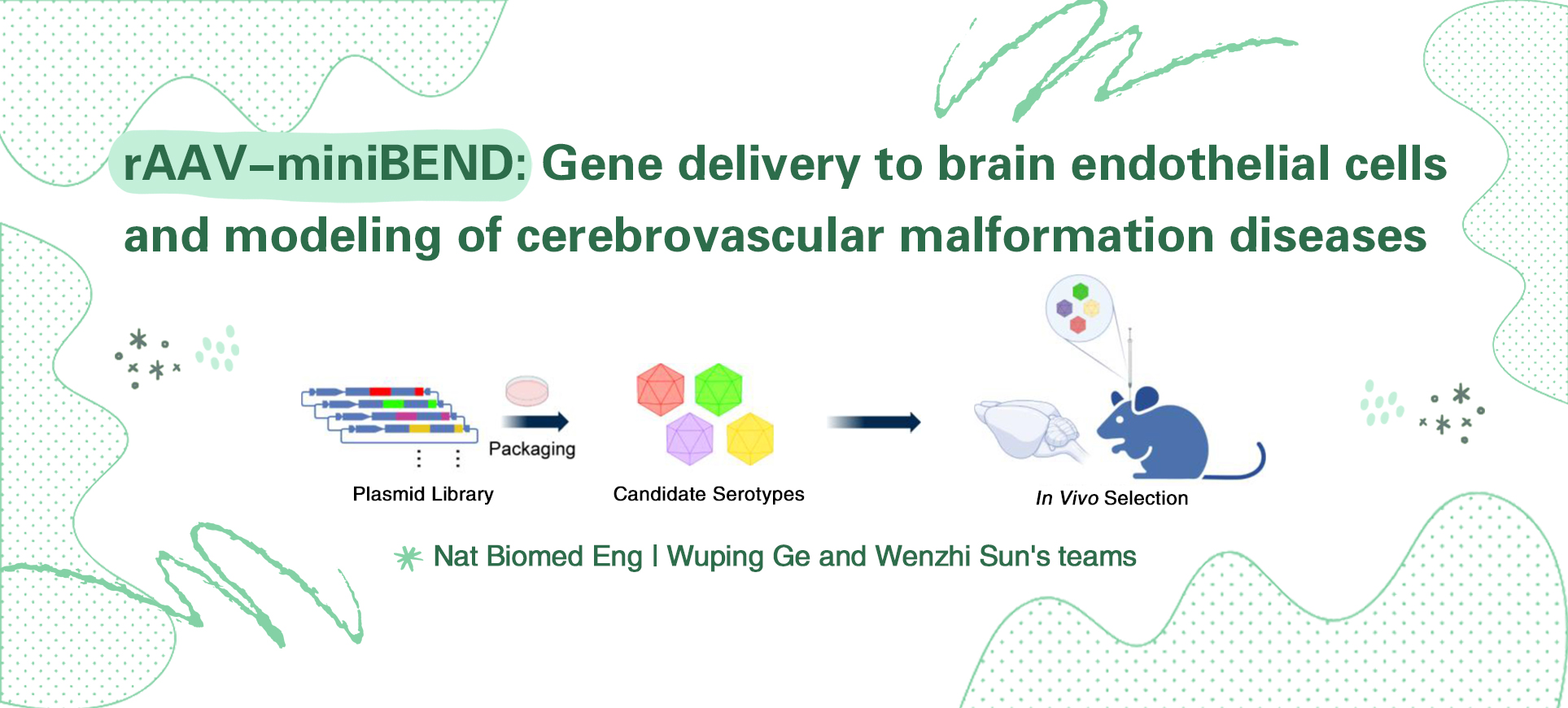
rAAV-miniBEND: Gene delivery to brain endothelial cells and modeling of vascular malformation diseases.
Enjoy up to 35% OFF on viral vectors! Global delivery & fast turnaround from Brain Case Biotech. Promotion ends Nov 9, 2025.
Holiday research sale featuring AAVs, PRV/HSV/RV/VSV tools, combo packs, mystery boxes, and custom virus packaging discounts. Nov 24–Dec 7.
This study reveals how tumor-derived SAM and METTL14-driven m⁶A modification rewire LPBN neural circuits to drive pain–depression comorbidity in PDAC.
A complete guide comparing GCaMP6, jGCaMP7, jGCaMP8 and RiboL1-jGCaMP8, covering sensitivity, kinetics, soma targeting and RO-injection brightness performance.
Learn how hydrophobic, hydrophilic, and hydrogel-based tissue clearing enable organ-scale 3D imaging, transforming neural circuit mapping and disease research.
Explore the critical quality attributes (CQA) of AAV vectors, including identity, potency, purity, impurities, and safety, for safe and effective gene therapy.
A breakthrough red–green dual-sensor system enables high-resolution, minimally invasive in vivo imaging of L-lactate dynamics in awake mice, revealing metabolic–neuronal coupling.
R-eLACCO2.1 is a red fluorescent genetically encoded sensor enabling in vivo, cell-resolution imaging of extracellular L-lactate and neural activity in awake mice, fully compatible with GCaMP and FLIM.
A PNAS study reveals how linoleic acid and (Z)-9-tricosene, detected via the main olfactory system, interact with the VTA–mOT dopaminergic pathway to regulate rodent insect predation.
Learn how to solve AAV expression loss and weak fluorescence with step-by-step optimization of vector design, viral titer, injection dose, timing, detection, and sample processing.
On October 24, 2025, the team of Tongji University published “Engineered thoracic spinal cord organoids for transplantation after spinal cord injury”
These probes enable spectrally and spatially multiplexed imaging of extracellular and intracellular L-lactate in cultured cells (e.g., HeLa cells, neurons), brain slices, and live mice.