E-mail:BD@ebraincase.com
Tel:+8618971215294
English 中文版
Pioneering Innovation in Gene Vector Research - BrainCasePioneering Innovation in Gene Vector Research - BrainCase
  • Home
  • Pre-made AAV Library
    CRISPRRNAiHSV-helperRV-helperNeurotropic virusCalcium SensorsOptogenetics activationOptogenetics inhibitionChemical geneticsSparse labelingFluorescent proteinBiosensorsRecombinaseApoptosis & AutophagyDisease ModelNeurotoxicityOther
  • Products & Service

    Product Center

    Virus

    Vesicular Stomatitis Virus-VSV
    RCAS-TVA
    Lentivirus
    Rabies Virus-CVS Strain-RABV
    Herpes simplex virus-HSV
    Pseudorabies virus-PRV
    Adeno-Associated Virus-AAV
    Neurotropic virus list
    Baculovirus

    Kits & Regents

    EndoFree Plasmid Maxi Kit
    Lentivirus Concentration Kit
    VESSL Exosome Solutions
    AAV Rainbow Combo™

    Plasmid Construction & Vector cloning

    Lentiviral Vector
    AAV Vector
    Plasmid
    Plasmid Library

    Popular Applications

    Gene Regulation

    Gene Overexpression-Brain Case
    RNA interference(RNAi)-siRNA-Brain Case
    Gene Editing - CRSIPR cloning - BrainCase

    Neural Circuit Function Research

    Optogenetics - BrainCase
    Chemical genetics-DREADDs-Brain Case
    Calcium signal recording-Gels- Brain Case
    GRAB Neurotransmitter Fluorescent Sensor- Brain Case
    Functional Magnetic Resonance Imaging Technology- Brain Case

    Research on the structure of neural circuits

    Direct Input and Output-viral vectors- Brain Case
    Anterograde Mono-synaptic Tracing -HSV- Brain Case
    Antrograde Muti-synaptic Tracing-HSV & VSV-Brain Case
    Retrograde Mono-synaptic Tracing-Rabies Virus(CVS Strain)-Brain Case
    Retrograde Muti-synaptic Tracing-PRV-Brain Case

    Featured Services

    Experiment Service

    Research Services | Neural Circuit Tracing + Targeted Spatial Omics + Neuronal Classification Analysi
    Research Service | Cell and Tissue Patch-Clamp Recording and Analysis Services
    BrainCase Biotech| Whole-Brain Transparency Imaging and Analysis Services

    AAV Serotype Screening

    AAV Serotypes screening-gene therapy

    Collaboration Products

    Kiryl Piatkevich lab
    Yulong Li lab
    Zhifei Fu lab
    Woo-ping Ge lab

    Oncolytic Virus Modification

    Oncolytic virus-for cancer therapy-Brain Case
    Herpes Virus Vector-anti-tumor- BrainCase
    Vesicular stomatitis virus-killing tumor cells-Brain Case
  • News
    Corporate News New Product Launch Test Report Investor News
  • Support
    Literature interpretation Customer article FAQs Blog Legal
  • About Us
    Pre-made AAV Library Products & Service News Support About Us Contact
  • Contact
    Contact Us Join us
  • 中文
    English 中文版
  • Home
  • Support
  • Customer article
  • Support
  • Literature interpretation
  • Customer article
  • FAQs
  • Blog
  • Legal

Sci. Adv. | How Does the Brain Recognize Familiar Individuals? Hao Wang / Gao Chen / Hongbin Yang / Libiao Pan Reveal VGluT2 Neurons Precisely Encode Conspecific Identity, and Exclusive Memories Can Be Reactivated

Release time:2026-06-10 10:55:37
Rodents rely on olfaction (pheromones) to perform social interactions, and the medial amygdala (MeA) is a key brain region for integrating social olfactory information. The MeA is divided into four subnuclei: MeAav, MeAad, MeApv, and MeApd. Previous studies have not clarified the roles of MeA subnuclei or specific neuron types in encoding conspecific identity.

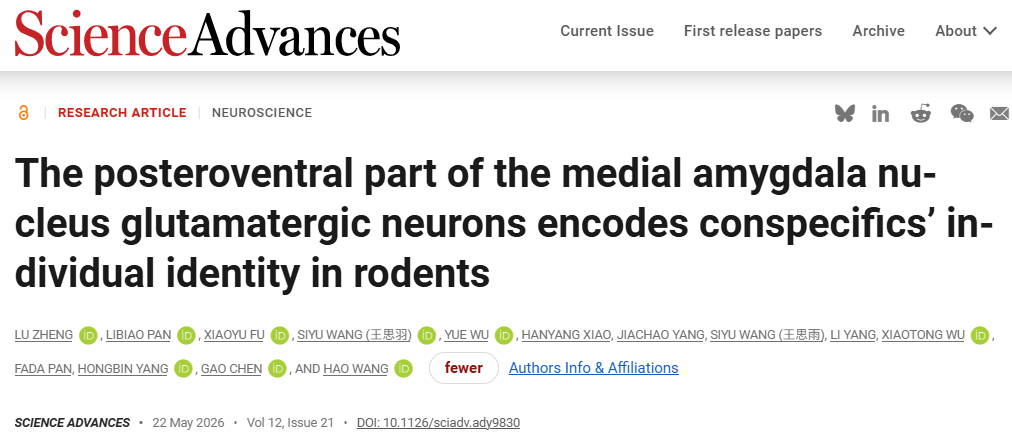
On May 23, 2026, Professor Hao Wang’s team at Zhejiang University (in collaboration with Professor Gao Chen, Researcher Hongbin Yang, and Dr. Libiao Pan’s team) published a paper in Science Advances titled “The posteroventral part of the medial amygdala nucleus glutamatergic neurons encodes conspecifics’ individual identity in rodents.” The study found that VGluT2 neurons in the posteroventral medial amygdala (MeApv) of rodents are the core cell type and brain region encoding the olfactory identity of conspecifics. Using calcium imaging, optogenetics, and activity-dependent labeling, the researchers confirmed that MeApv VGluT2 neurons receive social olfactory signals via the accessory olfactory bulb (AOB). Silencing these neurons or activating Gad2-positive neurons caused deficits in recognizing individual or sex-specific odors. Moreover, specific neuronal subpopulations stably store information about a single conspecific, and activating these subpopulations could restore social memory after 24 hours, highlighting MeApv’s critical role as a central hub for social information encoding.

https://doi.org/10.1126/sciadv.ady9830
 

MeApv VGluT2 Neurons Are Activated During Social Information Exploration

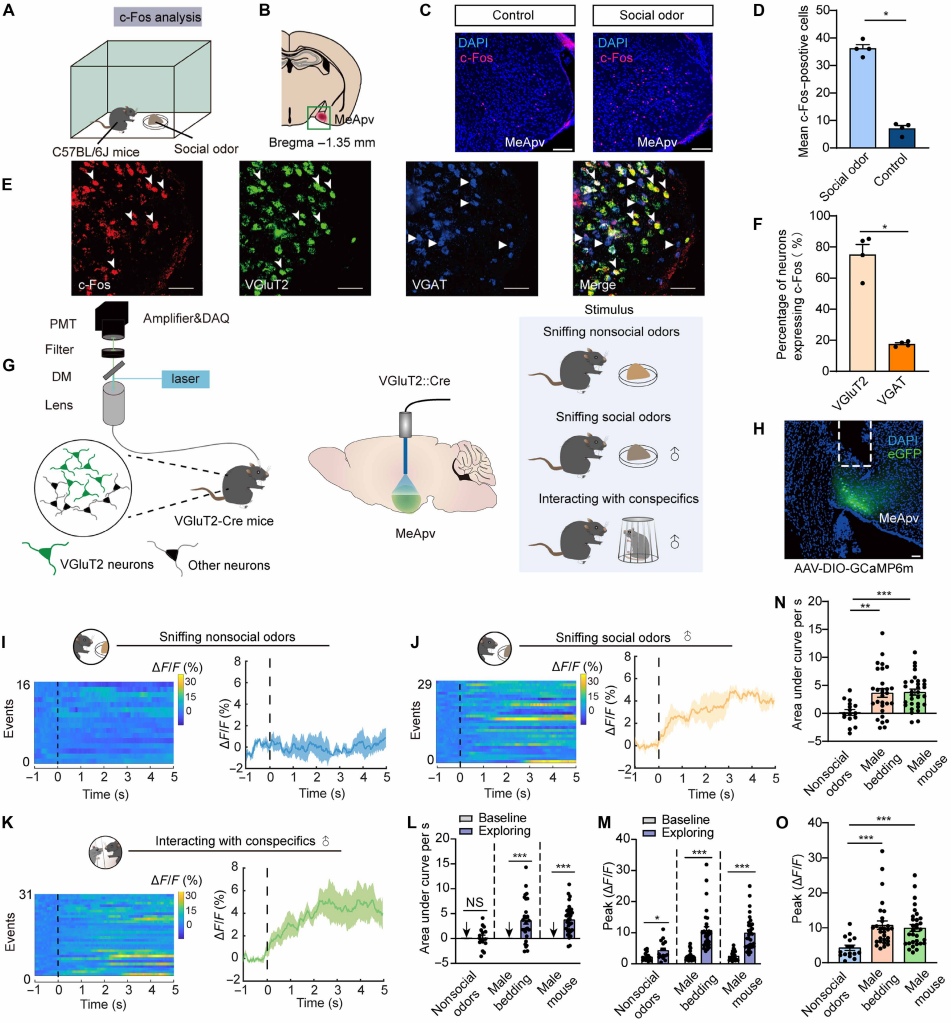
C57BL/6J mice were exposed to bedding containing odors from male conspecifics (social odor) for 10 minutes, followed by c-Fos immunostaining analysis (Figure 1A). The results showed that, compared with the non-social odor control group exposed to clean bedding, social odors significantly increased c-Fos expression in the MeApv region of the mouse brain (Figure 1B–D).

To identify the neuronal subtypes in MeApv that respond to social odors, the researchers combined c-Fos immunostaining with multiplex RNAscope analysis (Figure 1E–F). Quantitative results revealed that among the social odor-induced c-Fos-positive neurons, 75.1% were VGluT2-positive neurons, whereas only 17.6% expressed the inhibitory neuronal marker VGAT.

A Cre-dependent AAV carrying GCaMP6m was injected into the MeApv region of VGluT2-Cre mice, followed by optical fiber implantation to examine neuronal responses to social and non-social cues (Figure 1G–H). Calcium signal recordings demonstrated that exposure to male or female conspecific odors, as well as live conspecifics, significantly increased both the peak calcium signal and the area under the curve per second (AUC) of MeApv VGluT2 neurons compared with baseline levels. In contrast, non-social odors failed to elicit neuronal activation (Figure 1I–O).

Taken together, these findings indicate that the MeApv plays an important role in processing social olfactory information.
Figure 1. MeApv VGluT2 Neurons Are Robustly Activated During Social Exploration
 

Optogenetic Inhibition of MeApv VGluT2 Neurons Induces Social Recognition Deficits

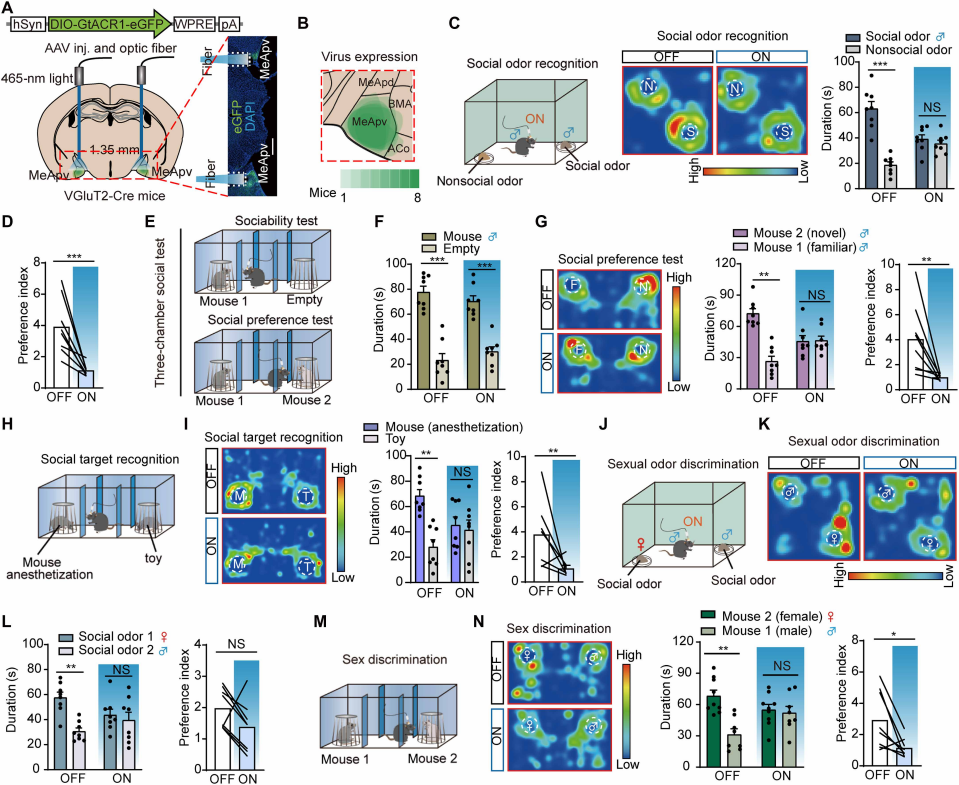
Using viral injection and optical fiber implantation techniques, the activity of bilateral MeApv neurons in VGluT2-Cre mice was selectively suppressed (Figure 2A–B). In olfactory preference tests, normal mice preferred male social odors, whereas inhibition of MeApv VGluT2 neurons abolished this preference, with no significant distinction between social and neutral clean odors (Figure 2C–D).

Three-chamber social behavior tests (Figure 2E) showed that inhibiting MeApv VGluT2 neurons did not affect basic social abilities (Figure 2F), but significantly impaired social recognition, preventing mice from distinguishing between familiar and novel conspecifics (Figure 2G). Control experiments removing visual and auditory cues (Figure 2H) further confirmed that inhibited mice could not differentiate anesthetized live mice from toy mice, demonstrating a selective deficit in olfaction-mediated social recognition (Figure 2I).

Sex-preference experiments showed that normal male mice preferred female individuals and female odors. After MeApv VGluT2 neuron inhibition, mice completely lost the ability to discriminate social cues between males and females (Figure 2J–N). Optogenetic activation of MeApv VGluT2 neurons did not alter social discrimination behavior, indicating that inhibition, rather than hyperactivation, of these neurons is critical for social recognition deficits.

Figure 2. Optogenetic Inhibition of MeApv VGluT2 Neurons Impairs Social Recognition in Mice
 
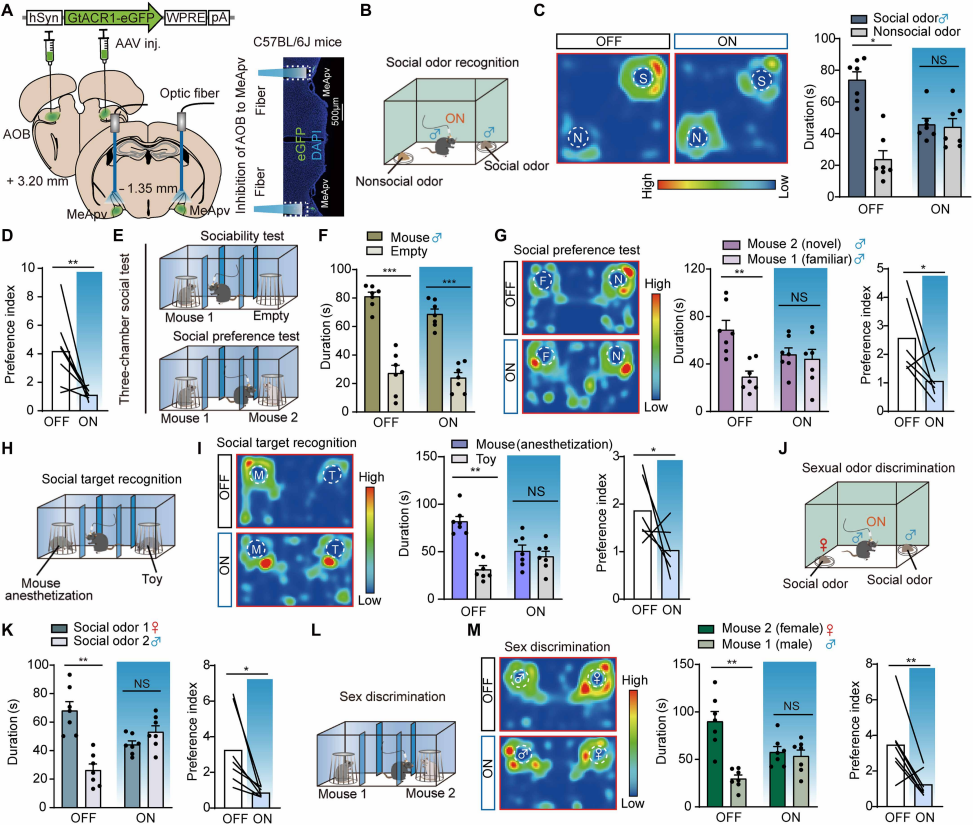
Experiments targeting the upstream AOB–MeApv pathway (Figure 3A–B) showed that inhibiting this pathway fully recapitulated social recognition deficits, including impaired discrimination of social odors, familiar versus novel individuals, real versus toy mice, and male–female distinction (Figure 3C–M), confirming that the AOB–MeApv pathway is central to social olfactory information processing.

The MeApv contains two types of glutamatergic neurons: VGluT1 and VGluT2. Selective inhibition of VGluT1 neurons did not affect social olfactory processing, demonstrating that only MeApv VGluT2 neurons are the key subtype regulating social olfactory recognition.

Figure 3. Optogenetic Inhibition of the AOB–MeApv Pathway Induces Social Recognition Deficits


Optogenetic Activation of MeApv Gad2 Neurons Impairs Social Recognition

The balance between neuronal excitation and inhibition is fundamental to neural coding and behavioral regulation. The authors hypothesized that disruption of this balance within the MeApv would impair social recognition. To test this, they used optogenetics to manipulate GABAergic (Gad2) neurons in the MeApv and examine the resulting behavioral changes.

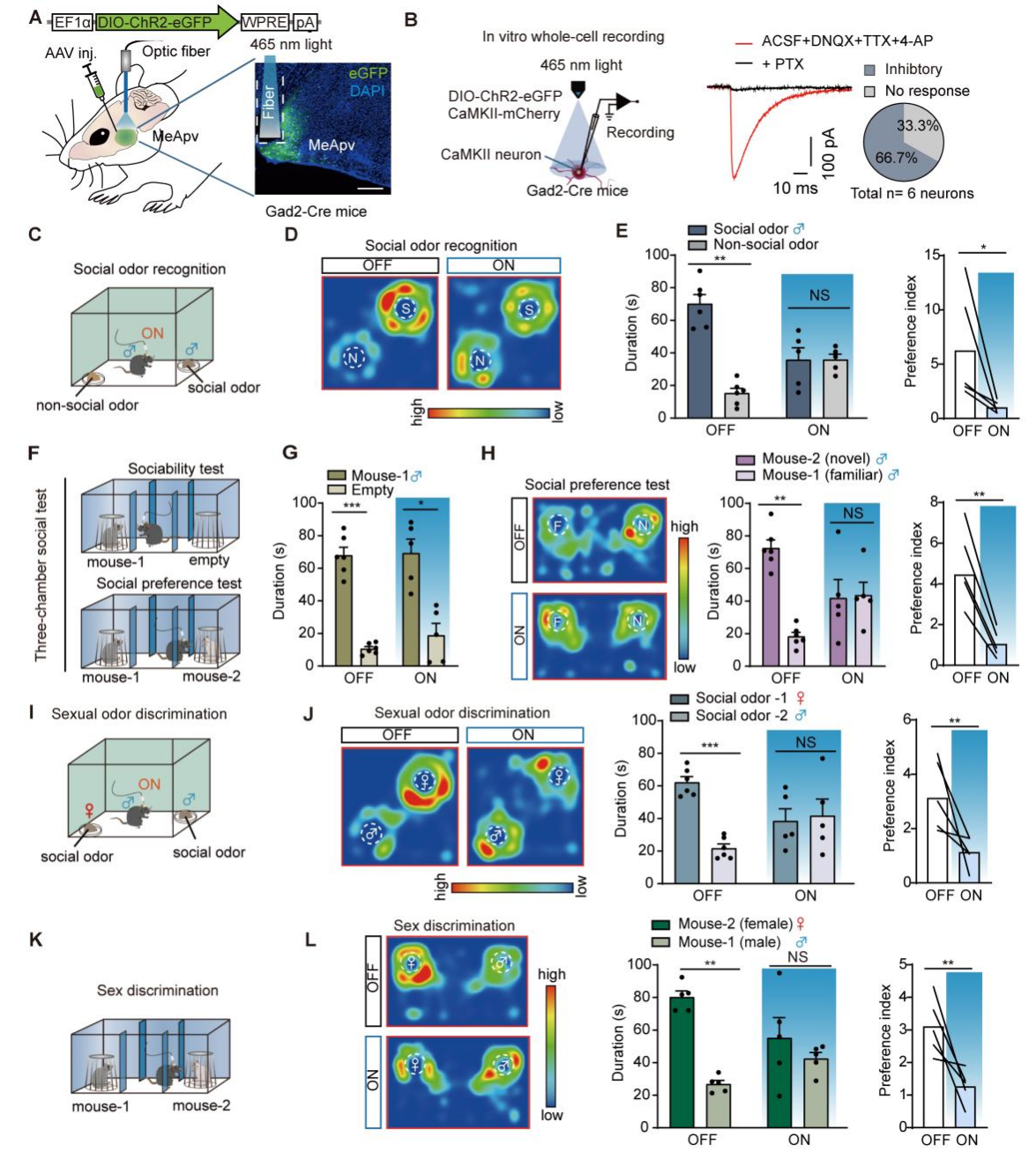
An optogenetic activation virus was expressed in the left MeApv of Gad2-Cre mice, followed by optical fiber implantation to selectively activate local GABAergic neurons (Figure 4A–B). Activation of these neurons produced marked social deficits: mice lost the ability to recognize social odors, failed to distinguish familiar from unfamiliar individuals, and exhibited no preference for male or female social cues (Figure 4C–L).

Taken together, these findings demonstrate that activation of MeApv GABAergic neurons severely disrupts social olfactory recognition, producing behavioral phenotypes similar to those observed following inhibition of excitatory VGluT2 neurons.

Whole-cell patch-clamp recordings in brain slices revealed that MeApv GABAergic neurons form direct monosynaptic inhibitory connections onto VGluT2 excitatory neurons. Furthermore, selective inhibition of MeApv GABAergic neurons did not affect social odor recognition, indicating that excessive activation—rather than baseline activity—of GABAergic neurons is the critical factor underlying social recognition deficits.

Figure 4. Optogenetic Activation of MeApv Gad2 Neurons Impairs Social Recognition


Distinct VGluT2 Neuronal Populations Store Social Odor Information

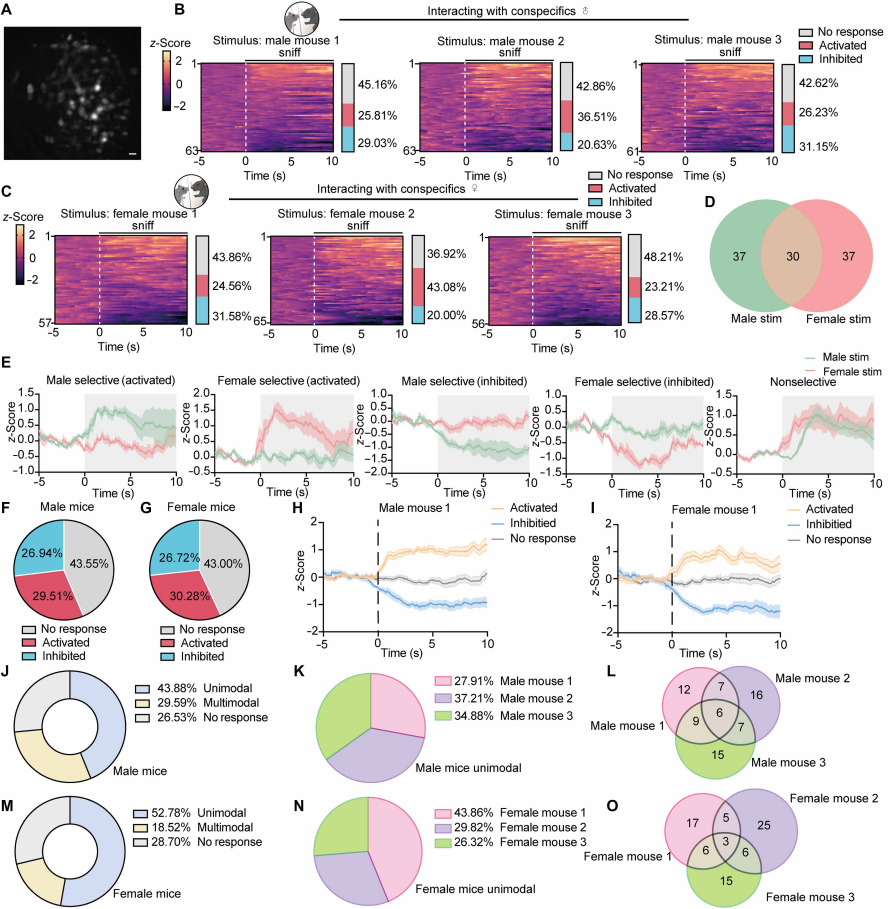
GCaMP6s was selectively expressed in MeApv VGluT2 neurons, and miniature endoscopic calcium imaging was used to record neuronal responses while mice interacted with three unfamiliar conspecifics of the same sex (male) or opposite sex (female) (Figure 5A).

The results showed that VGluT2 neurons exhibited three response patterns to conspecific stimuli: activation, inhibition, or no response (Figure 5B–I). The proportions of these neuronal populations were similar during exposure to male and female stimuli. Some neurons responded selectively to male or female odors, whereas others responded to both sexes. Non-selective responsive neurons were also observed (Figure 5D–E).

The proportions of responsive neurons and their temporal activity dynamics were highly stable across animals, demonstrating reproducible population responses to conspecific odors (Figure 5F–I). Further analysis revealed that, in response to different male mice, 43.88% of neurons responded exclusively to a single male (unimodal response), 29.59% responded to multiple males (multimodal response), and 26.53% showed no response (Figure 5J). Distinct unimodal neuronal populations specifically encoded individual male identities (Figure 5K).

Similarly, during exposure to female mice, 52.78% of neurons exhibited unimodal responses and 18.52% displayed multimodal responses (Figure 5M). Distinct neuronal subpopulations selectively responded to different female individuals (Figure 5N). The overlap among neurons responding to different individuals was minimal, demonstrating that MeApv VGluT2 neurons encode the identities of distinct conspecifics through largely independent neuronal ensembles (Figure 5L, O).


Figure 5. Population Coding Characteristics of MeApv VGluT2 Neurons for Male and Female Conspecifics

 
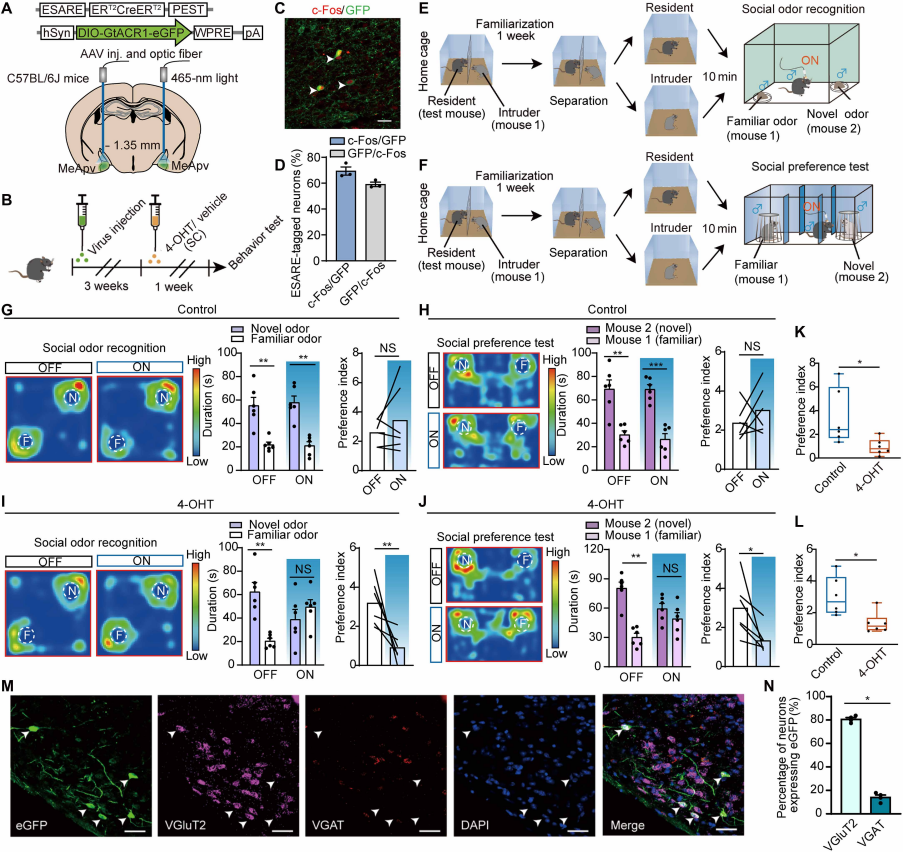
Using the ESARE-CreERT2 activity-dependent labeling system, the researchers identified neurons in the MeApv that encode specific conspecific individuals. Following injection of a dual-virus system into the MeApv and induction with 4-OHT, mice were housed adjacent to a stimulus mouse (Mouse #1) for one week, allowing only olfactory and visual interactions. This procedure selectively labeled neurons responding to that individual (Figure 6A–B).

To validate the specificity and efficiency of the labeling strategy, ESARE-labeled neurons (eGFP reporter) were co-labeled with c-Fos immunostaining following exposure to the stimulus mouse. The results showed that 69.36% of ESARE-labeled neurons were activated by social stimuli and expressed c-Fos, while 58.17% of c-Fos-positive neurons were successfully captured by the ESARE system (Figure 6C–D). Virtually no background labeling was observed in odor-free control animals, confirming that the system accurately and efficiently labels socially responsive neuronal ensembles.

Functional experiments further demonstrated that optogenetic inhibition of these specifically labeled neuronal ensembles significantly impaired both odor preference and social recognition toward Mouse #1 (Figure 6E, G–K; Figure 6F, I–L). RNAscope analysis revealed that the majority of these identity-coding neurons were VGluT2-positive (82.2%), whereas only a small proportion expressed VGAT (13.1%) (Figure 6M–N).

Figure 6. Specific VGluT2 Neuronal Ensembles Encode and Store Social Odor Memories
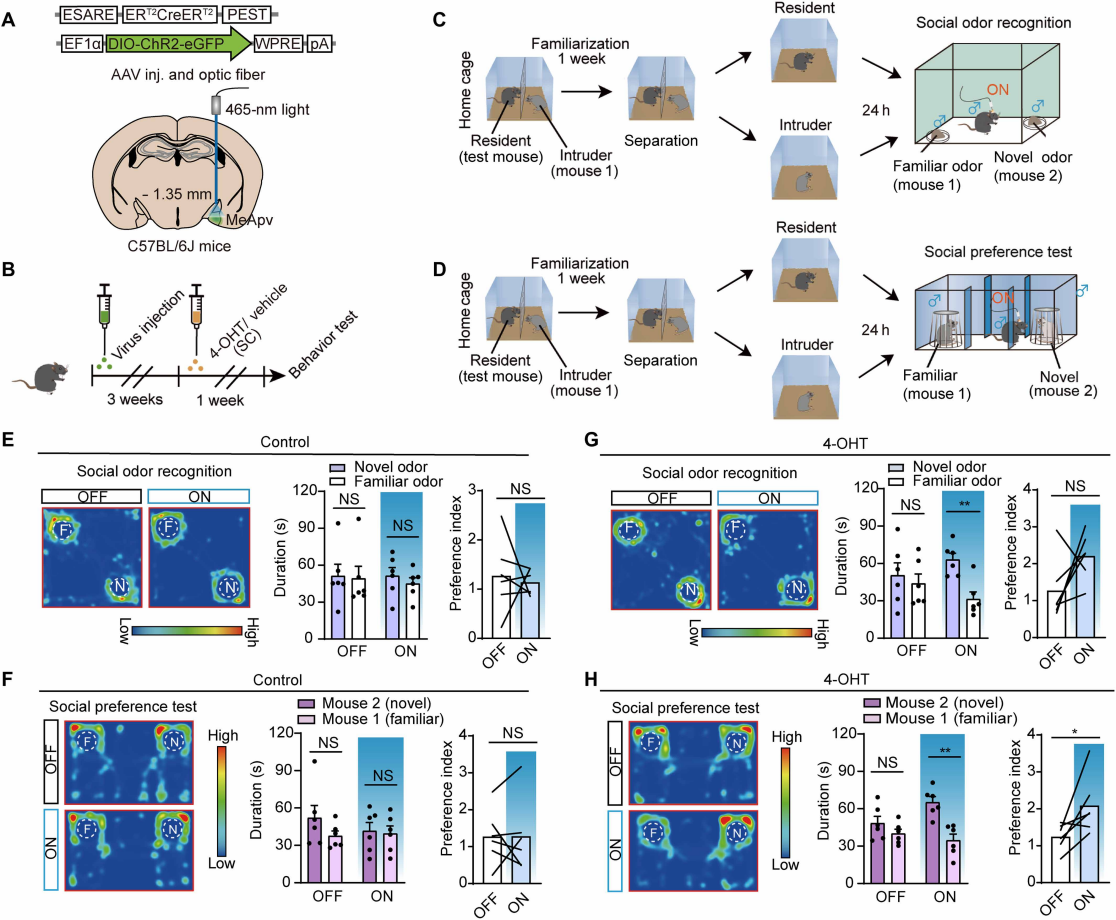
Previous studies have shown that social memory in mice typically persists for only about 24 hours. Consistent with these findings, control mice that had cohabited with Mouse #1 for one week were unable to distinguish Mouse #1 from Mouse #2 after a 24-hour interval.

To investigate the neuronal basis of this memory, the researchers employed activity-dependent labeling by injecting AAV-ESARE-CreERT2 and AAV-EF1α-DIO-hChR2-eGFP into the MeApv. Following 4-OHT induction and cohabitation with Mouse #1, neurons encoding information about Mouse #1 were selectively labeled (Figure 7A–B).

Remarkably, optogenetic activation of this neuronal ensemble restored the mice's ability to recognize both the odor and the identity of Mouse #1 after a 24-hour delay (Figure 7C–H). These findings demonstrate that social information about specific individuals can be stably stored within dedicated neuronal subpopulations of the MeApv.

Figure 7. Activation of Labeled VGluT2 Neurons in the MeApv Restores Recognition of Familiar Conspecifics After 24 Hours of Isolation
 

Summary

This study provides the first clear evidence that MeApv VGluT2 neurons are the core neuronal population encoding conspecific identity in rodents. It distinguishes the functional differences between MeApv (individual/sex identity coding) and MeApd (reproduction-related coding), reveals that specific neuronal subpopulations stably store social information of individual conspecifics, and offers direct evidence for the neural basis of social memory. These findings also provide rodent models and potential targets for studying the neural mechanisms underlying autism spectrum disorder and social deficits.

All viral tools used in this study are available from Brain Case Biotech:

  Product Category     Product Number     Product Name  
  Calcium Imaging   BC-0087     rAAV-EF1α-DIO-GCaMP6m  
BC-2158 rAAV-CAG-DIO-GCaMP6s
Optogenetics BC-0223 rAAV-EF1α-hGtACR1-P2A-EGFP
BC-0224 rAAV-EF1α-DIO-hGtACR1-P2A-EGFP
BC-0107 rAAV-EF1α-DIO-hChR2(H134R)-EYFP
Fluorescent Proteins BC-0027 rAAV-CaMKIIα-EGFP
BC-0028 rAAV-CaMKIIα--mCherry
BC-0244 rAAV-hSyn-DIO-EGFP
BC-0025 rAAV-hSyn-DIO-mCherry
Recombinases BC-1569 rAAV-E-SARE-Cre-ERT2
 
Brain Case Biotech also offers various custom services.
Please contact
bd@ebraincase.com for more information.

Service Type :

Select the service you'd like to purchase.

Order Information(Premade-AAVs)

Please provide us some information about the service you'd like to order.

How did you hear about BrainCase Biotech or our products?(Fill in this field to get a discount coupon)

Detailed requirements:

scroll

Order Information(Custom AAV/Lentivirus)

Please provide us some information about the service you'd like to order.

Gene ID or gene information:

Selection of the reporting gene:

Special Instructions:

scroll

Order Information(Others)

Please provide us some information about the service you'd like to order.

Virus name/Detailed requirements:

scroll

Related products

Customer Article | Sci. Adv. | Jinhao Sun’s Team at Shandong University Unveils: How Does the Brain “Remember” Gastric Inflammation? Hcn1-Dependent PVN Engram Neurons Are the Key!

Customer Article | Sci. Adv. | Jinhao Sun’s Team at Shandong University Unveils: How Does the Brain “Remember” Gastric Inflammation? Hcn1-Dependent PVN Engram Neurons Are the Key!

Sci. Adv. | How Does the Brain Recognize Familiar Individuals? Hao Wang / Gao Chen / Hongbin Yang / Libiao Pan Reveal VGluT2 Neurons Precisely Encode Conspecific Identity, and Exclusive Memories Can Be Reactivated

Sci. Adv. | How Does the Brain Recognize Familiar Individuals? Hao Wang / Gao Chen / Hongbin Yang / Libiao Pan Reveal VGluT2 Neurons Precisely Encode Conspecific Identity, and Exclusive Memories Can Be Reactivated

400+ Customer Publications Collection.

400+ Customer Publications Collection.

Customer Article | Neuron | Neural Code of Social Avoidance: Hai-Tao Wu’s Team Reveals a New Mechanism of Dual Anterior Insula–Prefrontal Cortex Circuit Dialogue

Customer Article | Neuron | Neural Code of Social Avoidance: Hai-Tao Wu’s Team Reveals a New Mechanism of Dual Anterior Insula–Prefrontal Cortex Circuit Dialogue

map
{dede:global.cfg_webname/}

Pre-made AAV Library

CRISPR
RNAi
Neurotropic virus
Optogenetics activation
Biosensors

News

Corporate News
New Product Launch
Test Report
Investor News

Support

Literature interpretation
Customer article
FAQs
Blog
Legal
微信

WhatsApp Business Account

Tel: +8618971215294
E-mail: BD@ebraincase.com

Address:-

Address:-

  • Copyright © 2024 Brain Case All Rights Reserved.