E-mail:BD@ebraincase.com
Tel:+8618971215294
English 中文版
Pioneering Innovation in Gene Vector Research - BrainCasePioneering Innovation in Gene Vector Research - BrainCase
  • Home
  • Pre-made AAV Library
    CRISPRRNAiHSV-helperRV-helperNeurotropic virusCalcium SensorsOptogenetics activationOptogenetics inhibitionChemical geneticsSparse labelingFluorescent proteinBiosensorsRecombinaseApoptosis & AutophagyDisease ModelNeurotoxicityOther
  • Products & Service

    Product Center

    Virus

    Vesicular Stomatitis Virus-VSV
    RCAS-TVA
    Lentivirus
    Rabies Virus-RABV
    Herpes simplex virus-HSV
    Pseudorabies virus-PRV
    Adeno-Associated Virus-AAV
    Neurotropic virus list
    Baculovirus

    Kits

    EndoFree Plasmid Maxi Kit
    Lentivirus Concentration Kit

    Plasmid Construction & Vector cloning

    Lentiviral Vector
    AAV Vector
    Plasmid

    Popular Applications

    Gene Regulation

    Gene Overexpression-Brain Case
    RNA interference(RNAi)-siRNA-Brain Case
    Gene Editing - CRSIPR cloning - BrainCase

    Neural Circuit Function Research

    Optogenetics - BrainCase
    Chemical genetics-DREADDs-Brain Case
    Calcium signal recording-Gels- Brain Case
    GRAB Neurotransmitter Fluorescent Sensor- Brain Case
    Functional Magnetic Resonance Imaging Technology- Brain Case

    Research on the structure of neural circuits

    Direct Input and Output-viral vectors- Brain Case
    Anterograde Mono-synaptic Tracing -HSV- Brain Case
    Antrograde Muti-synaptic Tracing-HSV & VSV-Brain Case
    Retrograde Mono-synaptic Tracing-Rabies Virus-Brain Case
    Retrograde Muti-synaptic Tracing-PRV-Brain Case

    Featured Services

    AAV Serotype Screening

    AAV Serotypes screening-gene therapy

    Collaboration Products

    Kiryl Piatkevich lab
    Yulong Li lab
    Zhifei Fu lab
    Woo-ping Ge lab

    Oncolytic Virus Modification

    Oncolytic virus-for cancer therapy-Brain Case
    Herpes Virus Vector-anti-tumor- BrainCase
    Vesicular stomatitis virus-killing tumor cells-Brain Case
  • News
    Corporate News New Product Launch Investor News
  • Support
    Literature interpretation Customer article FAQs Blog Legal
  • About Us
    Pre-made AAV Library Products & Service News Support About Us Contact
  • Contact
    Contact Us Join us
  • 中文
    English 中文版
  • Home
  • Support
  • Literature interpretation
  • Support
  • Literature interpretation
  • Customer article
  • FAQs
  • Blog
  • Legal

A New Tool for Visualizing α-Syn Aggregates in Live Brains—α-Syn-6H-EGFP/tdT sensor Experiment Guide

Release time:2026-04-01 10:53:23
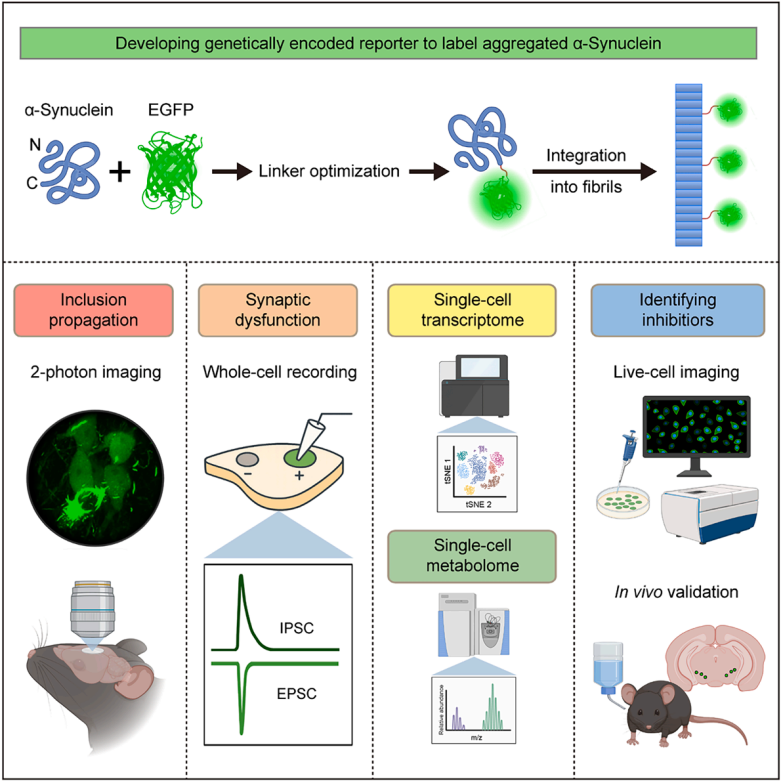
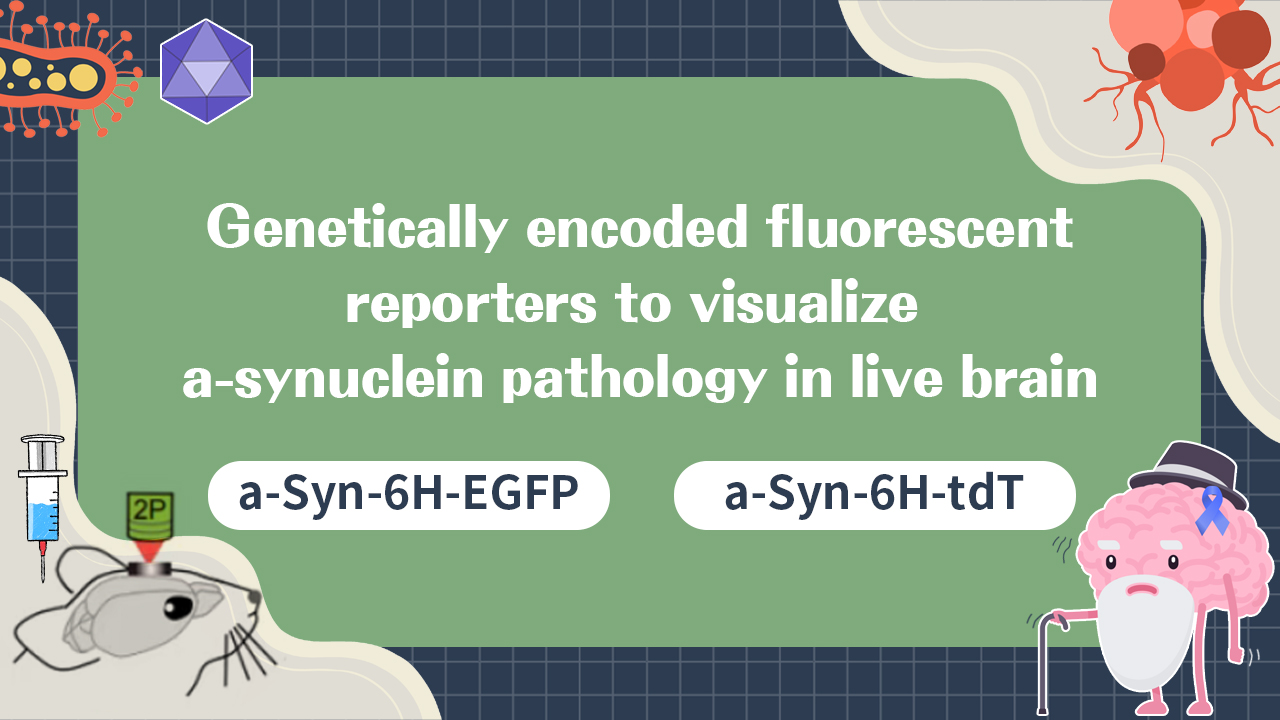
Research on α-synucleinopathies, such as Parkinson’s disease, has long been hindered by the inability to directly observe α-Syn aggregates in vivo. On March 4, 2026, a research paper titled "Genetically encoded fluorescent reporters to visualize α-synuclein pathology in live brain" was published online in Cell by researcher Peng Cao from the Beijing Institute of Life Sciences, researcher Xiaoqun Wang from the Institute of Biophysics, Chinese Academy of Sciences, researcher Wei Xiong from the University of Science and Technology of China, researcher Zhuan Zhou from Peking University, and researcher Qian Wu from Beijing Normal University, with co-first authors Li Zhang, Minhui Yu, Guoqing Chen, Siyuan Ge, and Mengdi Wang. The paper introduces the α-Syn-6H-EGFP and α-Syn-6H-tdT genetically encoded fluorescent sensors, which enable high-specificity and high-sensitivity labeling of p-α-Syn aggregates in live brains. These sensors are also adaptable to a variety of functional research scenarios. Here, I will walk you through the development and design of the sensors, applicable scenarios, practical methods, and imaging details—easy to use right away!

https://www.cell.com/cell/fulltext/S0092-8674(26)00163-7?rss=yes
 

Ⅰ. Core Sensor Design: Precise Targeting, Fluorescence Amplification

Design Principle

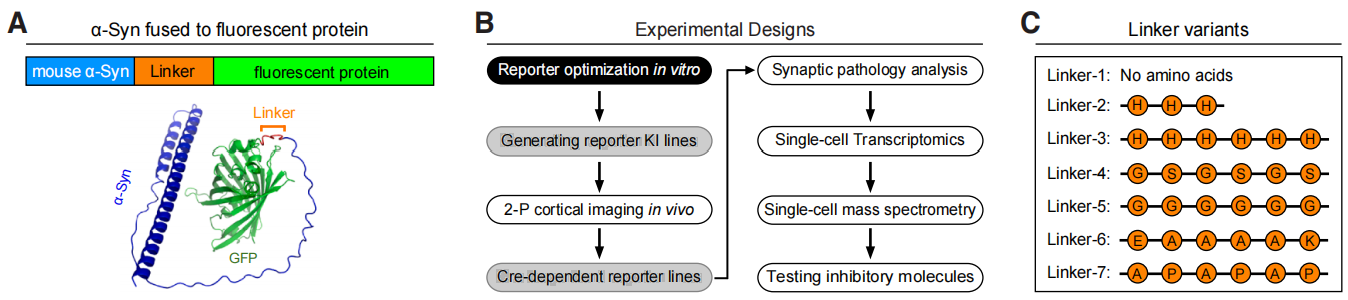
Based on wild-type α-Syn in mice, the α-Syn was fused with a fluorescent protein (EGFP/tdTomato) via a 6-histidine (6H) linker. After optimization with seven different linkers, the 6H linker enabled the efficient integration of the sensor into α-Syn aggregates without causing self-aggregation, achieving the core characteristic of high integration efficiency.

Core Advantages

🔹Fluorescent Switch Effect: After integration into p-α-Syn (where serine at position 129 is phosphorylated) aggregates, the fluorescence intensity increases fivefold. When not aggregated, the fluorescence remains at a baseline level, with minimal background interference.
🔹No Biological Interference: The sensor does not affect the aggregation tendency of endogenous α-Syn, and no self-aggregation occurs in Snca⁻/⁻ neurons, thus preventing false positives in experiments.
🔹Dual Fluorescence Selection: The dual sensor with EGFP (green) and tdT (red) allows for dual-color imaging, which can be combined with other fluorescent markers.
🔹In Vivo Compatibility: The gene-encoded sensor can be stably expressed in the live brain by knocking it into mice, eliminating the need for exogenous injection.

Figure 1: Development of α-Syn Aggregate Gene-Encoded Fluorescent Reporter Genes


Ⅱ. Sensor Validation: Multi-Dimensional Validation with Specificity/Efficiency >90%

The sensor was validated at both the cellular and animal levels, demonstrating a specificity and efficiency of over 90% in labeling p-α-Syn aggregates, with high reliability:

1. Cellular Level: 

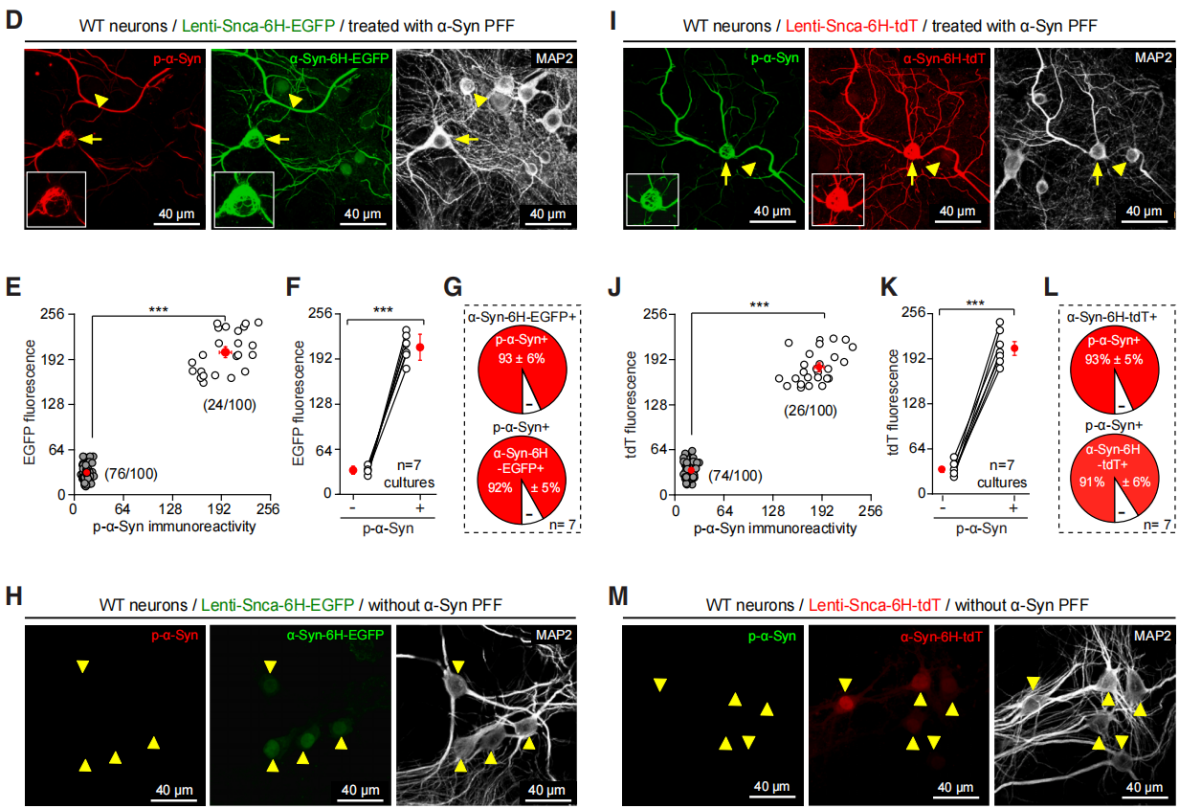
Primary hippocampal neurons were infected with lentivirus expressing the sensor. After α-Syn PFF (pre-formed fibrils) treatment, fluorescence of p-α-Syn-positive neurons was significantly enhanced. After treatment with 1% Triton X-100 detergent, the aggregates labeled by the sensor were insoluble, confirming stable integration into the fibrils.

Figure 2: α-Syn-6H-EGFP and α-Syn-6H-tdT Labeling α-Syn Aggregates in Cultured Neurons


2. Animal Level: 

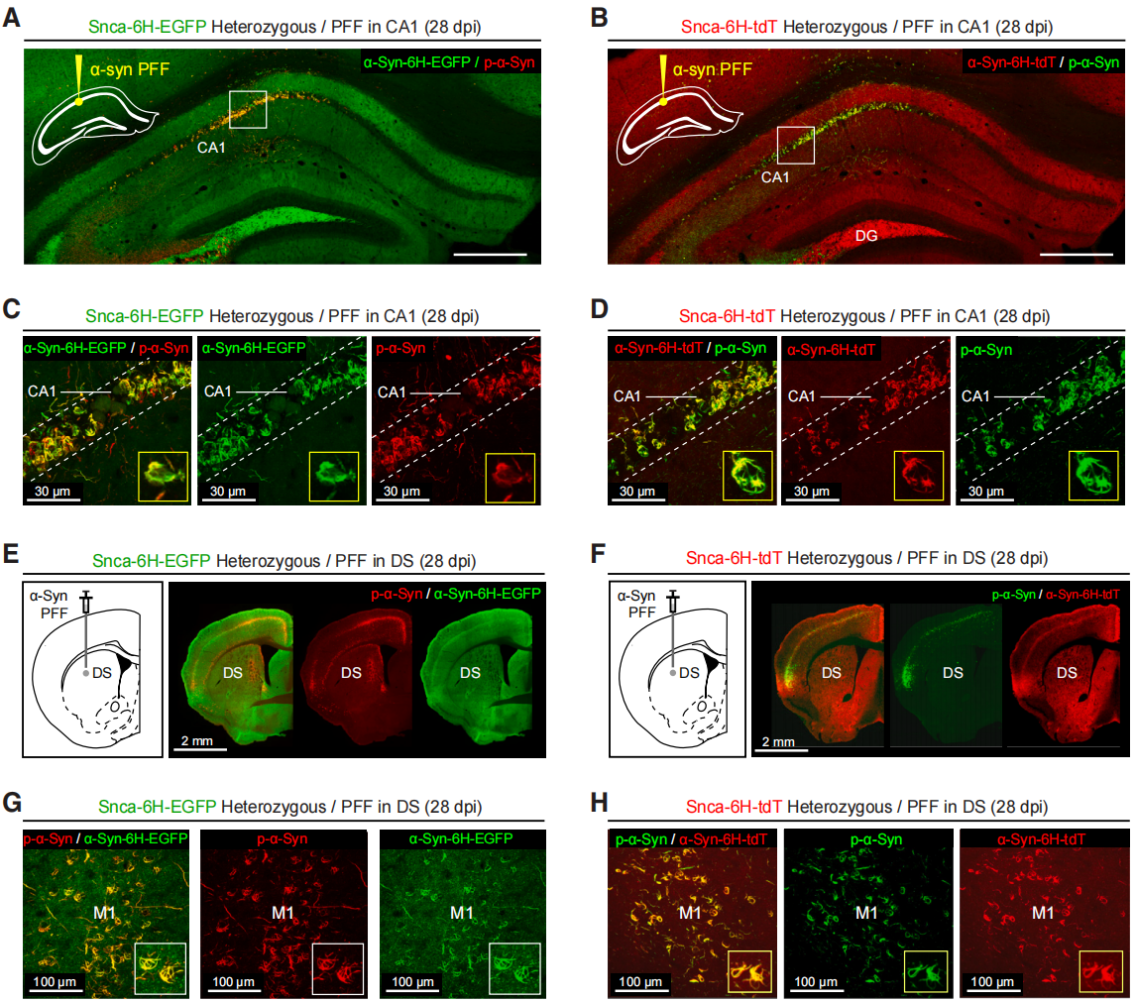
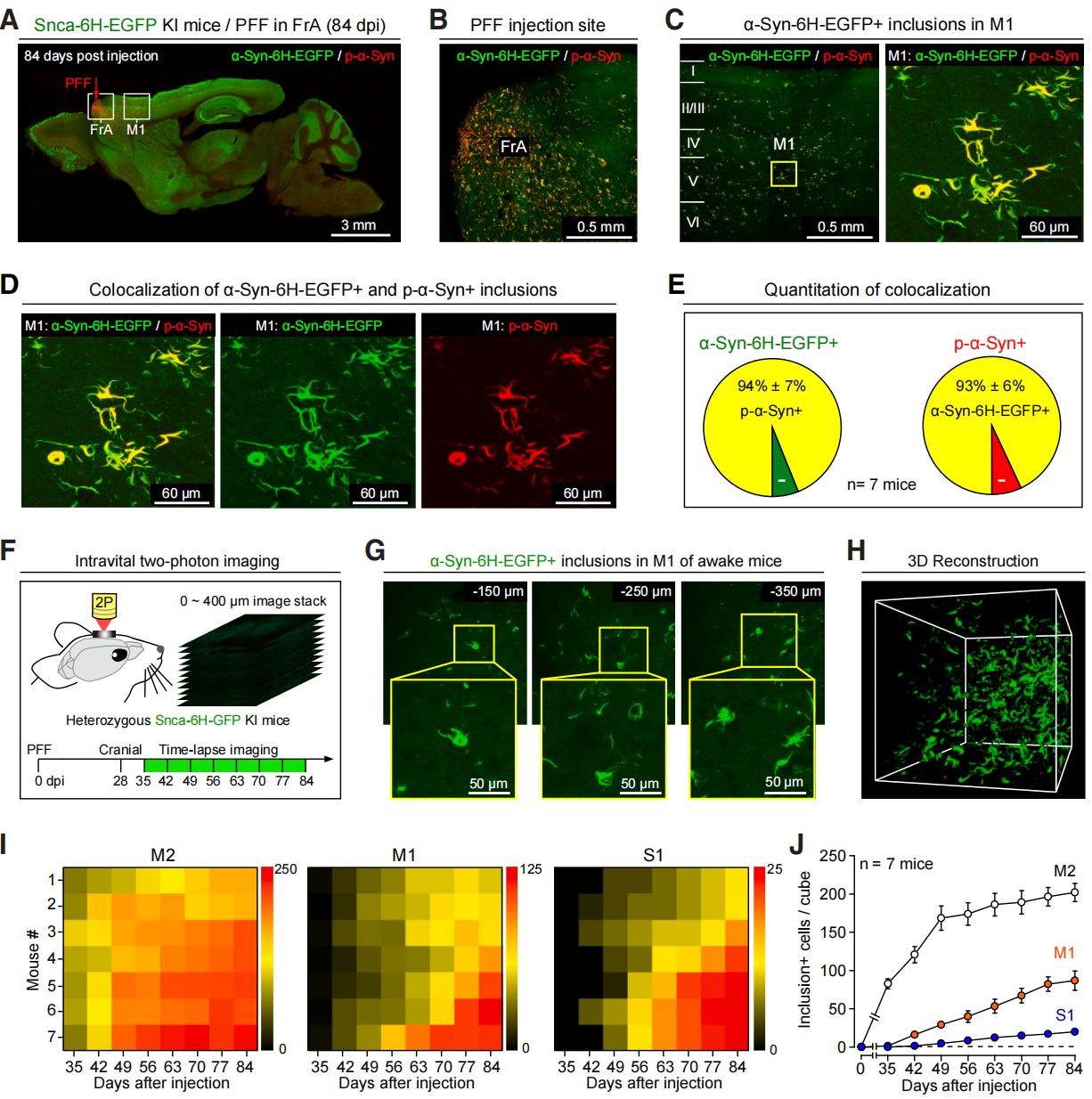
Snca-6H-EGFP/tdT heterozygous knock-in mice were constructed, with sensor expression patterns consistent with endogenous α-Syn. In multiple brain regions, including the hippocampal CA1, dorsal striatum, substantia nigra (SNc), and dorsal motor nucleus of the vagus nerve (DMV), the sensor accurately labeled PFF-induced p-α-Syn aggregates and showed high co-localization with the Lewy body marker p62 and ubiquitin.

Figure 3: Snca-6H-EGFP/tdT Knock-in Mice Label α-Syn Aggregates in Neurons


Ⅲ. Core Applicable Scenarios: Covering In Vivo/In Vitro, From Observation to Functional Analysis

This sensor is not just a "labeling tool," but is adaptable to the entire spectrum of α-Syn aggregate research. Whether it’s tracking aggregates in vivo or analyzing pathological effects at the single-cell level, it can achieve both. The core applicable scenarios are as follows:
🔹Scenario 1:
 Dynamic tracking of α-Syn aggregate propagation in the live brain

🔹Scenario 2:
 Subcellular localization of aggregates in in vitro/in vivo neurons

🔹Scenario 3:
 Analysis of the effects of aggregates on neuronal electrical activity and synaptic function at the single-cell level

🔹Scenario 4:
 Combining single-cell omics (transcriptomics/metabolomics) to analyze the molecular pathological effects of aggregates

🔹Scenario 5:
 Screening of α-Syn aggregate formation inhibitors at the live-cell/in vivo level

🔹Scenario 6:
 Targeted research of aggregates in specific neuronal subtypes (Cre-dependent sensors)

Ⅳ. Practical Methods: Divided into "Cellular Level" and "Animal Level"

(A) Cellular Level: Aggregates Labeling and Detection in Primary Neurons

✅ Applicable Scenarios: 
Mechanisms of aggregate formation, in vitro inhibitor screening, subcellular localization of aggregates


✅ Procedure:

1. Sensor Delivery:
 Primary hippocampal/cortical neurons (DIV5) are infected with lentivirus expressing the sensor (hsyn promoter to enhance neuronal specificity), and then cultured further.

2. Aggregate Induction:
 Add α-Syn PFF (1 μg/mL) at DIV10; control group is treated with α-Syn monomer.

3. Culture and Detection:
 Continue culture until DIV20, then perform live-cell imaging or fix and perform immunofluorescence validation.

✅ Detection Methods + Core Indicators:
1. Live-Cell Imaging:
Use a fluorescence microscope (e.g., Leica TCS2 confocal microscope), with a 63× oil immersion objective. EGFP is excited with a 488 nm laser, and tdT with a 543 nm laser. Use sequence collection mode (to avoid signal leakage). Monitor pixel intensity in glowing mode (to avoid saturation).
🔹Core Indicators:
① The percentage of aggregate-positive neurons (neurons with probe fluorescence intensity >128 as a percentage of total neurons).
② Fluorescence intensity ratio (average fluorescence intensity of positive neurons/average fluorescence intensity of negative neurons, target value ≥ 5x).
③ The number of aggregates per field (quantified using ImageJ particle analysis function).

2. Immunofluorescence Validation:
After immunofluorescent staining with anti-p-α-Syn primary antibody, imaging is done with a confocal microscope (63× objective). All samples in the experiment use the same collection parameters.
🔹Core Indicators:
① Co-localization rate of the sensor and p-α-Syn (percentage of dual-positive neurons among p-α-Syn positive neurons, target value > 90%).
② Aggregate density (number of p-α-Syn positive aggregates per number of MAP2-positive neurons).

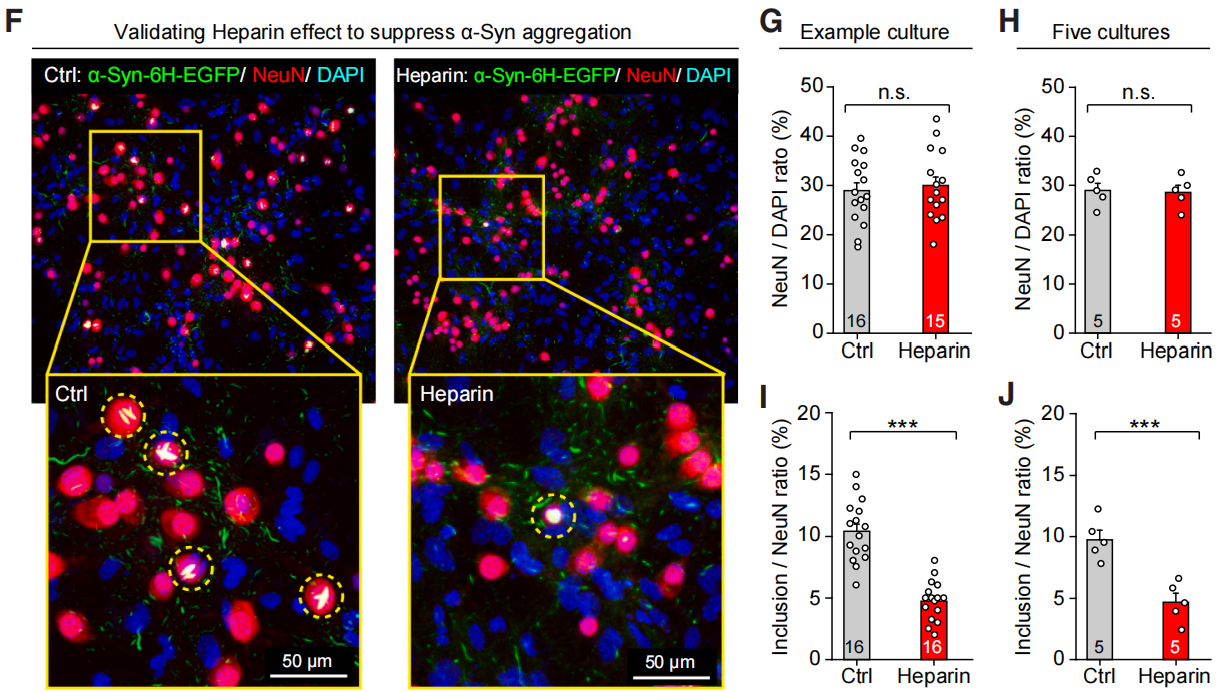
Figure 4: Reporter Genes for Identifying α-Syn Aggregate Formation Inhibitors

(B) Animal Level: Knock-in Mouse In Vivo/In Vitro Studies (Core Practical, Key Focus!)

Scenario 1: Tracking the Propagation of Aggregates in the Live Brain (Two-Photon Imaging)

✅ Procedure:
1. Aggregate Induction: Stereotaxically inject α-Syn PFF (0.1 mg/mL, 2.5 μL) into specific brain regions of knock-in mice.
2. Cranial Window Preparation: Surgical Timing: 28 days post-PFF injection.
3. In Vivo Two-Photon Imaging: 
🔹Use a two-photon laser scanning microscope, with an excitation wavelength of 830 nm (to avoid phototoxicity).
🔹Perform Z-stack scanning from the cortex to a depth of 0–400 μm (at 20 μm intervals).
🔹Use brain vasculature as a reference for locating the imaging field (ensure consistency in imaging positions across sessions).
🔹Perform imaging once every 7 days, for a total of 8 times.

✅ Core Indicators:
1. The number of aggregates in each brain region.
2. Fluorescence intensity of aggregates (mean grayscale value, reflecting aggregate maturity).
3. 
Propagation range (distance from the injection site to the distant brain regions where aggregates spread).

Figure 5: Visualization of Cortical Aggregates in Awake Mice


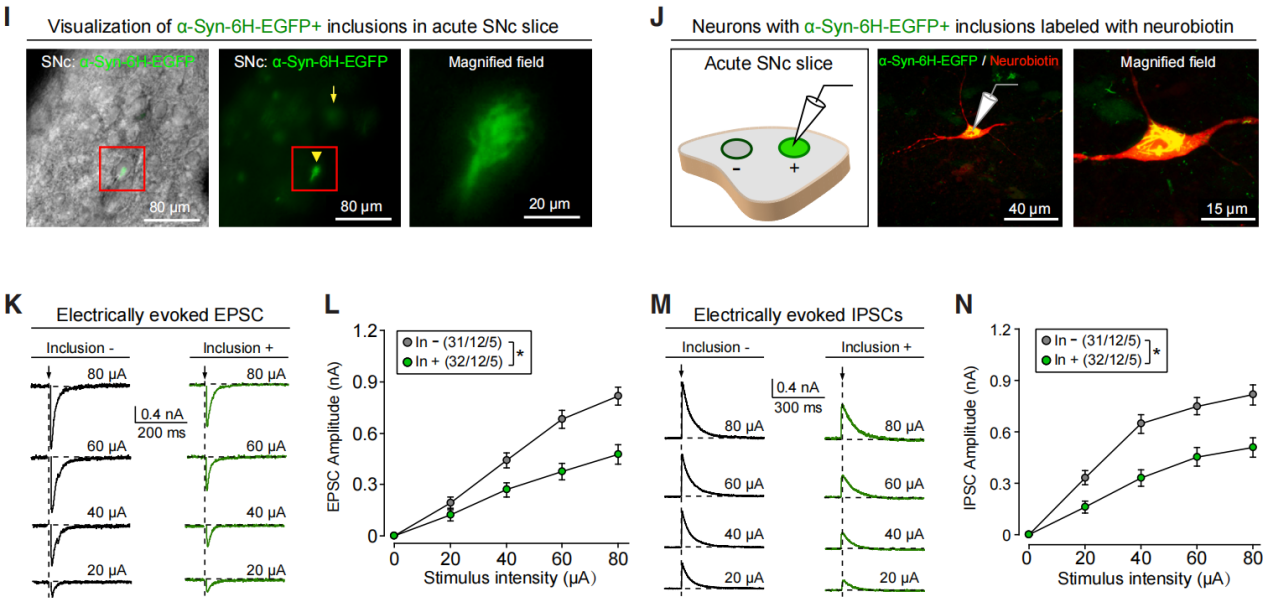
Scenario 2: Ex Vivo Brain Slice Aggregate Labeling and Functional Detection (Patch Clamp/Calcium Imaging)

✅ Applicable Scenarios: 
The impact of aggregates on neuronal electrical activity and synaptic function.

✅ Procedure:
🔹Aggregate Induction: After PFF injection into the brain regions of knock-in mice, culture for a specified time (28 days/90 days).
🔹Acute Brain Slice Preparation: Prepare 300–400 μm thick coronal brain slices. Incubate in oxygenated ACSF at 28°C for 30 minutes, then incubate at room temperature for 1 hour.
🔹Fluorescence Localization: Directly identify aggregate-positive neurons with strong fluorescence under a fluorescence microscope; neurons with weak fluorescence are considered negative.

✅ Functional Detection + Core Indicators:
1. Calcium Imaging: 
Load calcium dye into cortical layers 2/3 using pressure injection with a borosilicate glass electrode (0.04 MPa, 1 minute). Use a two-photon laser scanning microscope with an excitation wavelength of 920 nm. Imaging depth: 150–250 μm, frame rate: 8 Hz, resolution: 256×256 pixels, objective lens: 25× (NA 1.05).
- Core Indicators:
🔹Inactive Neuron Proportion (percentage of neurons with no spontaneous calcium transients).
🔹Calcium Transient Frequency (events per minute).
🔹Calcium Transient Amplitude (ΔF/F0 percentage).

2. Patch Clamp:
Use borosilicate glass pipettes with resistance of 3.0–3.5 MΩ. Place bipolar stimulating electrodes 100 μm from the recorded neuron, with a stimulus pulse of 1 ms, frequency of 0.067 Hz, and intensity ranging from 0 to 80 μA.
- Core Indicators:
🔹
EPSC/IPSC Amplitude (input-output curve with varying stimulus strength).
🔹
Action Potential Firing Rate (spikes/min).
🔹
Resting Membrane Potential (mV).
🔹
Paired Pulse Ratio (reflecting presynaptic neurotransmitter release probability).

Figure 6: Pathological Effects of α-Syn Aggregates on Synaptic Function


Ⅴ. Tool Summary: The "All-in-One Fluorescent Sensor" for α-Syn Research

This α-Syn-6H-EGFP/tdT sensor covers everything from basic aggregate labeling to complex in vivo functional studies, from cellular-level in vitro screening to animal-level in vivo validation, achieving full-scenario coverage. For researchers studying α-synucleinopathies, this sensor completely solves the challenges of "invisibility, inaccuracy, and in vivo difficulty." Whether exploring the mechanisms of aggregate propagation or screening candidate drugs targeting α-Syn, it is an indispensable core tool!

Service Type :

Select the service you'd like to purchase.

Order Information(Premade-AAVs)

Please provide us some information about the service you'd like to order.

How did you hear about BrainCase Biotech or our products?(Fill in this field to get a discount coupon)

Detailed requirements:

scroll

Order Information(Custom AAV/Lentivirus)

Please provide us some information about the service you'd like to order.

Gene ID or gene information:

Selection of the reporting gene:

Special Instructions:

scroll

Order Information(Others)

Please provide us some information about the service you'd like to order.

Virus name/Detailed requirements:

scroll

Related products

A New Tool for Visualizing α-Syn Aggregates in Live Brains—α-Syn-6H-EGFP/tdT sensor Experiment Guide

A New Tool for Visualizing α-Syn Aggregates in Live Brains—α-Syn-6H-EGFP/tdT sensor Experiment Guide

Cell Highlight丨Breaking Through AAV Delivery Bottlenecks! AAVLINK Technology Efficiently Delivers Large Genes to Aid in Genetic Disease Treatment

Cell Highlight丨Breaking Through AAV Delivery Bottlenecks! AAVLINK Technology Efficiently Delivers Large Genes to Aid in Genetic Disease Treatment

HSV Virus + Immunosuppressant Bortezomib Achieves Efficient Neuron Infection!

HSV Virus + Immunosuppressant Bortezomib Achieves Efficient Neuron Infection!

Microglia Gene Delivery Solutions: AAV11 Enables High-Efficiency, Microglia-Specific Transduction

Microglia Gene Delivery Solutions: AAV11 Enables High-Efficiency, Microglia-Specific Transduction

map
{dede:global.cfg_webname/}

Pre-made AAV Library

CRISPR
RNAi
Neurotropic virus
Optogenetics activation
Biosensors

News

Corporate News
New Product Launch
Investor News

Support

Literature interpretation
Customer article
FAQs
Blog
Legal
微信

WhatsApp Business Account

Tel: +8618971215294
E-mail: BD@ebraincase.com

Address:-

Address:-

  • Copyright © 2024 Brain Case All Rights Reserved.