E-mail:BD@ebraincase.com
Tel:+8618971215294
English 中文版
Pioneering Innovation in Gene Vector Research - BrainCasePioneering Innovation in Gene Vector Research - BrainCase
  • Home
  • Pre-made AAV Library
    CRISPRRNAiHSV-helperRV-helperNeurotropic virusCalcium SensorsOptogenetics activationOptogenetics inhibitionChemical geneticsSparse labelingFluorescent proteinBiosensorsRecombinaseApoptosis & AutophagyDisease ModelNeurotoxicityOther
  • Products & Service

    Product Center

    Virus

    Vesicular Stomatitis Virus-VSV
    RCAS-TVA
    Lentivirus
    Rabies Virus-CVS Strain-RABV
    Herpes simplex virus-HSV
    Pseudorabies virus-PRV
    Adeno-Associated Virus-AAV
    Neurotropic virus list
    Baculovirus

    Kits & Regents

    EndoFree Plasmid Maxi Kit
    Lentivirus Concentration Kit
    VESSL Exosome Solutions
    AAV Rainbow Combo™

    Plasmid Construction & Vector cloning

    Lentiviral Vector
    AAV Vector
    Plasmid
    Plasmid Library

    Popular Applications

    Gene Regulation

    Gene Overexpression-Brain Case
    RNA interference(RNAi)-siRNA-Brain Case
    Gene Editing - CRSIPR cloning - BrainCase

    Neural Circuit Function Research

    Optogenetics - BrainCase
    Chemical genetics-DREADDs-Brain Case
    Calcium signal recording-Gels- Brain Case
    GRAB Neurotransmitter Fluorescent Sensor- Brain Case
    Functional Magnetic Resonance Imaging Technology- Brain Case

    Research on the structure of neural circuits

    Direct Input and Output-viral vectors- Brain Case
    Anterograde Mono-synaptic Tracing -HSV- Brain Case
    Antrograde Muti-synaptic Tracing-HSV & VSV-Brain Case
    Retrograde Mono-synaptic Tracing-Rabies Virus(CVS Strain)-Brain Case
    Retrograde Muti-synaptic Tracing-PRV-Brain Case

    Featured Services

    Experiment Service

    Research Services | Neural Circuit Tracing + Targeted Spatial Omics + Neuronal Classification Analysi
    Research Service | Cell and Tissue Patch-Clamp Recording and Analysis Services
    BrainCase Biotech| Whole-Brain Transparency Imaging and Analysis Services

    AAV Serotype Screening

    AAV Serotypes screening-gene therapy

    Collaboration Products

    Kiryl Piatkevich lab
    Yulong Li lab
    Zhifei Fu lab
    Woo-ping Ge lab

    Oncolytic Virus Modification

    Oncolytic virus-for cancer therapy-Brain Case
    Herpes Virus Vector-anti-tumor- BrainCase
    Vesicular stomatitis virus-killing tumor cells-Brain Case
  • News
    Corporate News New Product Launch Test Report Investor News
  • Support
    Literature interpretation Customer article FAQs Blog Legal
  • About Us
    Pre-made AAV Library Products & Service News Support About Us Contact
  • Contact
    Contact Us Join us
  • 中文
    English 中文版
  • Home
  • Support
  • Customer article
  • Support
  • Literature interpretation
  • Customer article
  • FAQs
  • Blog
  • Legal

Customer Article | Sci. Adv. | Jinhao Sun’s Team at Shandong University Unveils: How Does the Brain “Remember” Gastric Inflammation? Hcn1-Dependent PVN Engram Neurons Are the Key!

Release time:2026-06-10 14:37:37
Beyond local factors such as Helicobacter pylori infection and drug-induced irritation, bidirectional brain–immune regulation and psychological stress are critical triggers of gastritis. Clinically, gastritis often recurs even after H. pylori eradication, suggesting the presence of central inflammatory memory (central inflammation sensitization), though the underlying mechanisms remain unclear. The paraventricular nucleus of the hypothalamus (PVN), as a hub for neuroendocrine and autonomic integration, had an undefined role in gastritis regulation.

On May 15, 2026, Jinhao Sun’s team from the School of Basic Medical Sciences at Shandong University published a study titled
Hcn1-dependent engram neurons in the PVN encode gastric inflammatory sensitization in Science Advances. This research focuses on the central neural mechanisms by which the brain regulates gastritis, revealing the pivotal roles of PVN Fos-positive neurons (FosPVN neurons) and the ion channel Hcn1 in stress–gastritis interactions, providing new targets for chronic inflammatory diseases.

https://doi.org/10.1126/sciadv.aeb6961
 

Activation of FosPVN Neurons in an HCl/Ethanol-Induced Gastritis Model

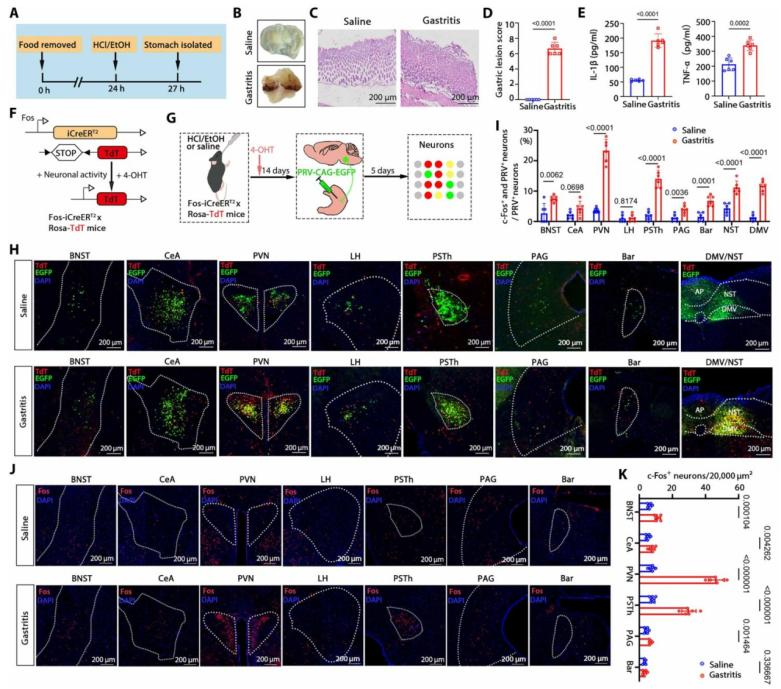
In an HCl/ethanol-induced mouse gastritis model, severe gastric mucosal hemorrhage and disrupted cellular architecture were observed 3 hours after induction (Fig. 1A–D), accompanied by significantly elevated levels of IL-1β and TNF-α in gastric tissues (Fig. 1E). To identify neurons activated during gastritis, the researchers used Fos-CreERT2 × Rosa-TdT mice, in which 4-hydroxytamoxifen (4-OHT) induced the nuclear translocation of Cre recombinase, permanently labeling neurons activated within a specific time window (Fig. 1F). This approach was combined with retrograde polysynaptic tracing through gastric wall injection of PRV-CAG-EGFP pseudorabies virus (Fig. 1G). Whole-brain imaging revealed co-localization of EGFP- and Fos-TdT-positive neurons across multiple brain regions, with the highest overlap observed in the paraventricular nucleus of the hypothalamus (PVN), followed by the parasubthalamic nucleus (PSTh) (Fig. 1H, I). c-Fos immunofluorescence further confirmed that gastritis-induced neuronal activation was most prominent in the PVN and secondarily in the PSTh (Fig. 1J, K). Together, these findings demonstrate that gastritis selectively activates neurons in the PVN and PSTh, a subset of which directly or indirectly innervate the gastric wall.

Figure 1. Specific Activation of FosPVN Neurons in a Gastritis Model


Functional Role and Activation Mechanism of FosPVN Neurons in Gastritis

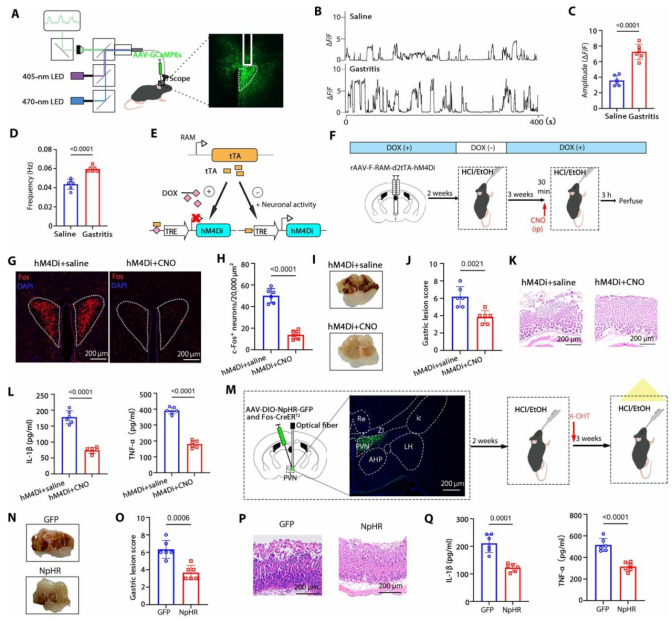
To investigate how gastritis regulates PVN neuronal activity, GCaMP6s was injected into the PVN and fiber photometry-based calcium imaging was performed (Fig. 2A). Three hours after gastritis induction, both the amplitude and frequency of calcium signals in PVN neurons were significantly increased (Fig. 2B–D), indicating enhanced neuronal activity. Using a Tet-Off system to label gastritis-activated FosPVN neurons and drive the expression of chemogenetic effectors (Fig. 2E, F), inhibition of gastritis-activated FosPVN neurons markedly reduced Fos expression within the PVN and alleviated gastric mucosal inflammation (Fig. 2G–L). Optogenetic inhibition further confirmed that suppressing this neuronal population significantly improved gastric mucosal injury (Fig. 2M–Q). In contrast, inhibition of FosPSTh neurons produced only modest anti-inflammatory effects.

Figure 2. FosPVN Neurons Regulate Gastritis
 

Mechanisms by Which FosPVN Neurons Regulate Gastritis

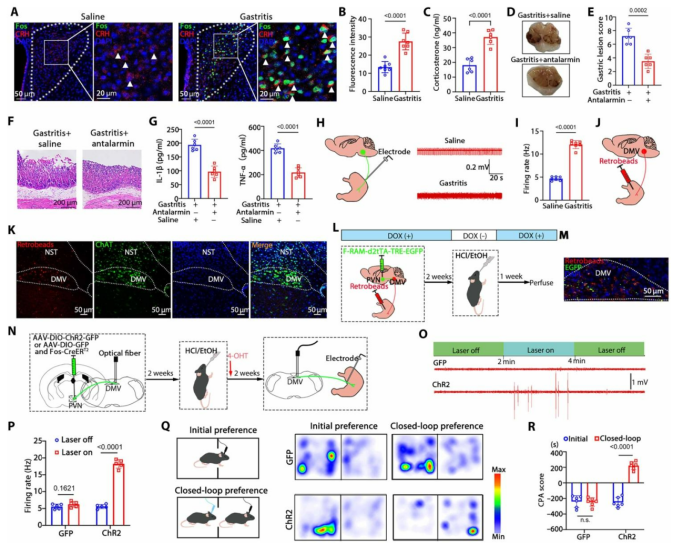
Immunofluorescence analysis showed that FosPVN neurons were predominantly corticotropin-releasing hormone (CRH)-positive neurons. Following gastritis induction, CRH expression in the PVN was significantly increased, accompanied by elevated plasma corticosterone levels (Fig. 3A–C). Intraperitoneal administration of the CRH receptor antagonist antalarmin markedly reduced gastric inflammation (Fig. 3D–G), suggesting that FosPVN neurons regulate gastritis through the hypothalamic–pituitary–adrenal (HPA) axis.

Electrophysiological recordings revealed that the firing frequency of gastric-innervating nerves was significantly elevated in gastritis mice (Fig. 3H, I). Retrograde tracing from the gastric wall combined with immunohistochemistry demonstrated that these neurons were primarily cholinergic neurons located in the dorsal motor nucleus of the vagus (DMV) (Fig. 3J, K). Furthermore, axonal terminals of gastritis-activated Fos+ neurons in the PVN co-localized with gastric wall retrograde tracing signals in the DMV (Fig. 3L, M), providing anatomical evidence for a FosPVN–DMV–stomach neural circuit.

To verify functional connectivity within this circuit, a mixture of AAV-DIO-ChR2-GFP and Fos-CreERT2 viruses was injected into the PVN, and optical fibers were implanted above the DMV (Fig. 3N). Following gastritis induction and 4-OHT labeling, optogenetic stimulation of FosPVN axon terminals in the DMV significantly increased the firing frequency of gastric nerves in the ChR2 group (Fig. 3O, P), confirming functional connectivity of the circuit. In a conditioned place aversion (CPA) assay, optogenetic activation of FosPVN neurons induced environmental aversion behavior in mice (Fig. 3Q, R), suggesting a role in the regulation of negative emotional states.

Figure 3. FosPVN Neurons Regulate Gastritis Through the HPA Axis and Validation of the FosPVN–DMV Circuit
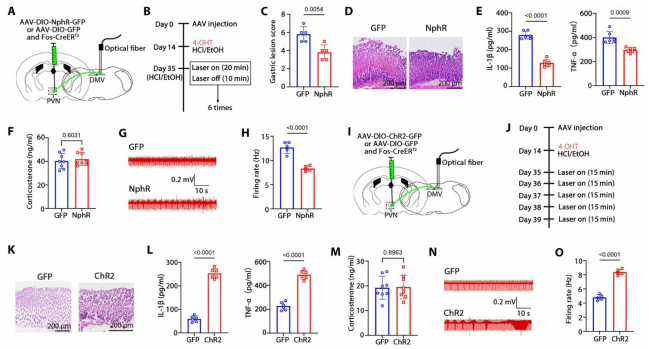
Further investigation of the FosPVN–DMV circuit demonstrated that optogenetic inhibition of FosPVN axon terminals within the DMV alleviated gastric inflammation and reduced gastric nerve firing frequency without affecting corticosterone levels (Fig. 4A–H). Conversely, activation of these terminals induced mild gastritis and enhanced gastric nerve activity, while similarly producing no changes in corticosterone or circulating inflammatory cytokine levels (Fig. 4I–O). Collectively, these findings indicate that FosPVN neurons regulate gastritis through two complementary pathways: the FosPVN–DMV–stomach neural circuit and the HPA axis.

Figure 4. FosPVN Neurons Regulate Gastritis Through the FosPVN–DMV Circuit


Repeated Activation of FosPVN Neurons Induces Chronic Gastritis

To investigate the effects of sustained abnormal activation of FosPVN neurons on chronic gastritis, rAAV-F-RAM-d2tTA-hM3Dq-mCherry was bilaterally injected into the PVN of mice. Two weeks after viral expression, gastritis was induced and Fos-positive neurons activated during this period were labeled. After a 3-week recovery period, mice were intraperitoneally injected with either CNO or saline on days 2–5 (Fig. 5A). In the saline group, Fos-positive PVN neurons rapidly declined after gastritis induction (minimal expression at 24 h, almost gone at 48 h). In contrast, CNO-mediated activation of FosPVN neurons maintained high Fos expression for an extended period (still abundant at 48 h and 96 h) (Fig. 5B, C).

In the experimental group, gastric wall structure was disrupted, inflammatory cytokines, corticosterone, and gastric nerve firing were significantly elevated, with no notable differences between 48 h and 96 h (Fig. 5D–I), suggesting that FosPVN neuron activation primarily initiates inflammatory responses rather than delaying recovery. After complete resolution of gastritis, optogenetic activation of FosPVN neurons for 5 consecutive days in the activation group resulted in disordered gastric wall cell arrangement, increased inflammatory cytokines, and enhanced gastric nerve firing, while serum inflammatory markers remained unchanged (Fig. 5J–O). Overall, repeated activation of FosPVN neurons specifically induces persistent chronic gastritis, mainly via local inflammatory responses rather than systemic inflammation.

Figure 5. Repeated Activation of FosPVN Neurons Induces Chronic Inflammation
 

snRNA-seq Identifies Hcn1 as a Key Regulatory Factor of FosPVN Neurons

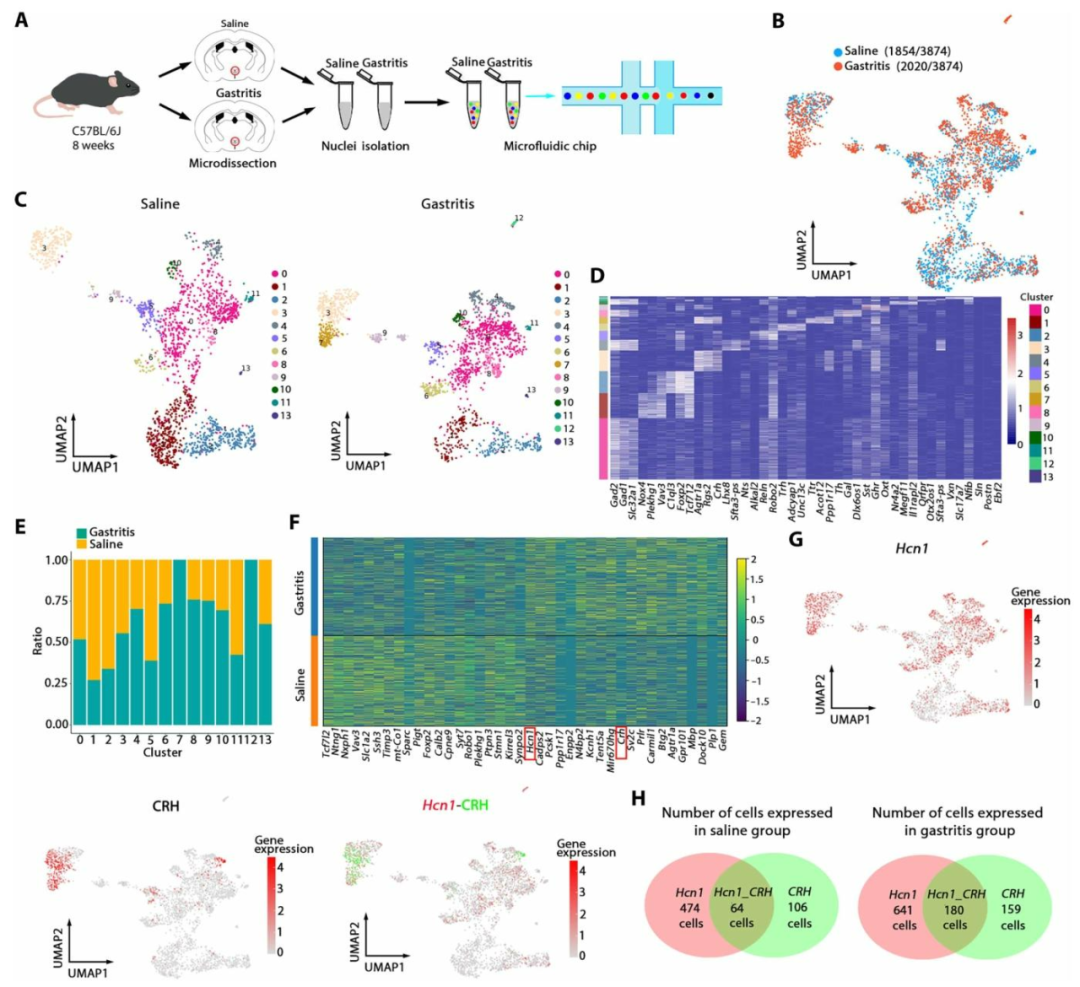
Single-nucleus RNA sequencing (snRNA-seq) was performed on PVN tissue from control and gastritis mice (Fig. 6A). PVN neurons were classified into 15 subpopulations, and Fos-positive neurons were further subdivided into 13 subpopulations (Fig. 6B, C). Heatmaps showed marker genes for each subpopulation (Fig. 6D), with significant differences in subpopulation proportions between the two groups (Fig. 6E). Differentially expressed genes were involved in multiple biological processes. Among the top 30 differentially expressed genes, Hcn1 and CRH were significantly upregulated in gastritis mice (Fig. 6F), with the proportion of Hcn1 co-localized in CRH neurons increasing from 38% in controls to 53% in gastritis (Fig. 6G, H).

Figure 6. snRNA-seq Analysis Identifies Differentially Expressed Gene Hcn1

 
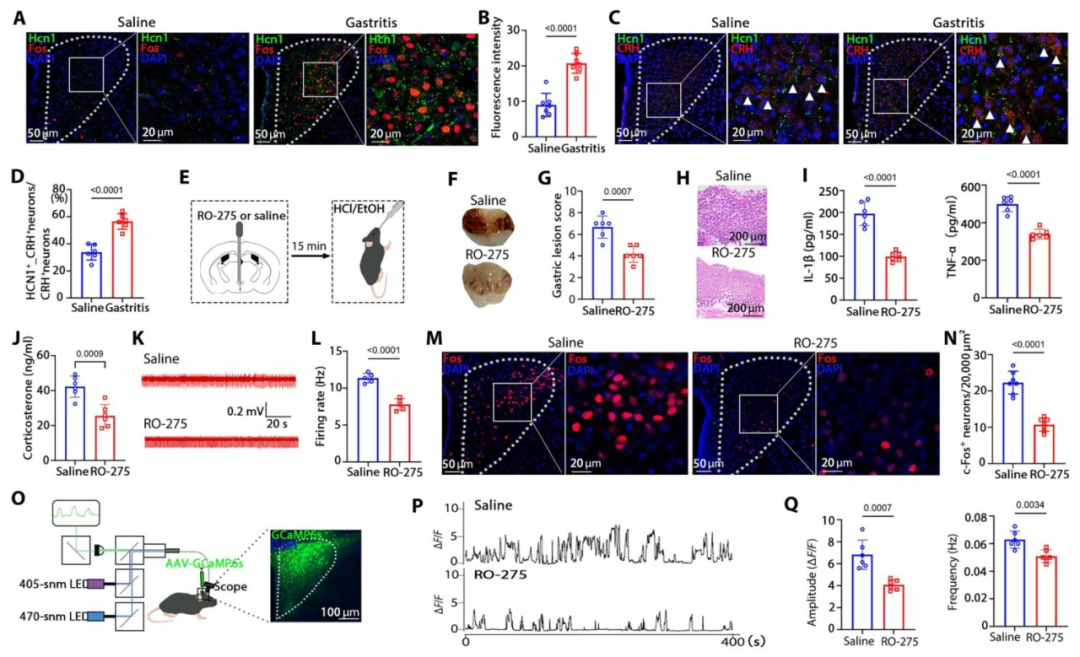
Immunofluorescence confirmed that both Hcn1 expression and Hcn1–CRH co-localization were significantly increased in gastritis mice (Fig. 7A–D). Injection of the Hcn1 inhibitor RO-275 into the PVN (Fig. 7E) markedly alleviated gastritis (Fig. 7F–I), and significantly reduced plasma corticosterone, gastric nerve firing, Fos expression in the PVN, and calcium activity (Fig. 7J–Q). Collectively, these results indicate that Hcn1 is a critical regulator of FosPVN neuronal activity.

Figure 7. Hcn1 Is a Key Regulatory Factor of FosPVN Neurons


Stress Exacerbates Gastritis via FosPVN Neurons

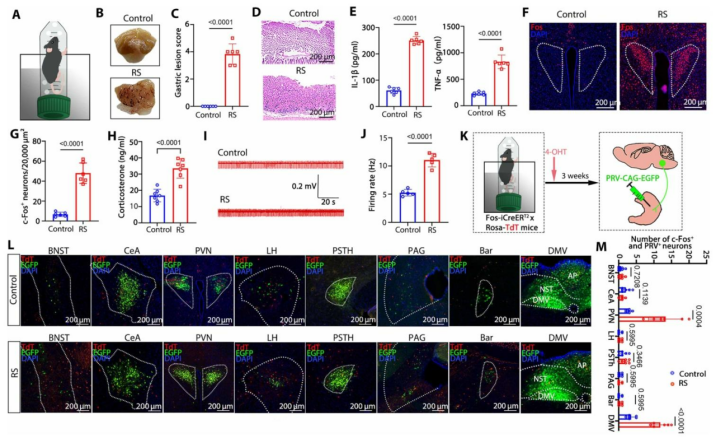
Water-immersion restraint stress (RS) was used to investigate the effect of stress on gastritis (Fig. 8A). RS mice exhibited anxiety-like behavior, gastric mucosal hemorrhage, disrupted cell arrangement, increased gastric inflammatory cytokines, elevated corticosterone levels, and enhanced gastric nerve firing, along with pronounced PVN neuronal activation (Fig. 8B–J). Using Fos-CreERT2 × Rosa-TdT mice combined with PRV retrograde trans-synaptic tracing from the gastric wall, RS was shown to strongly activate FosPVN neurons and increase their projections to the gastric wall (Fig. 8K–M).

Figure 8. RS Induces PVN Neuronal Activation
 
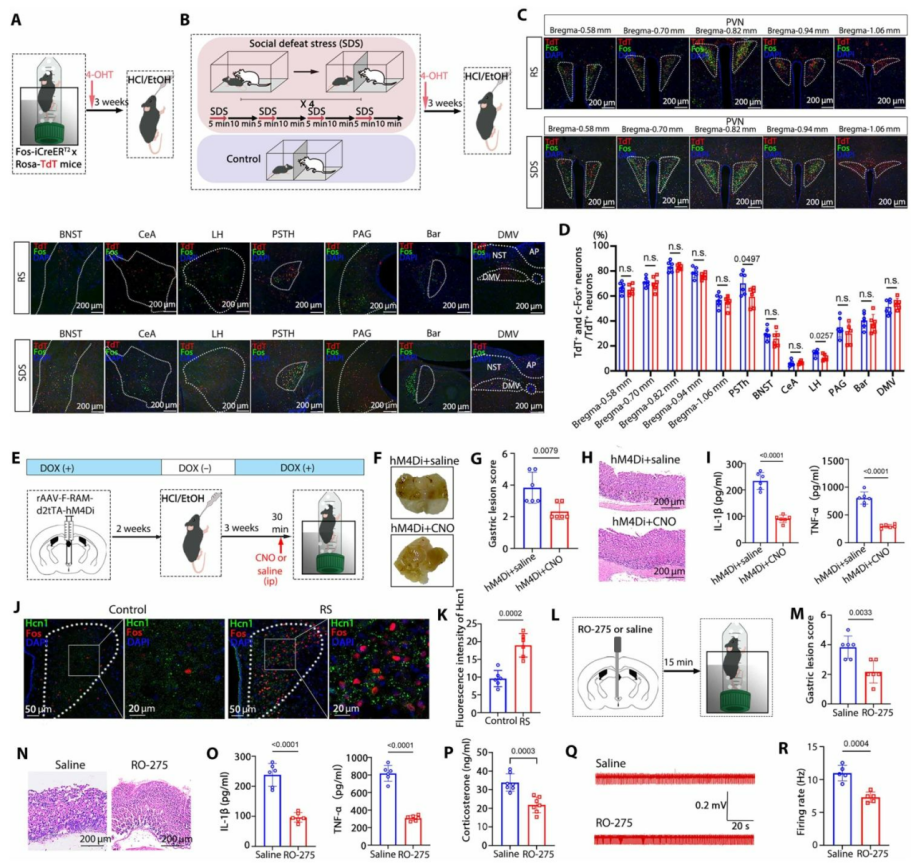
Comparing the overlap between stress- and gastritis-activated neurons, both water-immersion restraint stress and social defeat stress (SDS) reactivated approximately 80% of gastritis-associated FosPVN neurons (Fig. 9A–D), suggesting that psychological stress can reactivate gastritis-encoding circuits. Inhibition of FosPVN neurons during stress reduced gastric inflammation (Fig. 9E–I). Immunofluorescence showed that Hcn1 expression was upregulated in stressed mice (Fig. 9J, K), and PVN-targeted Hcn inhibition alleviated stress-induced gastritis while reducing corticosterone levels and gastric nerve firing (Fig. 9L–R). Together, these findings indicate that water-immersion restraint stress exacerbates gastric inflammation by activating FosPVN neurons.

Figure 9. Stress Exacerbates Gastritis via Activation of FosPVN Neurons
 

Summary

This study systematically demonstrates that FosPVN neurons bidirectionally regulate gastritis through both the neuroendocrine HPA axis and the PVN–DMV–stomach neural circuit. Chronic activation of these neurons induces inflammatory sensitization and promotes the progression of chronic gastritis. Hcn1 serves as a key regulatory molecule, and psychological stress can reactivate these neurons to exacerbate inflammation. These findings provide new insights and experimental evidence for understanding the central regulation of gastric inflammation and for developing targeted therapies for chronic gastritis.

Tools Used in This Study (Available from Brain Case Biotech)

Product Category Product Number Product Name
Calcium Imaging BC-0077 rAAV-hSyn-GCaMP6s
Chemogenetics BC-2434 rAAV-F-RAM-d2tTA-TRE-hM3D(Gq)-mCherry
Optogenetics BC-0107 rAAV-EF1α-DIO-hChR2(H134R)-EYFP
BC-0125 rAAV-EF1α-DIO-eNpHR3.0-EYFP
Fluorescent Proteins BC-2640 rAAV-F-RAM-d2tTA-TRE-mCherry
Recombinases BC-3390 rAAV-cFos-iCre-ERT2
Retrograde trans-synaptic BC-PRV-531 PRV-CAG-EGFP
 
Brain Case Biotech also offers various custom services.
Please contact
bd@ebraincase.com 
for more information.

Service Type :

Select the service you'd like to purchase.

Order Information(Premade-AAVs)

Please provide us some information about the service you'd like to order.

How did you hear about BrainCase Biotech or our products?(Fill in this field to get a discount coupon)

Detailed requirements:

scroll

Order Information(Custom AAV/Lentivirus)

Please provide us some information about the service you'd like to order.

Gene ID or gene information:

Selection of the reporting gene:

Special Instructions:

scroll

Order Information(Others)

Please provide us some information about the service you'd like to order.

Virus name/Detailed requirements:

scroll

Related products

Customer Article | Sci. Adv. | Jinhao Sun’s Team at Shandong University Unveils: How Does the Brain “Remember” Gastric Inflammation? Hcn1-Dependent PVN Engram Neurons Are the Key!

Customer Article | Sci. Adv. | Jinhao Sun’s Team at Shandong University Unveils: How Does the Brain “Remember” Gastric Inflammation? Hcn1-Dependent PVN Engram Neurons Are the Key!

Sci. Adv. | How Does the Brain Recognize Familiar Individuals? Hao Wang / Gao Chen / Hongbin Yang / Libiao Pan Reveal VGluT2 Neurons Precisely Encode Conspecific Identity, and Exclusive Memories Can Be Reactivated

Sci. Adv. | How Does the Brain Recognize Familiar Individuals? Hao Wang / Gao Chen / Hongbin Yang / Libiao Pan Reveal VGluT2 Neurons Precisely Encode Conspecific Identity, and Exclusive Memories Can Be Reactivated

400+ Customer Publications Collection.

400+ Customer Publications Collection.

Customer Article | Neuron | Neural Code of Social Avoidance: Hai-Tao Wu’s Team Reveals a New Mechanism of Dual Anterior Insula–Prefrontal Cortex Circuit Dialogue

Customer Article | Neuron | Neural Code of Social Avoidance: Hai-Tao Wu’s Team Reveals a New Mechanism of Dual Anterior Insula–Prefrontal Cortex Circuit Dialogue

map
{dede:global.cfg_webname/}

Pre-made AAV Library

CRISPR
RNAi
Neurotropic virus
Optogenetics activation
Biosensors

News

Corporate News
New Product Launch
Test Report
Investor News

Support

Literature interpretation
Customer article
FAQs
Blog
Legal
微信

WhatsApp Business Account

Tel: +8618971215294
E-mail: BD@ebraincase.com

Address:-

Address:-

  • Copyright © 2024 Brain Case All Rights Reserved.