How to Choose the Right Optogenetic Protein for Optogenetics
Release time:2026-04-08 13:58:47
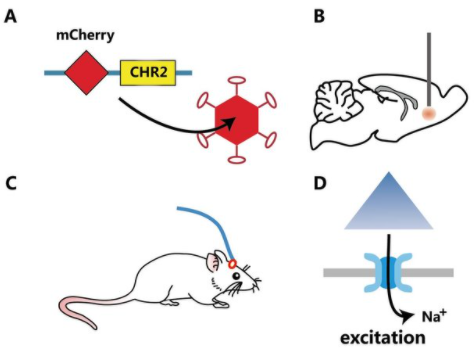
Optogenetics is a commonly used technique in our research on neural circuits, allowing precise control over the activity of specific neurons. This involves introducing exogenous optogenetic proteins into neurons and using specific wavelengths of light to control ion channels.
So, how should we choose the right optogenetic protein? Today, we bring you a related introduction and selection guide. Let’s go through these key tips together!
What is Optogenetics?
Optogenetics combines optical and genetic tools to precisely control the activity of specific neurons. It uses genetic modification techniques to introduce exogenous optogenetic proteins into neurons, expressing light-sensitive channel proteins on the cell membrane. Then, specific wavelengths of light are used to activate or deactivate these channel proteins to control ion channels.
What Are the Applications of Optogenetics?
If your research involves:
1. Optogenetic Electrophysiology: Suitable for in vivo neural circuit functional verification.
2. Optogenetic Patch Clamping: Used for ex vivo neural circuit functional verification to determine whether there is a functional connection between two brain regions.
3. Optogenetic Behavioral Studies: Applied in animal behavior research (including eating behavior, reward behavior, anxiety/depression behaviors, pain behaviors, etc.).
What Are the Main Steps in Optogenetics?
1. Choosing the Right Optogenetic Protein: Select an excitatory or inhibitory optogenetic protein, and then choose the appropriate one based on its characteristics.
2. Transmitting Genetic Information to Target Cells: Use viral transduction to deliver the genetic information of the optogenetic protein to the target cells.
3. Pre-experimentation: Precisely control neuron activity through methods like fiber optics and laser control, while monitoring the efficacy of the optogenetic proteins.
4. Phenotypic Testing: Assess neuron activity and its impact on animal behavior through stimulation or behavioral evaluation.
Thus, selecting the appropriate optogenetic protein is the first and crucial step in optogenetic experiments.
What Are Optogenetic Proteins?
Optogenetic proteins are a class of proteins that respond to light signals and generate physiological reactions. They are divided into six categories: opsins, retinal proteins, photopigments, cryptochromes, photo-oxygen-electric potential-sensing domain proteins, and flavin adenine dinucleotide-containing blue light-sensitive domain proteins. Based on the electrophysiological functions induced by light stimuli, they can be categorized into excitatory and inhibitory optogenetic proteins.
How to Choose the Right Optogenetic Protein?
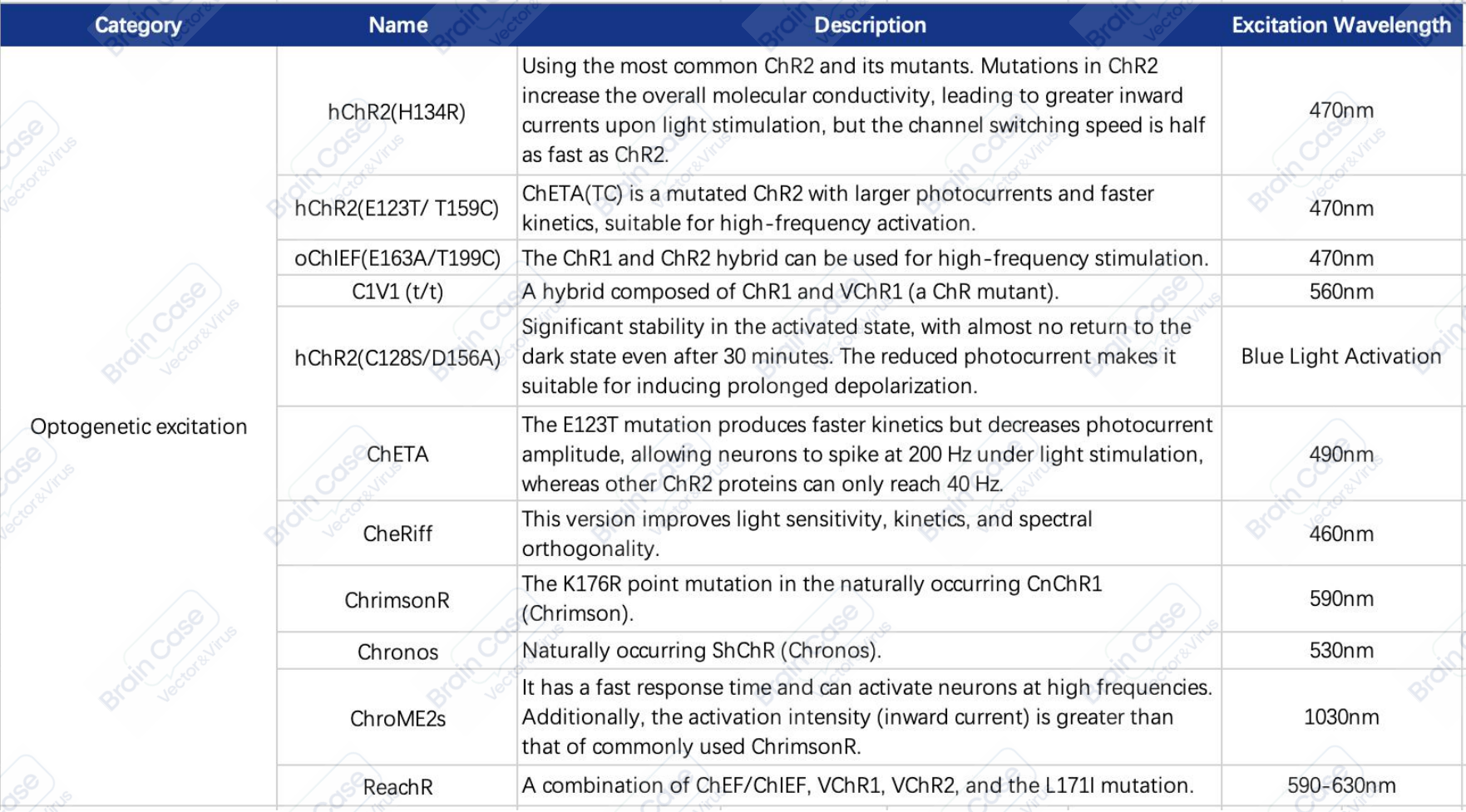
If you need excitatory optogenetic proteins, you can choose:
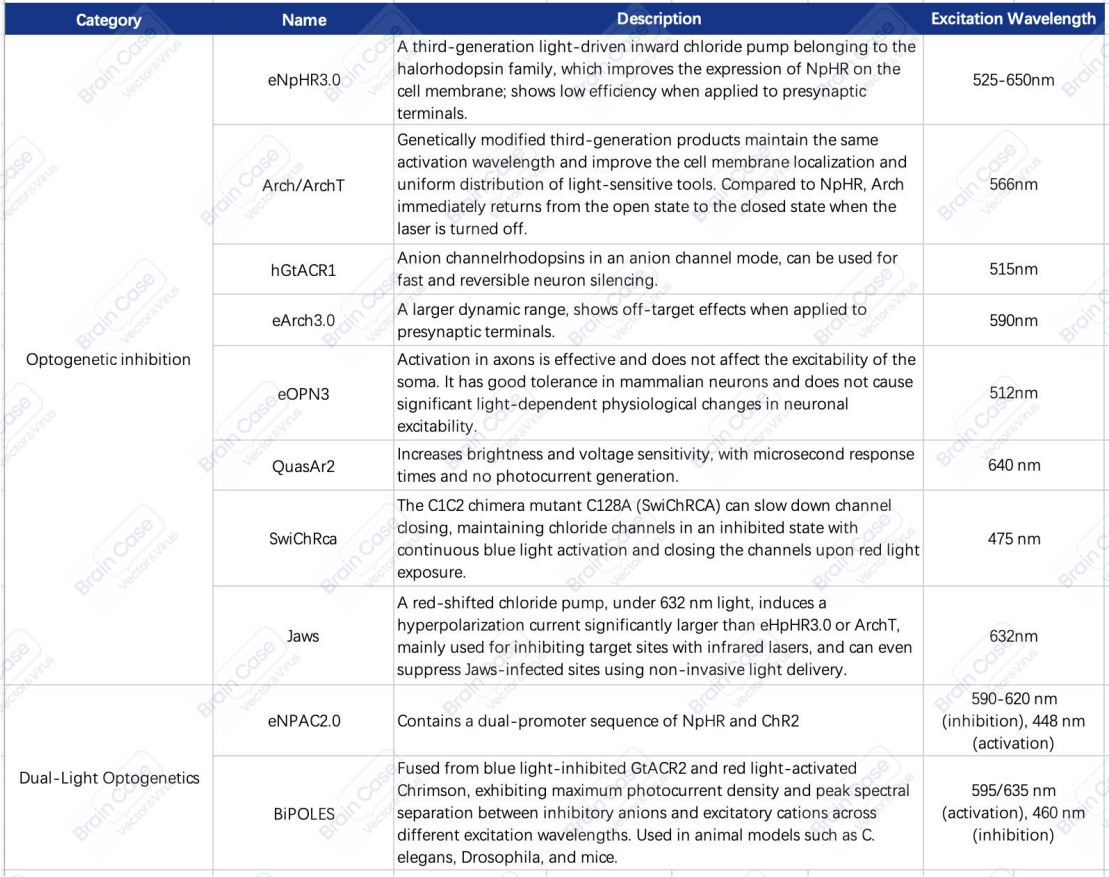
If you need inhibitory optogenetic proteins, you can choose:
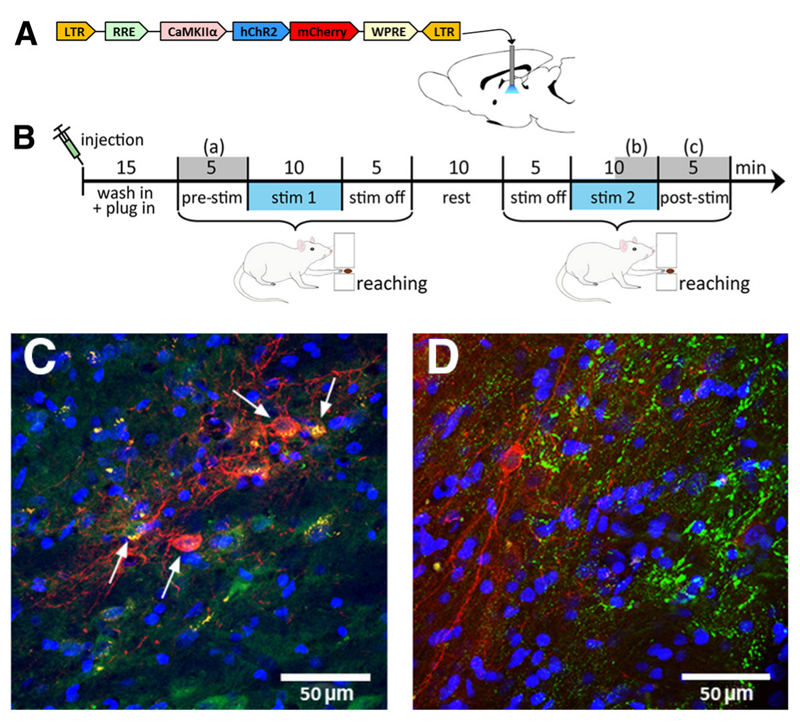
Examlpe
Sonja Seeger-Armbruster, the journal of neuroscience, 2015
If you are interested in the details of the
experiment or possible problems and causes
during the experiment, please contact: BD@ebraincase.com
Service Type :
Select the service you'd like to purchase.
Order Information(Premade-AAVs)
Please provide us some information about the service you'd like to order.
Order Information(Custom AAV/Lentivirus)
Please provide us some information about the service you'd like to order.
Order Information(Others)
Please provide us some information about the service you'd like to order.