Nature Methods | PinkyCaMP: The Brightest, Non-Photoswitchable Red Calcium Indicator Yet!
Release time:2026-05-11 16:07:30
On April 24, 2026, researchers from the University of Cologne (Germany), in collaboration with the University of Tokyo (Japan), Ruhr University Bochum (Germany), and other institutions, published an online paper in Nature Methods titled "PinkyCaMP: an mScarlet-based calcium sensor with enhanced brightness, photostability and multiplexing capabilities." They developed PinkyCaMP, a novel red genetically encoded calcium indicator (GECI) based on mScarlet, featuring ultra-high brightness, excellent photostability, non-blue-light photoswitching, and high signal-to-noise ratio. PinkyCaMP overcomes the major limitations of traditional red GECIs—such as low brightness, susceptibility to photoswitching, and lysosomal aggregation—and is compatible with blue-light optogenetics and multicolor imaging. Its performance has been validated in cultured cells, brain slices, and awake mice in vivo, approaching that of the green GCaMP series, providing a revolutionary tool for multichannel and deep-tissue neural activity imaging.
Genetically encoded calcium indicators (GECIs) are essential tools for imaging neural activity. While green GECIs (e.g., the GCaMP series) are well-established, red GECIs have significant limitations. Traditional red GECIs, such as jRGECO1a and RCaMP3, suffer from:
Low brightness and poor signal-to-noise ratio
Blue-light-induced photoswitching, causing reversible fluorescence changes that interfere with optogenetic experiments
Lysosomal aggregation and poor photostability
Limited tissue penetration and multicolor multiplexing capabilities
2. Design and Construction of PinkyCaMP
(1)Innovative Scaffold: mScarlet was selected as the base due to its high brightness and low photoswitching properties as a red fluorescent protein.
(2)Construction Strategy:
🔹Circularly permuted mScarlet (cpmScarlet)
🔹RS20 peptide fused at the N-terminus and calmodulin (CaM) at the C-terminus
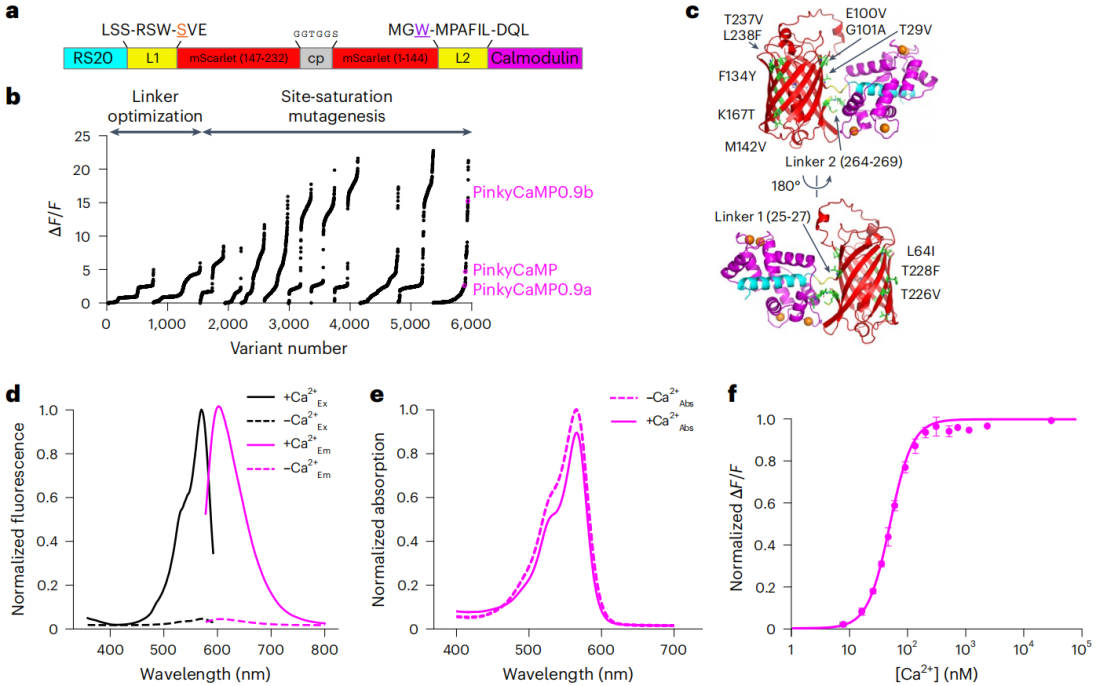
🔹12 rounds of directed evolution, screening approximately 6,000 variants
🔹Final selection: PinkyCaMP0.9c, named PinkyCaMP
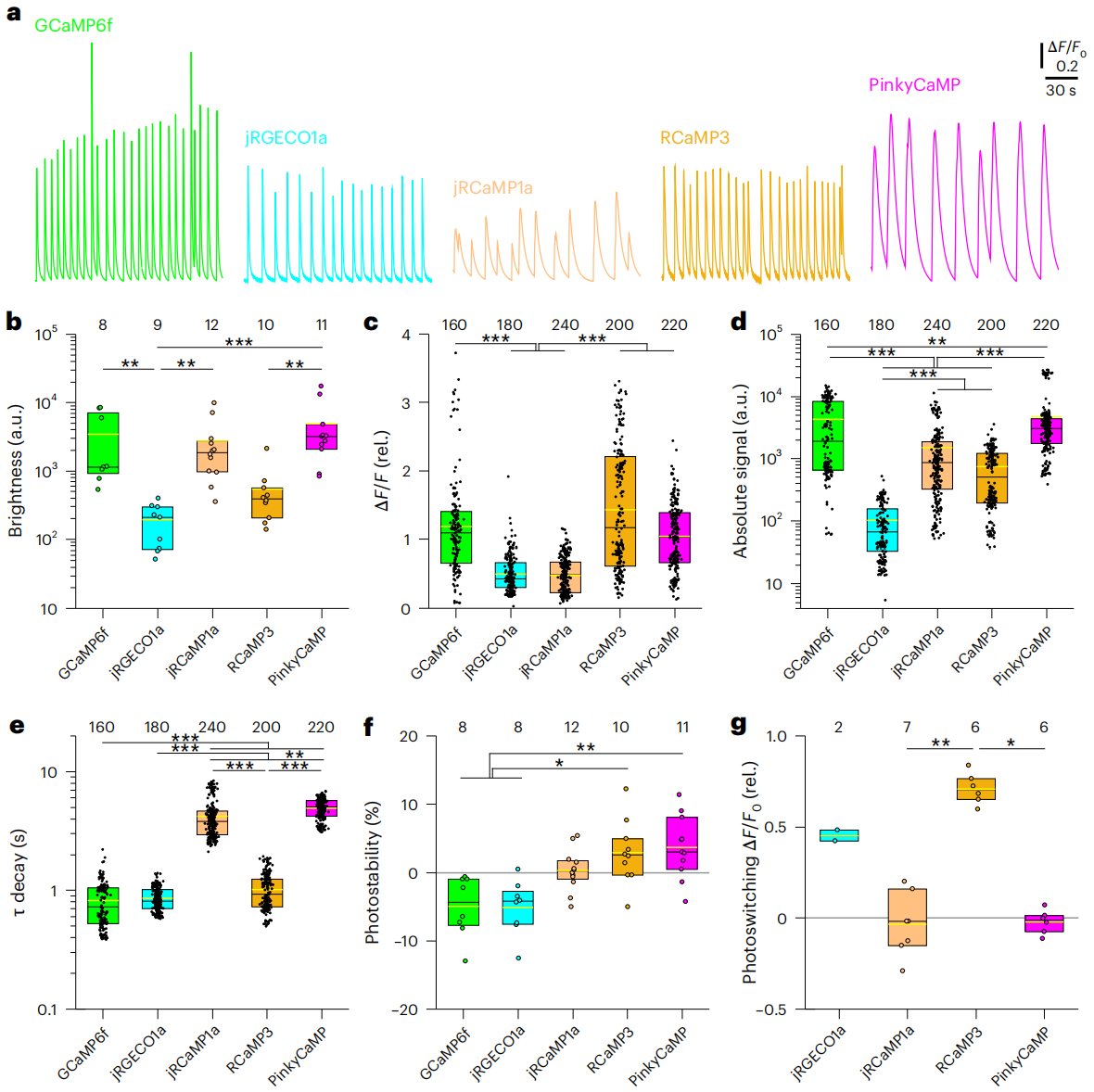
Figure 1 | Development and characterization of PinkyCaMP
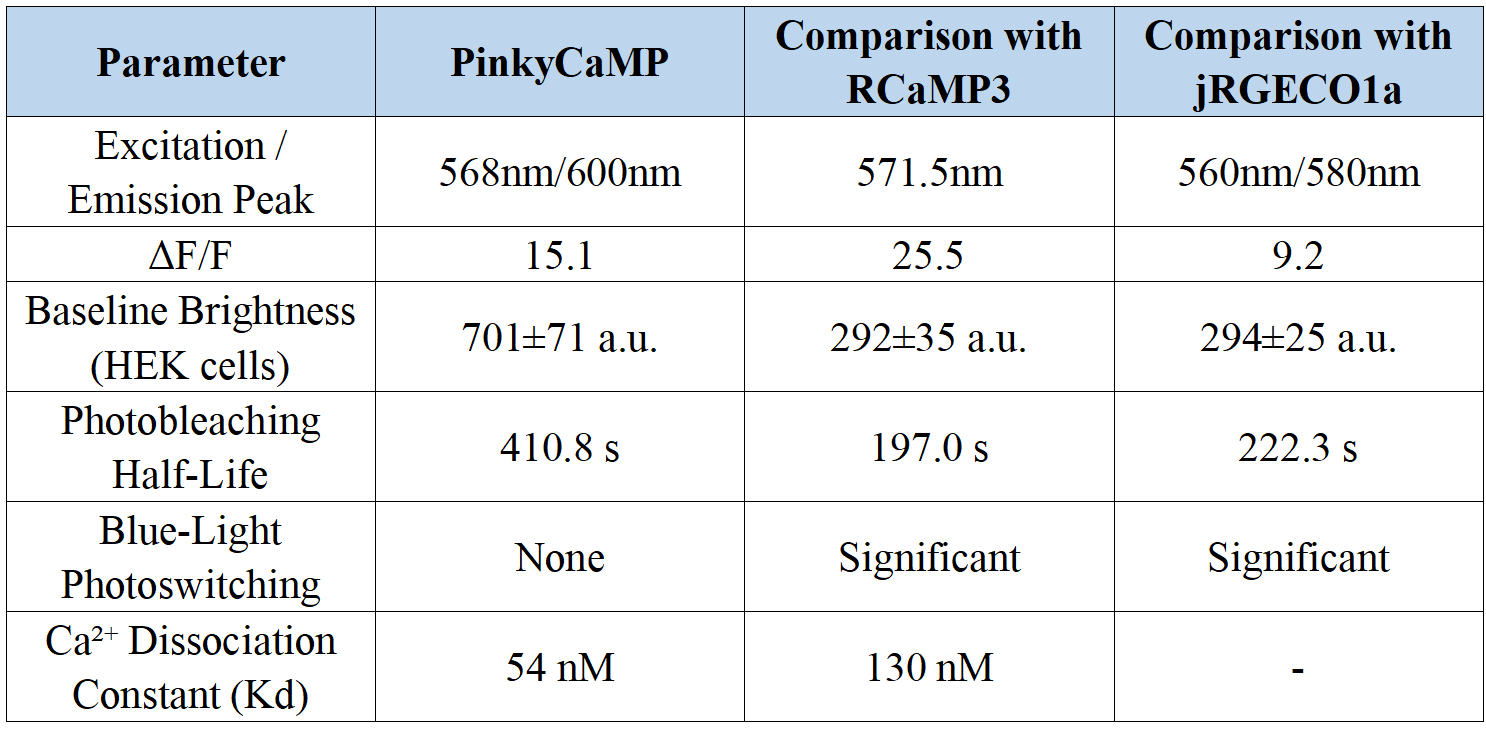
3. Key Physicochemical and Optical Properties (Critical Data)
4. Multi-Level Functional Validation
(1). In Vitro Cellular Level
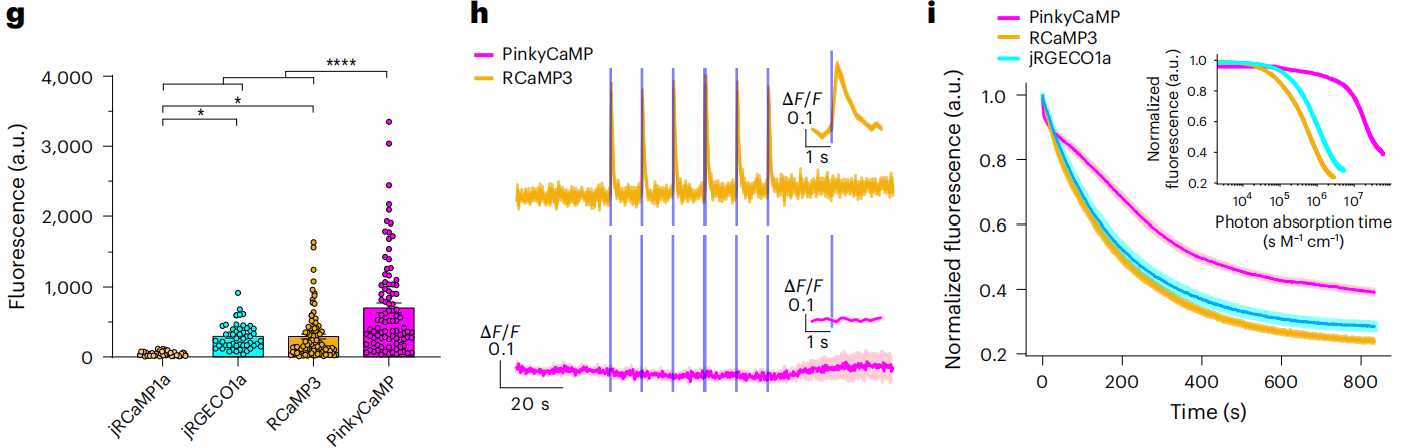
HEK293T cells: Brightness 2.4× higher than RCaMP3, with no photoswitching.
Figure 2 | Basic characterization of PinkyCaMP in cultured cells
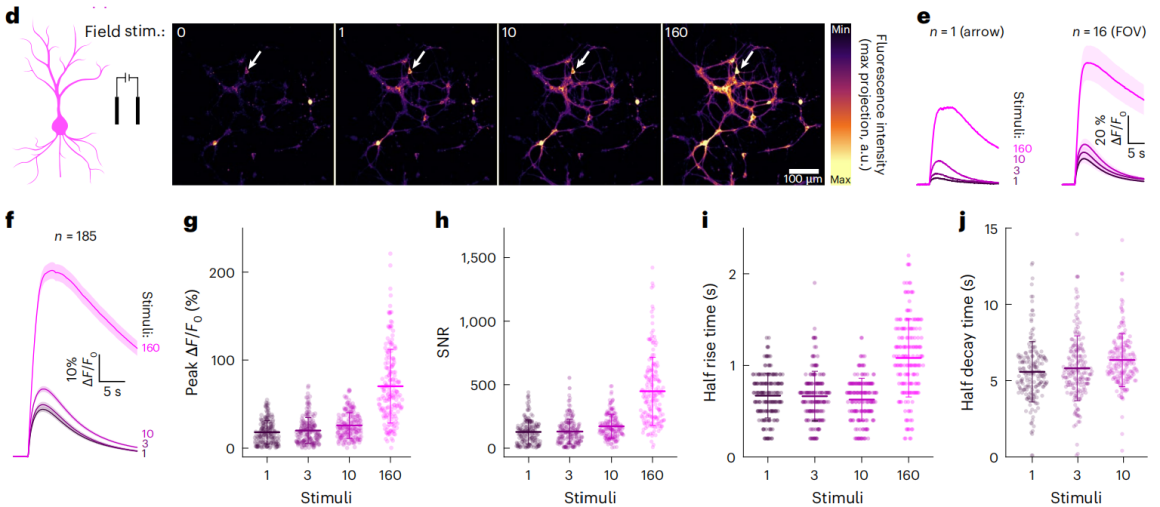
Mouse hippocampal neurons: Single-stimulus ΔF/F = 18 ± 1%, with a signal-to-noise ratio (SNR) up to 129 ± 7.
Figure 3 | Characterization of PinkyCaMP in cultured neurons
(2). Ex Vivo Brain Slice Level
Cortical organotypic slices: Baseline brightness and absolute signal intensity surpass all red GECIs, comparable to GCaMP6f.
Figure 4 | Comparison of PinkyCaMP with other GECIs in cortical organotypic slices
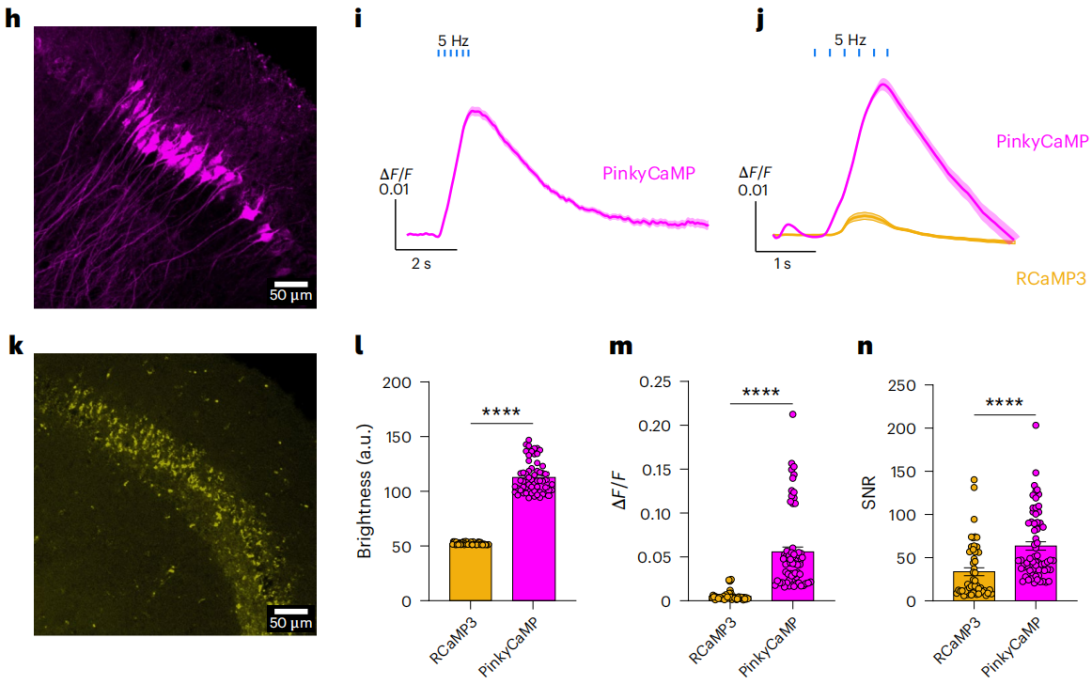
Acute hippocampal slices: Brightness 2× that of RCaMP3, with SNR = 63.5 ± 7.9 (RCaMP3: 33.7 ± 4.8).
Figure 5 | Comparison of PinkyCaMP with other GECIs in acute brain slices
(3). In Vivo Animal Level
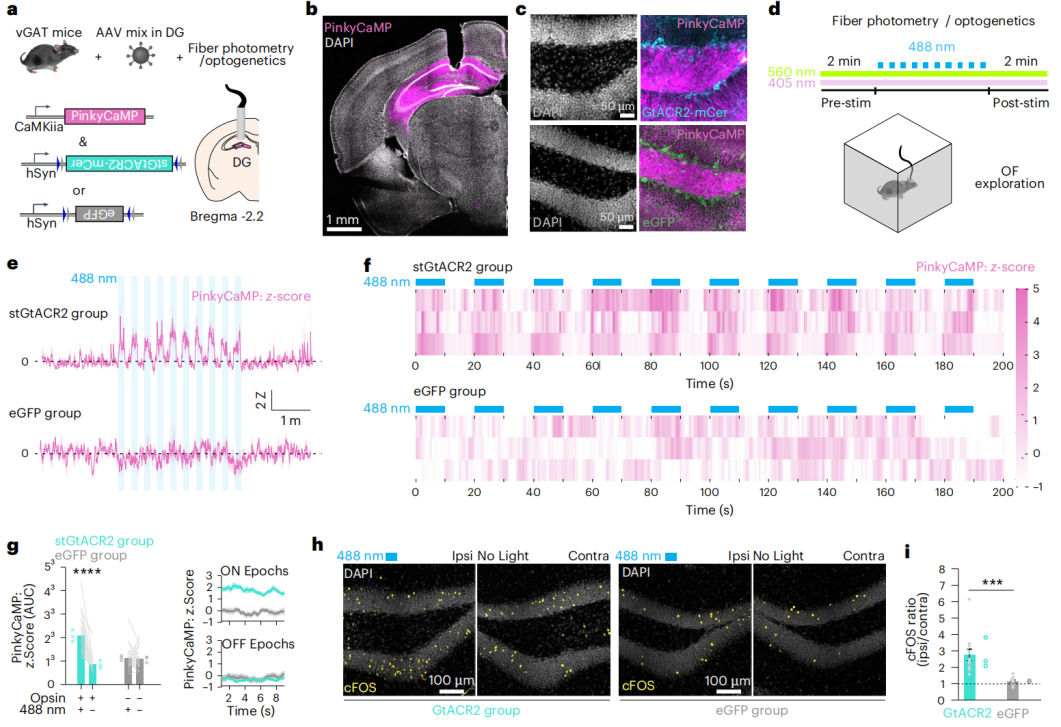
Fiber photometry: Calcium signals in the prefrontal cortex and dentate gyrus are clear, compatible with blue-light optogenetic control without interference.
Figure 6 | Integration of PinkyCaMP with blue-light-sensitive optogenetic techniques
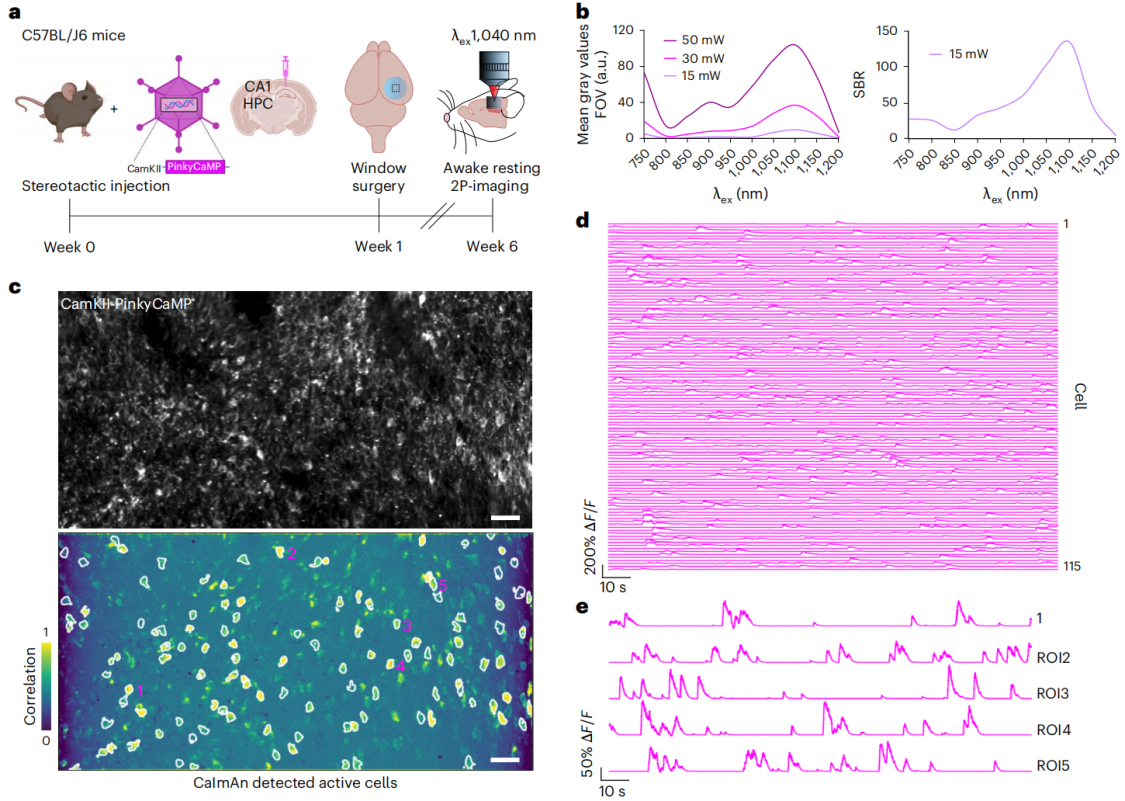
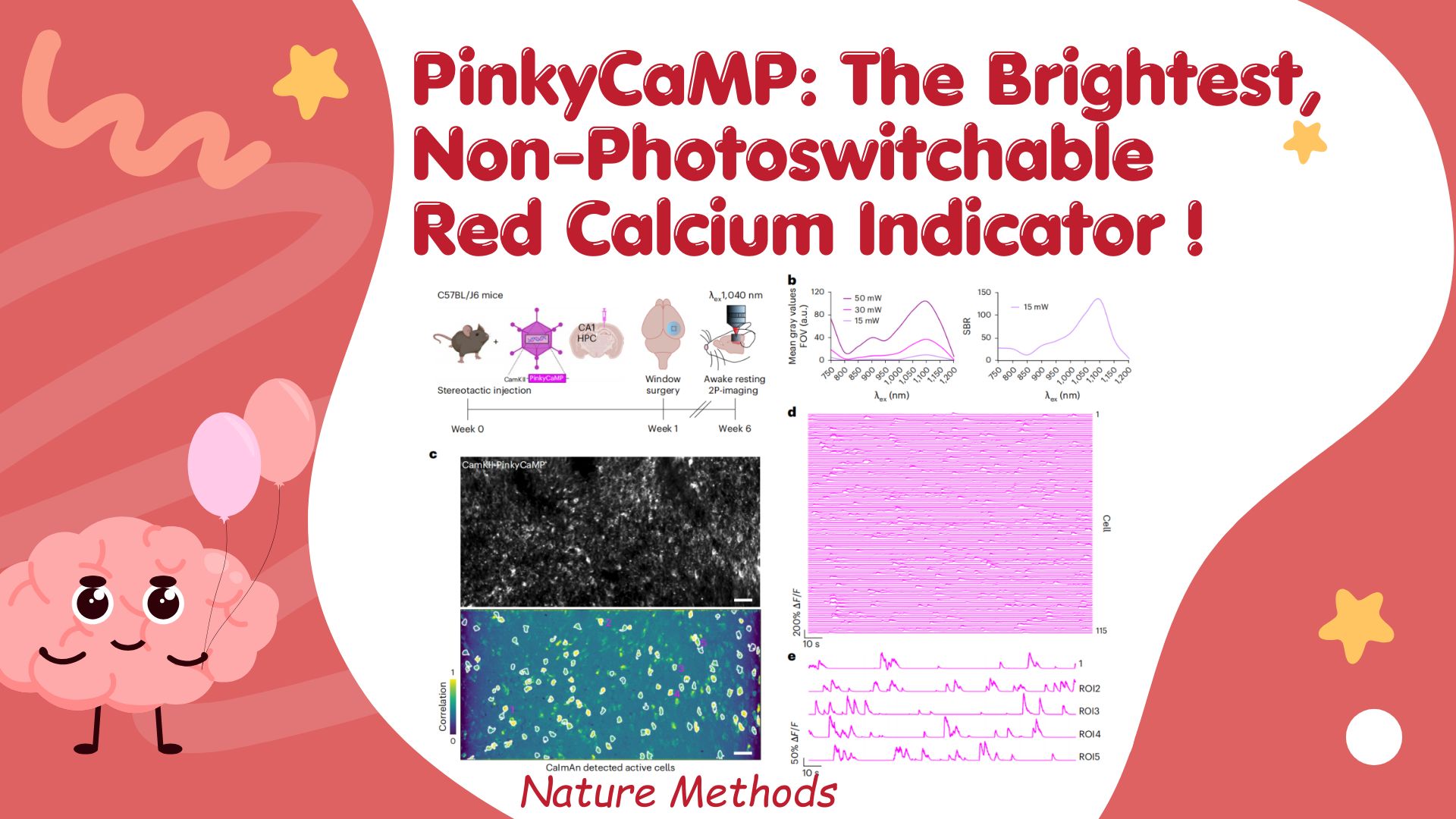
Two-photon imaging: Excitation at 1040 nm allows recording of CA1 hippocampal neurons in awake, head-fixed mice.
Figure 7 | Two-photon imaging of PinkyCaMP in freely moving mice
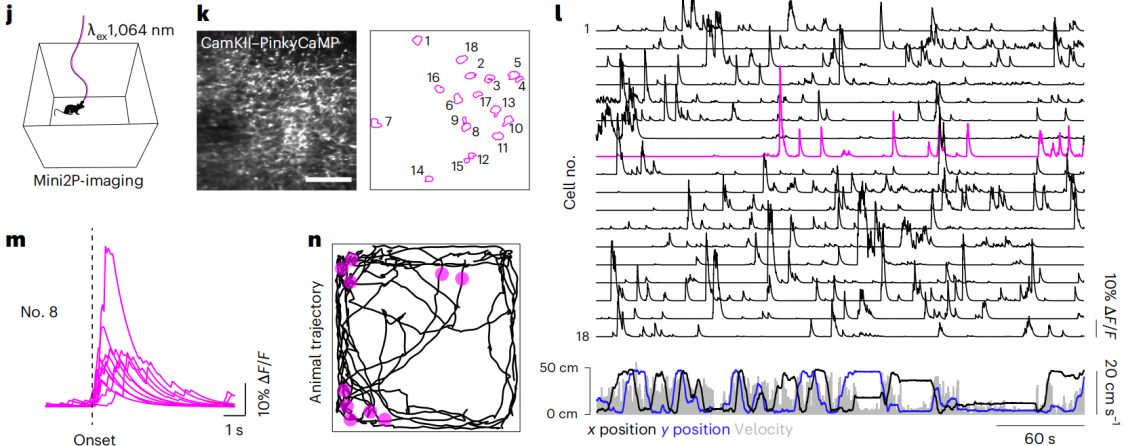
Miniature microscopy: Single- and two-photon imaging in freely moving mice is stable and reliable.
Figure 8 | Compatibility of PinkyCaMP with miniature microscope imaging systems
(4). Multicolor Multiplexing Capability
🔹Combined with GCaMP8s: Excitatory and inhibitory neurons can be labeled separately with minimal crosstalk.
🔹Combined with sDarken (serotonin sensor): Allows simultaneous recording of Ca²⁺ and serotonin.
🔹Combined with blue-light opsins (stCoChR/stGtACR2): Enables all-optical manipulation and recording without artifacts.
5. Advantages and Limitations
(1). Key Advantages
🔹One of the brightest red GECIs in the world, with brightness approaching that of the GCaMP series
🔹Completely free of blue-light photoswitching, compatible with all-optical experiments