E-mail:BD@ebraincase.com
Tel:+8618971215294
English 中文版
Pioneering Innovation in Gene Vector Research - BrainCasePioneering Innovation in Gene Vector Research - BrainCase
  • Home
  • Pre-made AAV Library
    CRISPRRNAiHSV-helperRV-helperNeurotropic virusCalcium SensorsOptogenetics activationOptogenetics inhibitionChemical geneticsSparse labelingFluorescent proteinBiosensorsRecombinaseApoptosis & AutophagyDisease ModelNeurotoxicityOther
  • Products & Service

    Product Center

    Virus

    Vesicular Stomatitis Virus-VSV
    RCAS-TVA
    Lentivirus
    Rabies Virus-RABV
    Herpes simplex virus-HSV
    Pseudorabies virus-PRV
    Adeno-Associated Virus-AAV
    Neurotropic virus list
    Baculovirus

    Kits & Regents

    EndoFree Plasmid Maxi Kit
    Lentivirus Concentration Kit
    VESSL Exosome Solutions

    Plasmid Construction & Vector cloning

    Lentiviral Vector
    AAV Vector
    Plasmid
    Plasmid Library

    Popular Applications

    Gene Regulation

    Gene Overexpression-Brain Case
    RNA interference(RNAi)-siRNA-Brain Case
    Gene Editing - CRSIPR cloning - BrainCase

    Neural Circuit Function Research

    Optogenetics - BrainCase
    Chemical genetics-DREADDs-Brain Case
    Calcium signal recording-Gels- Brain Case
    GRAB Neurotransmitter Fluorescent Sensor- Brain Case
    Functional Magnetic Resonance Imaging Technology- Brain Case

    Research on the structure of neural circuits

    Direct Input and Output-viral vectors- Brain Case
    Anterograde Mono-synaptic Tracing -HSV- Brain Case
    Antrograde Muti-synaptic Tracing-HSV & VSV-Brain Case
    Retrograde Mono-synaptic Tracing-Rabies Virus-Brain Case
    Retrograde Muti-synaptic Tracing-PRV-Brain Case

    Featured Services

    Experiment Service

    Research Services | Neural Circuit Tracing + Targeted Spatial Omics + Neuronal Classification Analysi
    BrainCase Biotech| Whole-Brain Transparency Imaging and Analysis Services

    AAV Serotype Screening

    AAV Serotypes screening-gene therapy

    Collaboration Products

    Kiryl Piatkevich lab
    Yulong Li lab
    Zhifei Fu lab
    Woo-ping Ge lab

    Oncolytic Virus Modification

    Oncolytic virus-for cancer therapy-Brain Case
    Herpes Virus Vector-anti-tumor- BrainCase
    Vesicular stomatitis virus-killing tumor cells-Brain Case
  • News
    Corporate News New Product Launch Test Report Investor News
  • Support
    Literature interpretation Customer article FAQs Blog Legal
  • About Us
    Pre-made AAV Library Products & Service News Support About Us Contact
  • Contact
    Contact Us Join us
  • 中文
    English 中文版
  • Home
  • Support
  • Customer article
  • Support
  • Literature interpretation
  • Customer article
  • FAQs
  • Blog
  • Legal

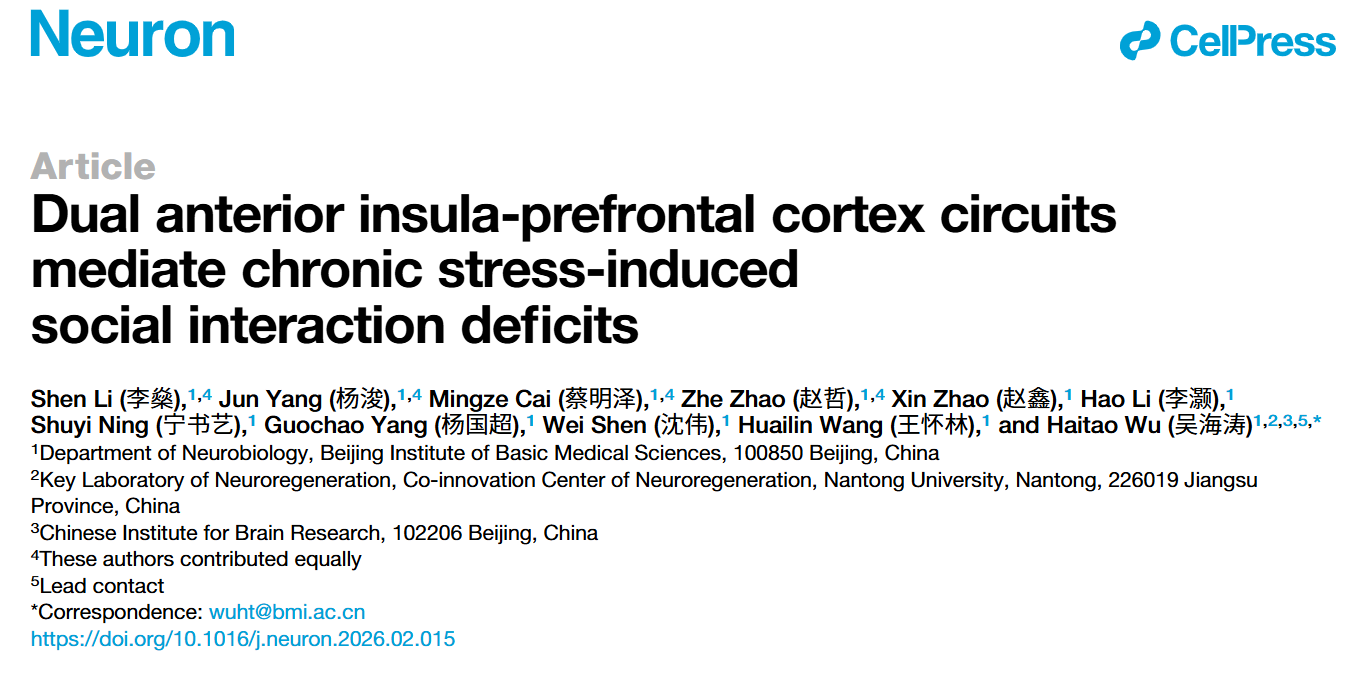
Customer Article | Neuron | Neural Code of Social Avoidance: Hai-Tao Wu’s Team Reveals a New Mechanism of Dual Anterior Insula–Prefrontal Cortex Circuit Dialogue

Release time:2026-05-13 11:55:23
Chronic social stress can impair social function, yet the precise neural mechanisms underlying its effects on social behavior remain unclear. Chronic emotional stress (CES) induces phenotypes in mice such as social avoidance and loss of preference for social novelty. Both the insular cortex and prefrontal cortex are involved in social and emotional regulation. The prefrontal cortex is particularly rich in oxytocin receptors, which can selectively modulate social memory, but its role under stress is still not fully understood.

https://doi.org/10.1016/j.neuron.2026.02.015
 
On March 26, 2026, Professor Hai-Tao Wu’s team at the Academy of Military Medical Sciences published a study in Neuron titled Dual anterior insula-prefrontal cortex circuits mediate chronic stress-induced social interaction deficits. The study revealed that chronic stress impairs social behavior through dual circuits: overactivation of the AIDCaMKIIα→FrA pathway, composed of glutamatergic neurons in the dorsal anterior insula (AID), drives social fear. Excitation of parvalbumin (PV)-positive interneurons in the anterior insula exerts lateral inhibition on the AIV→PrL pathway projecting from the ventral anterior insula (AIV) to the prelimbic cortex (PrL), while simultaneously downregulating oxytocin receptor signaling in the PrL. Together, these mechanisms lead to deficits in social novelty preference. Inhibition of the AID→FrA pathway, activation of the AIV→PrL pathway, administration of oxytocin receptor agonists, or inhibition of PV interneurons all reversed the social deficits.

This study not only elucidates the dual-circuit mechanism by which chronic stress disrupts social behavior but also provides precise circuit and molecular targets for therapeutic intervention in social withdrawal associated with psychiatric disorders such as social anxiety and depression.


Part 01 | CES Induces Differential Neural Activity Patterns in AID and AIV of Susceptible and Resilient Mice

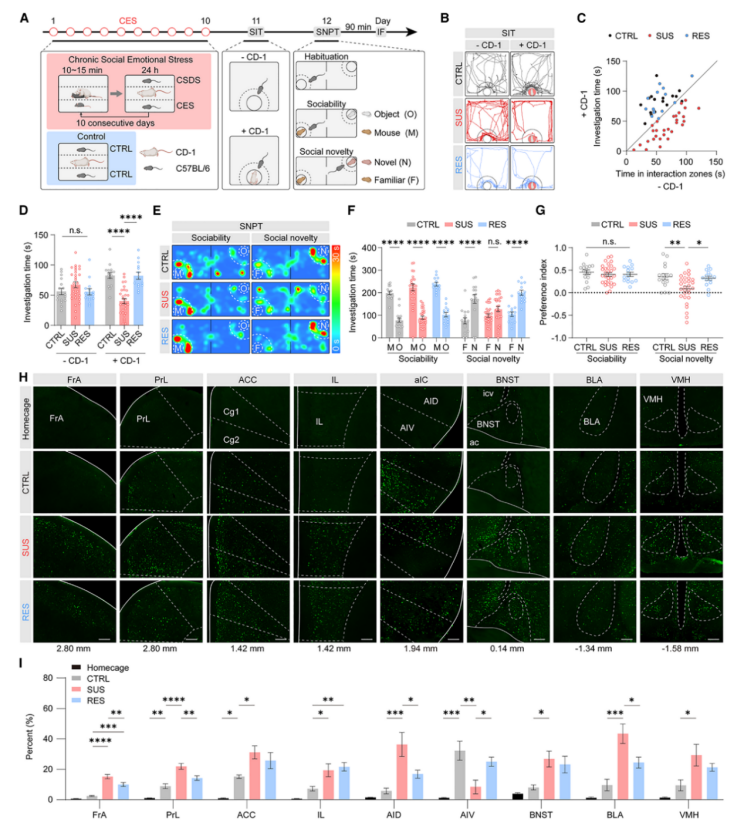
In this study, male C57BL/6J mice were subjected to 10 consecutive days of chronic emotional stress (CES) using a modified stress paradigm. Each day, the observer mice were exposed to attacks by a CD1 intruder for 10–15 minutes. This paradigm imposed only indirect emotional stress on the observer mice, without any physical contact. Control mice were housed under the same conditions but without exposure to intruders (Figure 1A).

Based on social interaction ratios in the Social Interaction Test (SIT), stressed mice were categorized as susceptible (SUS) or resilient (RES). SUS mice displayed pronounced social avoidance, spending significantly less time sniffing CD1 mice, whereas RES mice showed social preference similar to controls (Figures 1B–D). The Social Novelty Preference Test (SNPT) indicated that all groups retained normal social ability, but only SUS mice lacked preference for a novel stranger, suggesting a deficit in social novelty discrimination (Figures 1E–G).

Analysis of cFos expression across 40 brain regions revealed that, compared with baseline cage-housed mice, control mice showed increased activation in five social-emotion–related regions. In both SUS and RES mice, stress- and anxiety-related brain areas—including the prefrontal cortex, basolateral amygdala, bed nucleus of the stria terminalis, and ventromedial hypothalamus—were further activated. Notably, the anterior insular cortex (aIC) showed differential activation patterns between the two groups: SUS mice exhibited increased activation in the dorsal anterior insula (AID) but decreased activation in the ventral anterior insula (AIV), whereas RES mice showed enhanced activation in both AID and AIV (Figures 1H–I).

Figure 1. CES induces social fear and social novelty deficits in SUS mice


Part 02 | Subtypes and Projection Patterns of AID and AIV Neurons

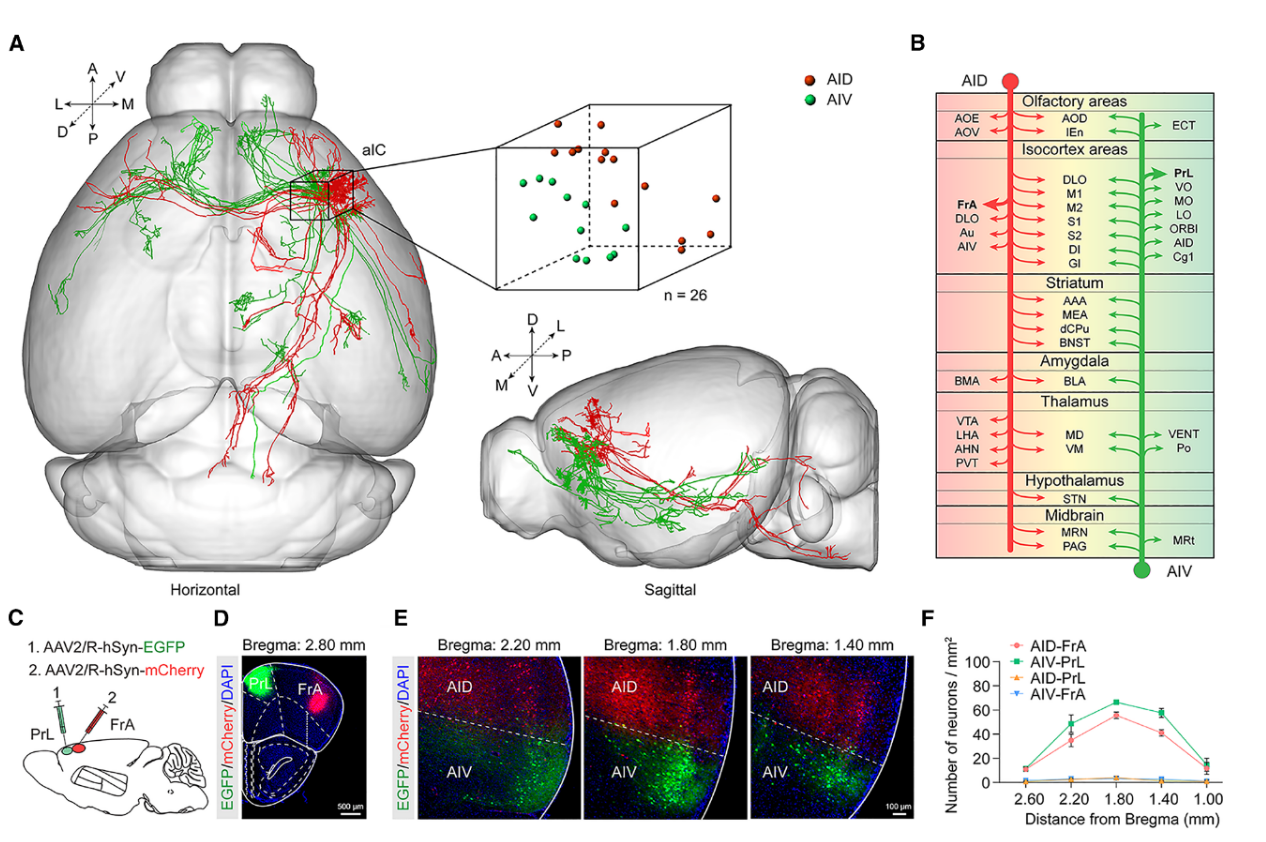
Using fMOST technology, the study reconstructed the dendritic and axonal morphology of 26 neurons in the dorsal anterior insula (AID) and ventral anterior insula (AIV) (Figure 2A). These neurons included CaMKIIα-positive glutamatergic excitatory neurons and GABAergic inhibitory interneurons, exhibiting widespread projections throughout the brain.

Comparison with the Allen Brain Atlas showed that the overall projection patterns of AID and AIV neurons aligned with typical anterior insular cortex connectivity, but notable differences were observed in the prefrontal cortex. AID neurons primarily projected to the frontal association cortex (FrA), whereas AIV neurons mainly projected to the prelimbic cortex (PrL) (Figure 2B).

Retrograde tracing injections into PrL and FrA confirmed these projection patterns (Figure 2C). Neurons projecting to FrA were predominantly located in AID, while those projecting to PrL were largely in AIV, both concentrated in cortical layers 2/3, with minimal labeling in deeper layers (Figures 2D–F). Cross-projection between the two pathways was less than 5%, indicating that these are two parallel and independent neural circuits.

Combining CaMKIIα-Cre::Ai9 and Viaat-Cre::Ai9 reporter mice with CTB-488 retrograde tracing, the study confirmed that these projection neurons were primarily CaMKIIα-positive excitatory neurons. Ultimately, two segregated pathways were identified: AIDCaMKIIα → FrA and AIVCaMKIIα → PrL, suggesting that AID and AIV regulate social behavior via distinct projection-specific circuits.

Figure 2. Subtypes and projection patterns of AID and AIV neurons


Part 03 | Distinct Roles of AIDCaMKIIα → FrA and AIVCaMKIIα → PrL Circuits in Regulating Social Fear and Social Novelty Preference

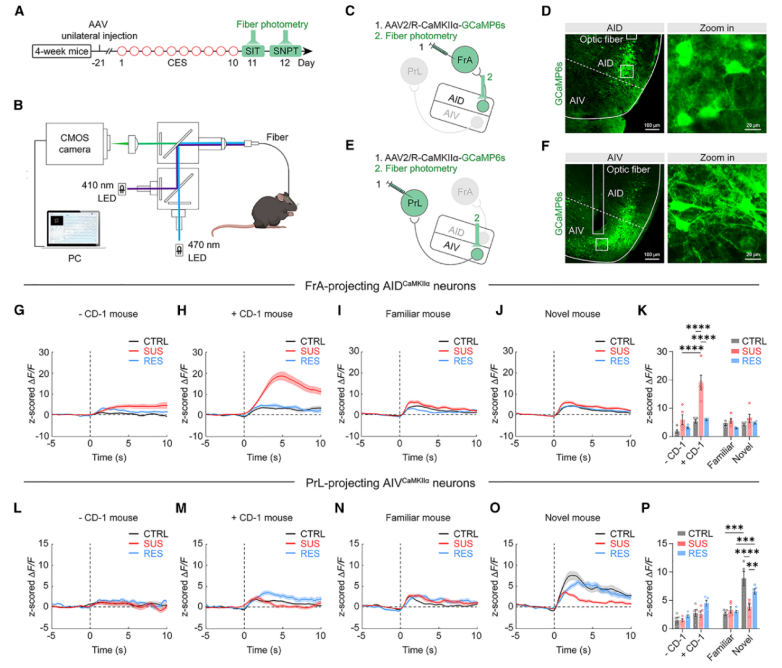
CES induces social fear and impaired social novelty preference in SUS mice. To elucidate the dynamic mechanisms, the study employed in vivo fiber photometry to record activity changes in the AIDCaMKIIα → FrA and AIVCaMKIIα → PrL circuits during social stress and interaction (Figures 3A–B). Retrograde calcium indicator viruses were injected into FrA or PrL, and optical fibers were implanted above AID or AIV, respectively (Figures 3C–F).

The two circuits exhibited pronounced functional segregation: AIDCaMKIIα → FrA neurons in SUS mice were abnormally activated only when approaching fear-conditioned CD-1 mice, mediating social avoidance (Figures 3G–K). In contrast, the AIVCaMKIIα → PrL circuit showed reduced activity in response to novel mice, leading to impaired social novelty preference (Figures 3L–P). Together, these results indicate that the anterior insula–prefrontal cortex (aIC→PFC) network regulates social behavior via circuit-specific reorganization.


Figure 3. Activity changes of AIDCaMKIIα → FrA and AIVCaMKIIα → PrL neurons during social contexts


Part 04 | Chemogenetic and Optogenetic Manipulation of AIDCaMKIIα → FrA and AIVCaMKIIα → PrL Circuits Modulates Social Fear and Social Novelty Preference

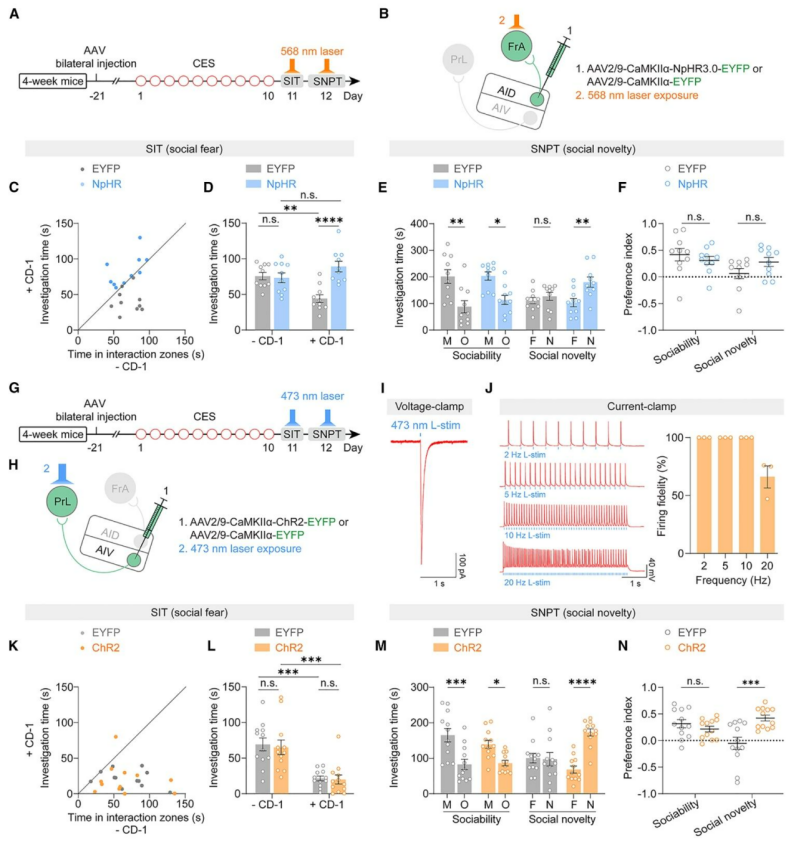
The study further applied chemogenetic and optogenetic bidirectional manipulations to the AIDCaMKIIα → FrA and AIVCaMKIIα → PrL circuits (Figures 4A–B, 4G–H).
🔹Optogenetic inhibition of the AIDCaMKIIα → FrA pathway alleviated both social avoidance and deficits in social novelty preference (Figures 4C–F).
🔹10 Hz activation of the AIVCaMKIIα → PrL pathway selectively restored social novelty preference without affecting fear-related behavior (Figures 4I–N).
Additionally, chemogenetic inhibition of the AIVCaMKIIα → PrL circuit in normal mice selectively impaired social novelty preference but did not affect novel object recognition or locomotion.

These findings demonstrate that CES-induced social fear depends on overactivation of the AID → FrA pathway, whereas deficits in social novelty preference are due to insufficient AIV → PrL activity, confirming functional segregation and imbalance of the two aIC→PFC circuits as a core mechanism underlying stress-related social dysfuncti
on.

Figure 4. Bidirectional optogenetic control of AIDCaMKIIα → FrA and AIVCaMKIIα → PrL circuits regulates stress-induced social deficits
 

Part 05 | Role of the AIV → PrLOXTR Circuit in Modulating Social Novelty Preference

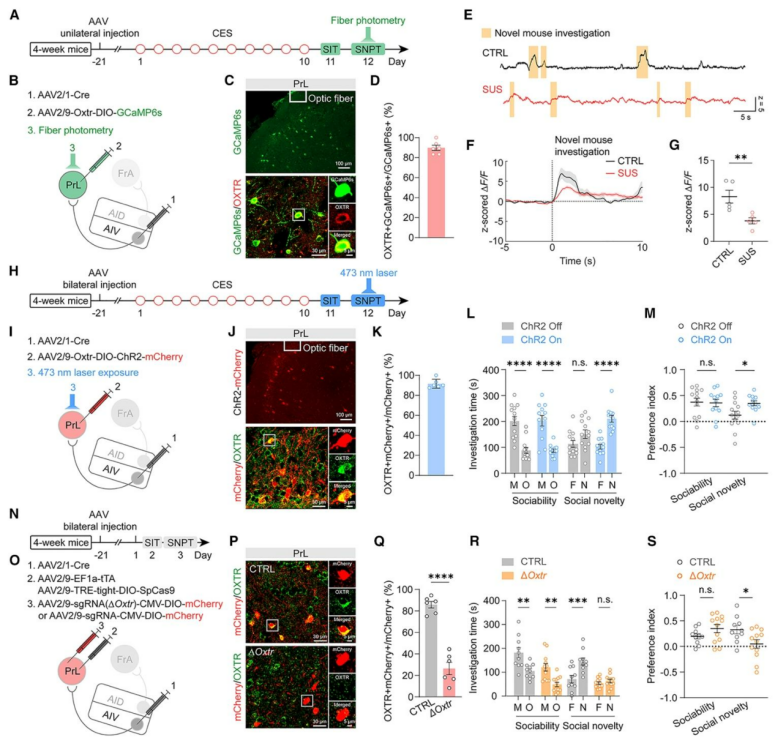
Anterograde tracing revealed that AIV predominantly targets somatostatin-positive (SST) GABAergic interneurons in PrL, and CES caused selective downregulation of oxytocin receptor (OXTR) expression in PrL GABAergic neurons of SUS mice.

To test the role of PrLOXTR neurons (AIV-targeted and OXTR-expressing) in encoding social novelty preference, the study injected AAV2/1-Cre into AIV and a Cre-dependent, OXTR-promoter–driven GCaMP6s virus into PrL, allowing selective recording of PrLOXTR neuronal activity (Figures 5A–B).
  • Control mice exhibited robust Ca²⁺ responses when investigating novel conspecifics, whereas SUS mice showed markedly reduced responses (Figures 5E–G).
  • Immunostaining confirmed that ~90% of GCaMP6s-positive neurons co-expressed OXTR (Figures 5C–D).
  • Optogenetic activation of this pathway restored social novelty preference in SUS mice without affecting baseline social behavior (Figures 5H–M).
  •  
Virus-mediated CRISPR-Cas9 knockdown of OXTR in PrL-projecting AIV neurons produced no overt neurotoxicity (Figures 5N–O), reduced OXTR immunoreactivity by ~70% (Figures 5P–Q), and selectively caused social novelty preference deficits without altering basic social interaction (Figures 5R–S), confirming that OXTR is essential.

In summary, downregulation of OXTR impairs the function of AIV-input SST interneurons in PrL, representing a core mechanism underlying deficits in social novelty preference, and highlighting the critical regulatory role of the AIV → PrLOXTR circuit.

Figure 5. OXTR signaling in the AIVCaMKIIα → PrL circuit regulates social novelty preference


Part 06 | Oxytocinergic Input from PVN to PrL and Its Modulation of the AIVCaMKIIα → PrLOXTR Circuit

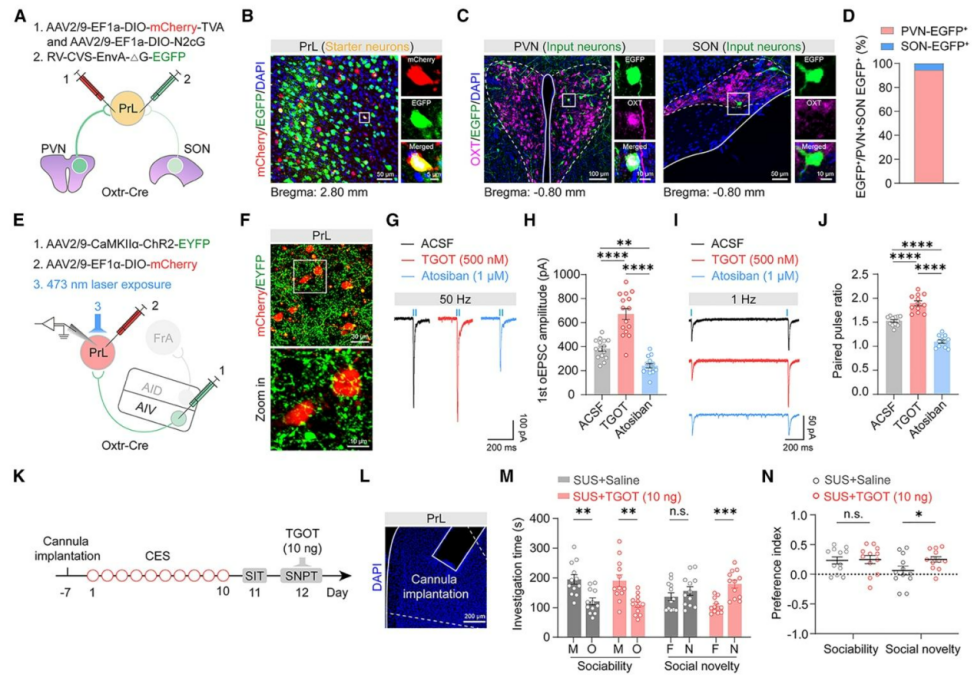
To identify the source of oxytocinergic inputs to PrLOXTR neurons and their regulatory effect on the AIV→PrL pathway, retrograde monosynaptic tracing was performed in Oxtr-Cre mice (Figure 6A). The results revealed that direct presynaptic inputs to PrLOXTR neurons mainly originated from the paraventricular nucleus of the hypothalamus (PVN), with sparse labeling from the supraoptic nucleus (SON), and the majority of labeled PVN neurons were oxytocin-positive (Figures 6B–D).

In Oxtr-Cre mice, AIV was injected with AAV-ChR2-EGFP and PrL with Cre-dependent AAV-DIO-mCherry, labeling AIV axon terminals and PrLOXTR neurons, respectively (Figures 6E–F). Acute slice recordings showed that TGOT, an oxytocin receptor agonist, enhanced light-evoked excitatory postsynaptic currents (oEPSCs) in the AIV→PrL pathway, whereas the antagonist atosiban inhibited these currents (Figures 6G–H). TGOT also increased the paired-pulse ratio (PPR), while atosiban decreased it (Figures 6I–J), suggesting that OXTR activation enhances presynaptic release probability and modulates short-term synaptic plasticity.

In vivo, bilateral microinjection of TGOT into PrL of SUS mice (Figures 6K–L) significantly increased exploration time toward novel mice (Figures 6M–N), confirming that direct activation of OXTR in PrL restores social novelty preference in SUS mice.

Figure 6. PVN-derived oxytocinergic input modulates synaptic efficacy of the AIVCaMKIIα → PrLOXTR circuit and regulates social behavior
 

Part 07 | Overactivated AIDCaMKIIα → FrA Circuit Mediates Lateral Inhibition of the AIVCaMKIIα → PrL Circuit via PV Interneurons in SUS Mice

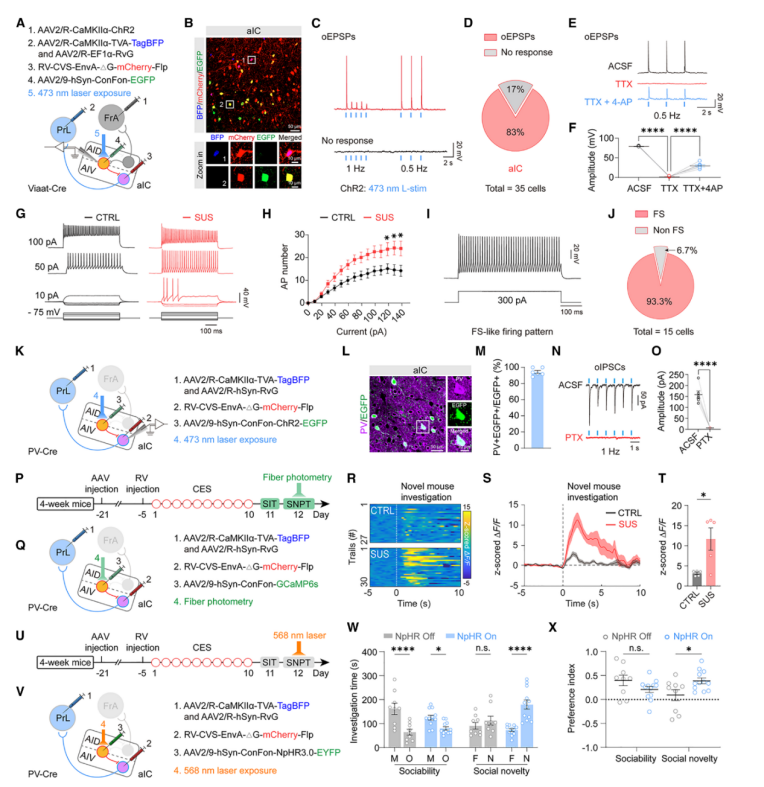
Based on local inhibitory mechanisms within the insula, the study hypothesized that overactivation of the AID→FrA pathway in SUS mice suppresses the AIV→PrL circuit via aIC local GABAergic neurons. Multiple approaches were used to test this hypothesis.

Using RV retrograde tracing, Viaat-Cre mice received bilateral PrL injections of RV-helper virus, followed three weeks later by injection of trans-synaptic rabies virus into AIV. Starter projection neurons were labeled in aIC (TagBFP+mCherry+), and their upstream GABAergic inhibitory inputs were specifically visualized using Cre-dependent EGFP, enabling precise mapping of this inhibitory circuit (Figures 7A–B).

Retrograde AAV2/R-CaMKIIα-ChR2 injection into FrA specifically labeled AIDCaMKIIα → FrA neurons. Optical stimulation of aIC evoked excitatory postsynaptic potentials (EPSPs) in aIC GABA interneurons, indicating functional input (Figure 7C). Light-evoked currents were blocked by 1 μM TTX and rescued by 20 mM 4-AP, confirming monosynaptic connectivity (Figures 7D–F). Among aIC GABA interneurons projecting to AIVCaMKIIα → PrL neurons, 83% received input from AIDCaMKIIα → FrA neurons, while 17% were unresponsive, showing that AIDCaMKIIα → FrA activity can drive aIC GABA interneurons to inhibit AIVCaMKIIα → PrL neurons.

In SUS mice, intrinsic excitability of aIC GABA interneurons controlling AIV→PrL was significantly increased (Figures 7G–H), and 93% exhibited fast-spiking (FS) phenotypes (Figures 7I–J), indicating that these neurons are predominantly PV-positive inhibitory interneurons.

To confirm this, PV-Cre mice received monosynaptic rabies virus injections, leading to ChR2-EGFP expression specifically in aIC PV interneurons controlling AIVCaMKIIα → PrL neurons (Figures 7K). About 90% of EGFP-positive neurons co-localized with PV (Figures 7L–M). Optogenetic activation of these neurons induced inhibitory postsynaptic currents (IPSCs) in AIVCaMKIIα → PrL projection neurons, which were fully blocked by GABA receptor antagonists, confirming their inhibitory function (Figures 7N–O).

Fiber photometry recordings revealed that Ca²⁺ responses of aIC PV interneurons were significantly enhanced during novel social exploration in SUS mice (Figures 7P–T), indicating that increased inhibitory drive leads to suppressed AIVCaMKIIα → PrL activity. Optogenetic inhibition (eNpHR3.0) of the same neurons significantly restored social novelty preference (Figures 7W–X). In summary, aIC PV interneuron activity mediates lateral inhibition of the AIVCaMKIIα → PrL circuit, causing social novelty preference deficits in SUS mice.

Figure 7. Overactivated aIC PV microcircuit mediates AIDCaMKIIα → FrA inhibition of the AIVCaMKIIα → PrL circuit in SUS mice


Conclusion

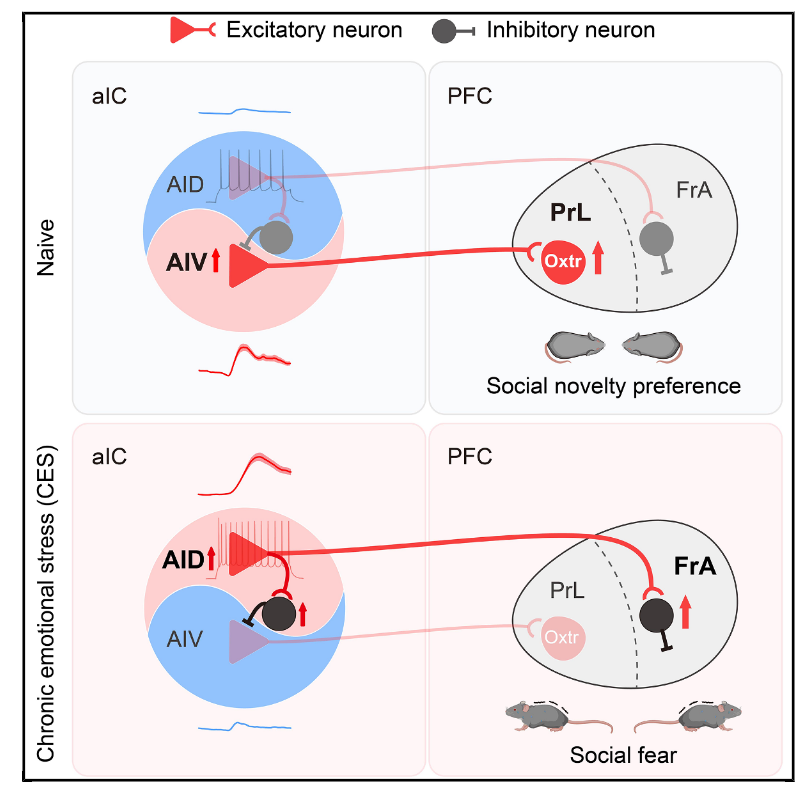
Using a CES mouse model, the study identified two parallel and functionally opposing circuits within the anterior insular cortex (aIC): the AID → FrA circuit mediates social fear and avoidance, while the AIV → PrL circuit regulates social novelty preference. Chronic stress overactivates the AID → FrA pathway, which exerts lateral inhibition on the AIV → PrL circuit via aIC PV interneurons, while also downregulating OXTR signaling in the PrL, collectively leading to social avoidance and deficits in social novelty preference. Optogenetic, chemogenetic, or pharmacological activation of the AIV → PrL circuit or enhancement of OXTR signaling effectively reverses stress-induced social deficits.

This study provides a comprehensive mechanistic framework at the circuit, cellular, and molecular levels for how chronic stress causes social dysfunction and offers precise therapeutic targets for related psychiatric disorders.

Figure 8. Summary diagram


All viral tools used in this study are available from Brain Case Biotech. 
 
Product Category Product Number Product Name
Fluorescent Proteins BC-0016 rAAV-EF1α-DIO-mCherry
BC-0023 rAAV-hSyn-mCherry
BC-0020 rAAV-hSyn-EGFP
BC-0028 rAAV-CaMKIIα-mCherry
BC-0027 rAAV-CaMKIIα-EGFP
BC-0193 rAAV-EF1α-fDIO-mCherry
BC-0015 rAAV-EF1α-DIO-EGFP
BC-0029 rAAV-CaMKIIα-EYFP
BC-3848 rAAV-hSyn-Con Fon-EGFP
Recombinases BC-0243/1 rAAV-CMV-Cre
BC-0171 rAAV-hSyn-Flp
BC-0165 rAAV-CaMKIIα-EGFP-P2A-SV40 NLS-Cre
Chemogenetics BC-0155 rAAV-EF1α-DIO-hM4D(Gi)-mCherry
BC-0146 rAAV-EF1α-DIO-hM3D(Gq)-mCherry
Optogenetics BC-0356 rAAV-hSyn-ConFon-hChR2(H134R)-P2A-EYFP
BC-0120 rAAV-CaMKIIα-eNpHR3.0-EYFP
BC-0100 rAAV-CaMKIIα-hChR2(H134R)-EYFP
BC-1134 rAAV-Oxtr-DIO-ChR2-mCherry
Calcium Imaging BC-0081 rAAV-CaMKIIα-GCaMP6s
BC-2016 rAAV-Ef1α-ConFon-GCaMP6s
RV-helper BC-0061 rAAV-EF1α-DIO-mCherry-T2A-TVA
BC-0442 rAAV-EF1α-DIO-N2cG
RV BC-RV-EnvA862 RV-EnvA-ΔG-EGFP
BC-RV-CVS EnvA471 CVS-EnvA-ΔG-mCherry-P2A-FlpO
Tetracycline-Inducible Gene Regulation BC-0055 rAAV-EF1α-tTA
BC-2256 rAAV-TRE-tight-DIO-SpCas9-3×FLAG
BC-2255 AAV-U6-sgRNA(ΔOxtr)-CMV-DIO-mCherry
BC-1629 rAAV-U6-sgRNA-CMV-DIO-mCherry

Custom services are also offered,
please contact bd@ebraincase.com for more information

Service Type :

Select the service you'd like to purchase.

Order Information(Premade-AAVs)

Please provide us some information about the service you'd like to order.

How did you hear about BrainCase Biotech or our products?(Fill in this field to get a discount coupon)

Detailed requirements:

scroll

Order Information(Custom AAV/Lentivirus)

Please provide us some information about the service you'd like to order.

Gene ID or gene information:

Selection of the reporting gene:

Special Instructions:

scroll

Order Information(Others)

Please provide us some information about the service you'd like to order.

Virus name/Detailed requirements:

scroll

Related products

Customer Article | Neuron | Neural Code of Social Avoidance: Hai-Tao Wu’s Team Reveals a New Mechanism of Dual Anterior Insula–Prefrontal Cortex Circuit Dialogue

Customer Article | Neuron | Neural Code of Social Avoidance: Hai-Tao Wu’s Team Reveals a New Mechanism of Dual Anterior Insula–Prefrontal Cortex Circuit Dialogue

Zhi Zhang’s team at USTC provides a detailed analysis of the core regulatory circuit in Science

Zhi Zhang’s team at USTC provides a detailed analysis of the core regulatory circuit in Science

Visceral Pain in Pancreatitis: Ting Xu's Team  at Sun Yat-sen University Reveals  a Novel Brain-Pancreas Sensory Conduction Pathway

Visceral Pain in Pancreatitis: Ting Xu's Team at Sun Yat-sen University Reveals a Novel Brain-Pancreas Sensory Conduction Pathway

Client Article | Cell Reports | The team of Mian Peng and Xiang Li from Zhongnan Hospital, Wuhan University, reveals that dexmedetomidine inhibits fear memory consolidation via the astrocyte-specific Srebf1-Phgdh pathway.

Client Article | Cell Reports | The team of Mian Peng and Xiang Li from Zhongnan Hospital, Wuhan University, reveals that dexmedetomidine inhibits fear memory consolidation via the astrocyte-specific Srebf1-Phgdh pathway.

map
{dede:global.cfg_webname/}

Pre-made AAV Library

CRISPR
RNAi
Neurotropic virus
Optogenetics activation
Biosensors

News

Corporate News
New Product Launch
Test Report
Investor News

Support

Literature interpretation
Customer article
FAQs
Blog
Legal
微信

WhatsApp Business Account

Tel: +8618971215294
E-mail: BD@ebraincase.com

Address:-

Address:-

  • Copyright © 2024 Brain Case All Rights Reserved.