E-mail:BD@ebraincase.com
Tel:+8618971215294
English 中文版
Pioneering Innovation in Gene Vector Research - BrainCasePioneering Innovation in Gene Vector Research - BrainCase
  • Home
  • Pre-made AAV Library
    CRISPRRNAiHSV-helperRV-helperNeurotropic virusCalcium SensorsOptogenetics activationOptogenetics inhibitionChemical geneticsSparse labelingFluorescent proteinBiosensorsRecombinaseApoptosis & AutophagyDisease ModelNeurotoxicityOther
  • Products & Service

    Product Center

    Virus

    Vesicular Stomatitis Virus-VSV
    RCAS-TVA
    Lentivirus
    Rabies Virus-RABV
    Herpes simplex virus-HSV
    Pseudorabies virus-PRV
    Adeno-Associated Virus-AAV
    Neurotropic virus list
    Baculovirus

    Kits

    EndoFree Plasmid Maxi Kit
    Lentivirus Concentration Kit

    Plasmid Construction & Vector cloning

    Lentiviral Vector
    AAV Vector
    Plasmid

    Popular Applications

    Gene Regulation

    Gene Overexpression-Brain Case
    RNA interference(RNAi)-siRNA-Brain Case
    Gene Editing - CRSIPR cloning - BrainCase

    Neural Circuit Function Research

    Optogenetics - BrainCase
    Chemical genetics-DREADDs-Brain Case
    Calcium signal recording-Gels- Brain Case
    GRAB Neurotransmitter Fluorescent Sensor- Brain Case
    Functional Magnetic Resonance Imaging Technology- Brain Case

    Research on the structure of neural circuits

    Direct Input and Output-viral vectors- Brain Case
    Anterograde Mono-synaptic Tracing -HSV- Brain Case
    Antrograde Muti-synaptic Tracing-HSV & VSV-Brain Case
    Retrograde Mono-synaptic Tracing-Rabies Virus-Brain Case
    Retrograde Muti-synaptic Tracing-PRV-Brain Case

    Featured Services

    AAV Serotype Screening

    AAV Serotypes screening-gene therapy

    Collaboration Products

    Kiryl Piatkevich lab
    Yulong Li lab
    Zhifei Fu lab
    Woo-ping Ge lab

    Oncolytic Virus Modification

    Oncolytic virus-for cancer therapy-Brain Case
    Herpes Virus Vector-anti-tumor- BrainCase
    Vesicular stomatitis virus-killing tumor cells-Brain Case
  • News
    Corporate News New Product Launch Investor News
  • Support
    Literature interpretation Customer article Video Zone FAQs
  • About Us
    Pre-made AAV Library Products & Service News Support About Us Contact
  • Contact
    Contact Us Join us
  • 中文
    English 中文版
  • Home
  • Support
  • Literature interpretation
  • Support
  • Literature interpretation
  • Customer article
  • Video Zone
  • FAQs

Cell Highlight丨Breaking Through AAV Delivery Bottlenecks! AAVLINK Technology Efficiently Delivers Large Genes to Aid in Genetic Disease Treatment

Release time:2026-03-19 11:37:01
Adeno-associated viruses (AAVs) are commonly used vectors in gene therapy, offering advantages such as non-pathogenicity, the ability to infect both dividing and non-dividing cells, and long-term expression. However, their conventional packaging capacity is limited to less than 5 kb, which restricts the delivery of large therapeutic genes, limiting their application in genetic diseases related to large genes. Traditional solutions, such as DNA trans-splicing, RNA trans-splicing, and protein trans-splicing, suffer from low recombination efficiency, dependency on specific split sites, and the risk of producing truncated proteins.

https://doi.org/10.1016/j.cell.2025.12.039
 
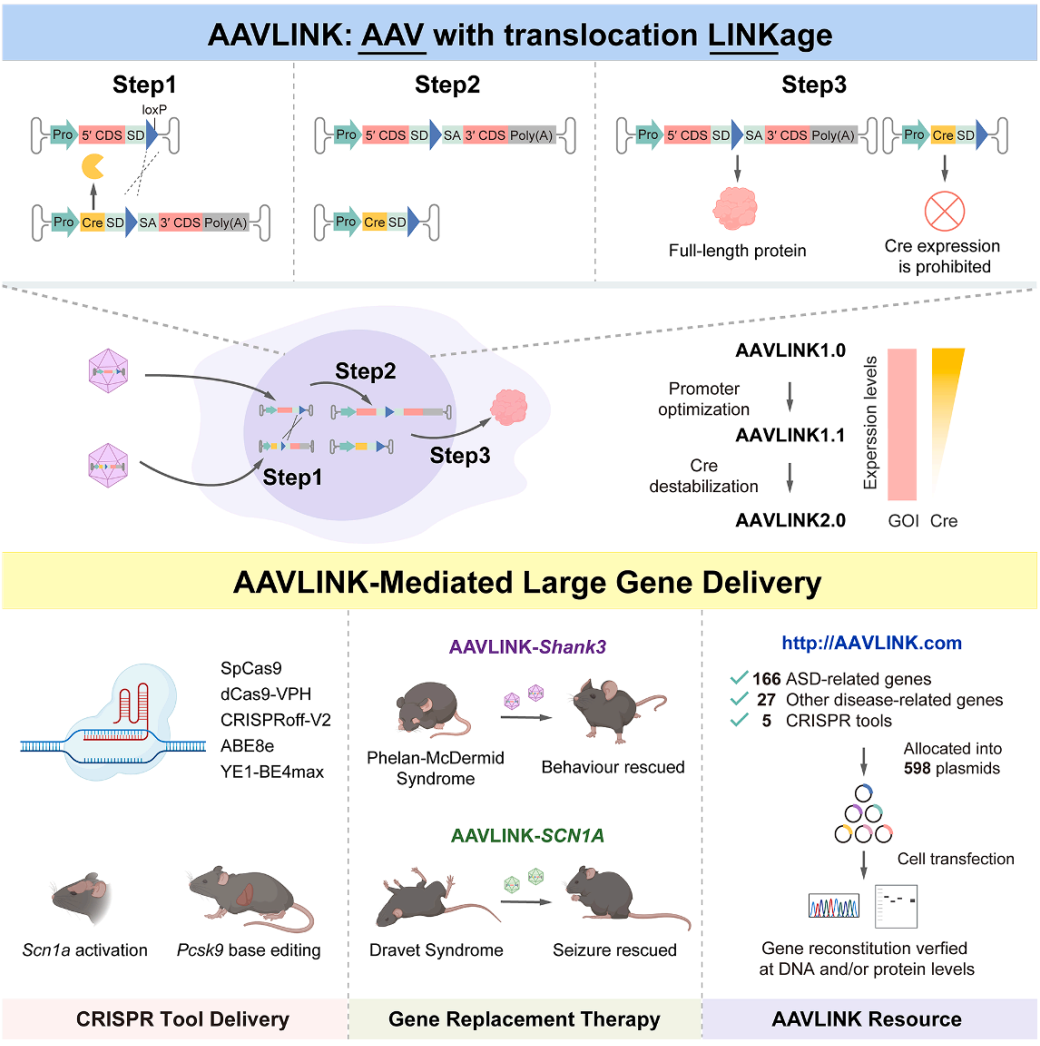
On February 5, 2026, a collaborative team from the Shenzhen Institute of Advanced Technology, Chinese Academy of Sciences, led by Zhonghua Lu and Tai'an Liu, along with Yuwu Jiang's team from Peking University First Hospital, published their latest research in Cell: "AAVLINK: A potent DNA-recombination method for large cargo delivery in gene therapy." They developed AAVLINK, an efficient gene delivery platform that overcomes AAV’s packaging capacity limitation (typically <5 kb) using Cre/lox-mediated DNA recombination technology. This system enables the efficient delivery of large therapeutic genes (the dual-vector system covers genes up to 6.2 kb, and the tri-vector system can reach up to 11 kb) and CRISPR tools, with minimal by-products and high safety. The upgraded version, AAVLINK 2.0, enhances biosafety by optimizing the promoter and adding protein instability tags to reduce Cre expression. The platform successfully rescued phenotypes related to Phelan-McDermid Syndrome (Shank3 gene) and Dravet Syndrome (SCN1A gene) in mouse models. It also established a vector library containing 193 disease-related large genes and five CRISPR tools (http://AAVLINK.com/), providing strong technical support and resource reserves for gene therapy in genetic diseases involving large genes.


AAVLINK Design and Optimization

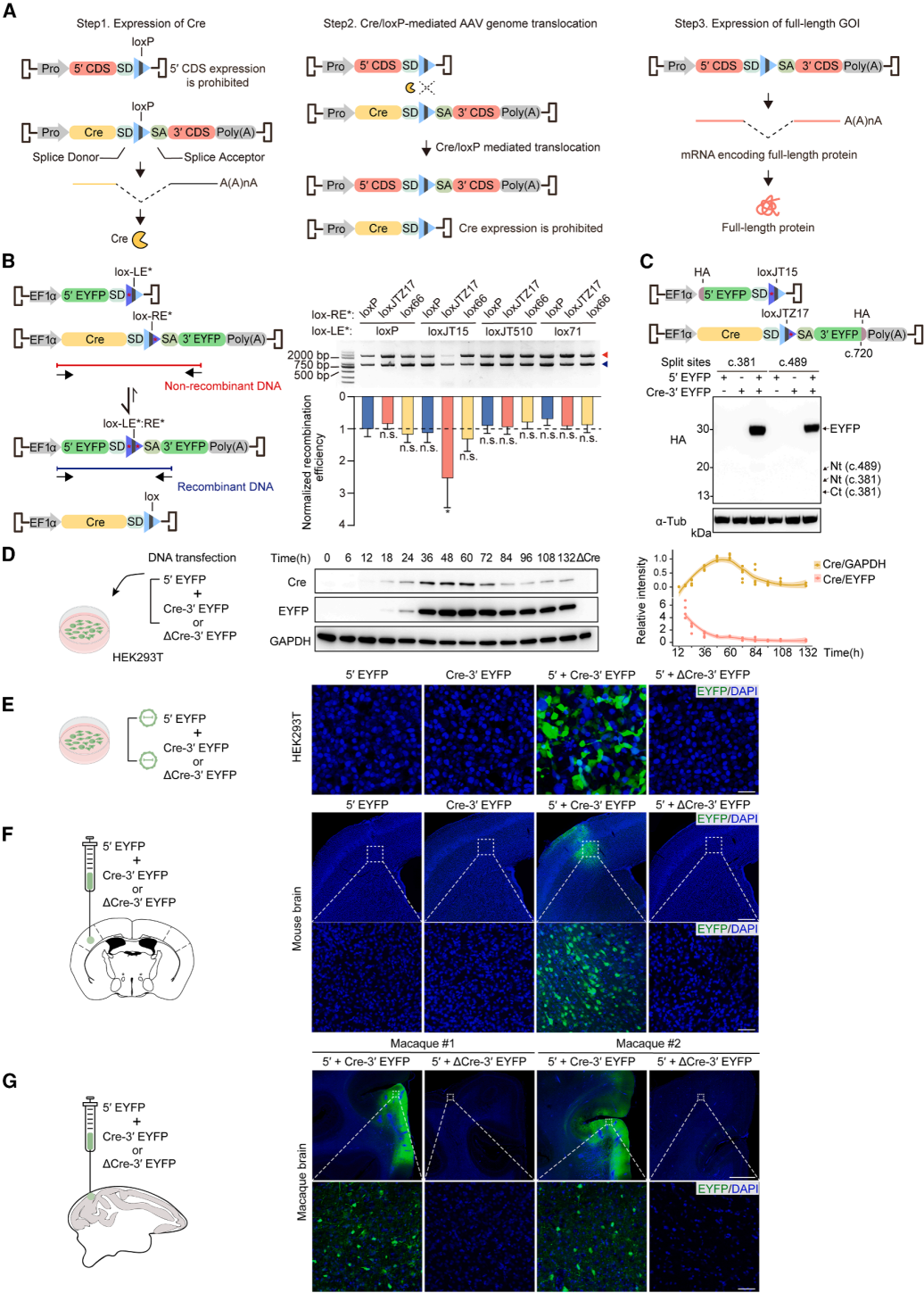
In the dual-vector design, one vector contains the promoter, 5' end of the gene of interest (GOI), splice donor (SD), and lox site; the other vector contains the promoter, Cre recombinase, lox site, splice acceptor (SA), 3' end of the GOI, and polyadenylation (poly(A)) signal. After both vectors are co-delivered to the target cells, Cre is first produced (Step 1). Subsequently, Cre-mediated recombination links the (GOI 5' end-SD) element from the first vector to the (SA-GOI 3' end) element of the second vector. During this process, the Cre expression element is separated from the SA and 3' poly(A) signal, limiting their subsequent expression (Step 2). Ultimately, after intron splicing, the full-length GOI is recombined and expressed (Step 3) (Figure 1A).

To reduce the reversibility of Cre-mediated translocation, asymmetric lox sites with left/right palindromic arm mutations (LE/RE) were used. These recombine to generate wild-type loxP and double-arm mutated lox sites, which cannot serve as Cre substrates, making the translocation essentially irreversible. Electrophoresis analysis of band ratios confirmed that the combination of loxJT15 (LE) and loxJTZ17 (RE) yielded the best results (Figure 1B). Sanger sequencing validated the precise recombination of full-length EYFP, and no truncated EYFP was detected in Western Blot (WB) analysis (Figure 1C). Time-course analysis showed that EYFP reached its peak at 60 hours and remained stable, while Cre significantly decreased after 60 hours, returning to baseline levels by 84 hours (Figure 1D). These are its two core advantages. When the split EYFP is packaged into dual vectors, fluorescence is observed only in co-transfected cells and mouse cortex, with no signal in the absence of Cre (Figure 1E, 1F). Similar results were obtained in macaque brain experiments, highlighting the potential for translation (Figure 1G). In summary, AAVLINK enables efficient and precise gene recombination of split genes both in vitro and in vivo, with minimal by-products.

Figure 1. AAVLINK Design and Optimization


Achieving High-Efficiency Gene Delivery with Three-Vector AAVLINK

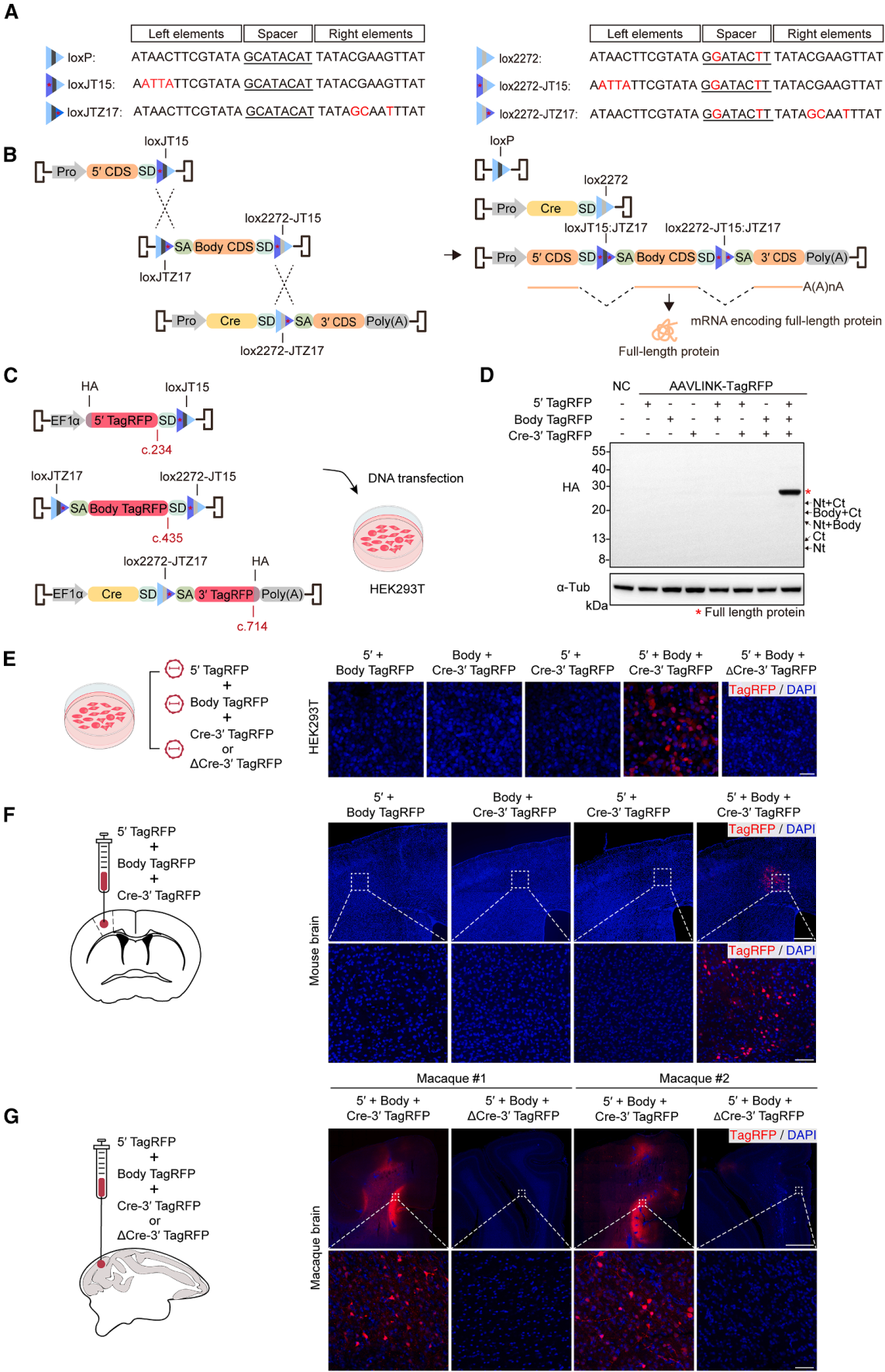
To accommodate genes too large for dual-vector delivery, the authors validated the effectiveness of the three-part AAVLINK vector system. This system requires two pairs of lox sites to assemble and split the GOI: the first pair mediates recombination between the 5' end and middle segment, and the second pair, containing loxJT15/loxJTZ17 arm mutations and lox2272 interspaced mutations, mediates translocation of the 3' end downstream of the middle segment. The lox2272 mutation prevents cross-reaction with wild-type interspaced lox sites (Figure 2A, 2B). To verify the design, the TagRFP gene was split into three segments and assigned to the vectors (Figure 2C). After co-transduction into HEK293T cells, Sanger sequencing confirmed precise recombination of full-length TagRFP, and WB analysis showed efficient expression with no truncated products (Figure 2D). These vectors were packaged into three rAAVs, and after transduction into mammalian cells, TagRFP signal was detected only when all three vectors co-existed and Cre was active (Figure 2E). In vivo experiments also confirmed efficient recombination in mouse and macaque cortex (Figure 2F, 2G), showing that AAVLINK can deliver ultra-large genes. The single rAAV genome has a capacity of approximately 4.7 kb. Excluding ITRs, Cre, and regulatory elements, the three-vector system can deliver up to 11 kb of genetic material, covering most genes related to human genetic diseases.

Figure 2. Three-Vector Gene Delivery with AAVLINK


AAVLINK Achieves More Efficient Protein Recombination than Intron Peptide Method

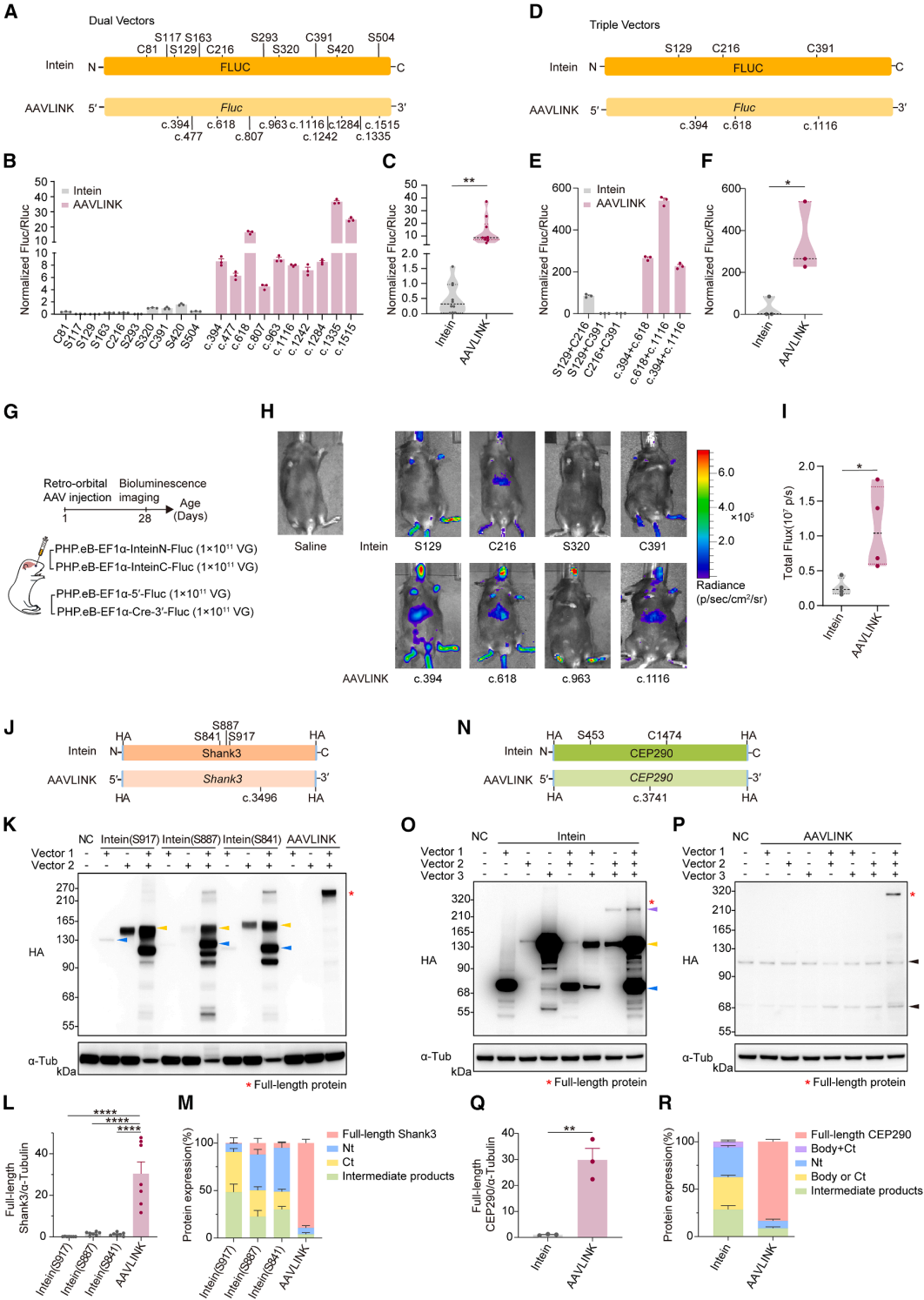
The performance of AAVLINK was compared with the commonly used intron peptide-mediated protein recombination technique. Using luciferase as a reporter gene, the dual- and triple-vector effects were compared. In the dual-vector experiment, under 10 split sites (Figure 3A), the optimal AAVLINK bioluminescence intensity was 23.3±1.3 times greater than the intron peptide method (Figure 3B), with an average of 25.8±10.5 times higher (Figure 3C), and significant differences in efficiency between the internal sites of both groups. In the three-vector experiment, the intron peptide method used Npu and Rma orthogonal intron peptides to ensure directional splicing, but AAVLINK showed superior recombination efficiency (Figure 3D, 3E), with average bioluminescence intensity 245.5±156.7 times higher (Figure 3F), and fewer truncated products (Figure 2D), demonstrating a clear advantage. In mouse in vivo experiments, after retro-orbital injection of the vectors, four weeks later (Figure 3G), AAVLINK bioluminescence efficiency was 4.5±1.4 times greater than the intron peptide method (Figure 3H, 3I), confirming its high efficiency in both in vitro and in vivo experiments.

When recombining the disease-related large genes Shank3 (5.4 kb) and CEP290 (7.4 kb), Shank3 haploinsufficiency is the main cause of Phelan-McDermid Syndrome (PMS). Under three split sites (Figure 3J), recombination was weak with the intron peptide method, but AAVLINK efficiency was 36.6±22.1 times higher, with no truncated products (Figure 3K-3M). CEP290 was split into two parts and inserted into dual AAVLINK vectors, with the third vector providing Cre (Figure 3N). The yield was 29.8±4.4 times higher than the intron peptide method (Figure 3O-3Q). In the AAVLINK group, full-length CEP290 accounted for 83.4%±2.4%, while in the intron peptide group, it was only 0.2%±0.1% (Figure 3R), confirming AAVLINK's high efficiency and minimal by-products.


Figure 3. Comparison of AAVLINK and Intron Peptide-Mediated Protein Recombination Techniques

AAVLINK-Mediated Full-Length Shank3 Delivery Improves Behavioral Deficits in Shank3 Mutant Mice

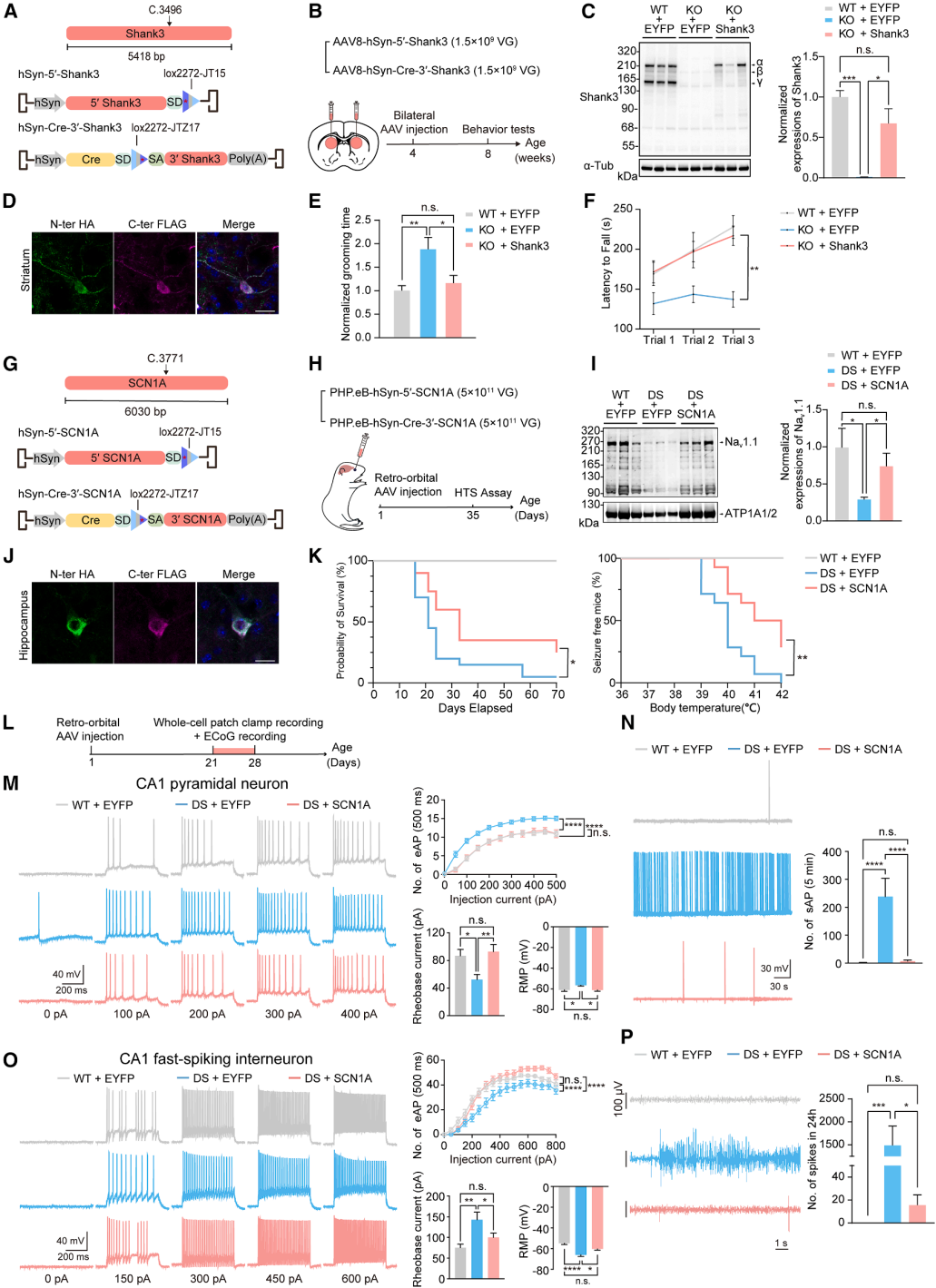
To validate the therapeutic potential, the Shank3 gene was expressed in Shank3 mutant mice using AAVLINK. Shank3 knockout mice exhibit abnormal synaptic transmission and autism-like behavior, and re-expression of the gene can rescue some of these symptoms. However, the Shank3 gene is large, and AAV delivery is challenging. AAVLINK addresses this issue. The Shank3 gene was split at the c.3496 site, and the two segments were inserted into AAVLINK vectors (Figure 4A). These vectors were then injected into the striatum of 4-week-old Shank3*InsG3680+/+ mutant mice (with significant defects in the striatal pathway, Figure 4B). After 4 weeks, strong full-length Shank3 expression was detected via Western Blot (WB) (Figure 4C), and immunohistochemistry (IHC) confirmed its expression along with detection of N/C-terminal epitopes (Figure 4D). The mice exhibited rescued stereotyped behavior and motor deficits (Figure 4E, 4F).
 

AAVLINK-Mediated SCN1A Replacement Alleviates Seizures in Dravet Syndrome Mouse Model

Dravet Syndrome (DS) is a refractory and highly destructive epileptic encephalopathy, with over 80% of cases caused by haploinsufficiency of the sodium channel-encoding gene SCN1A. Its monogenic nature makes it suitable for gene replacement therapy, although the SCN1A gene (6 kb) exceeds the packaging limit of AAVs. The authors used rAAV-PHP.eB vectors carrying the SCN1A 5' (c.1-3771) and 3' (c.3772-6030) ends and co-delivered these vectors by retro-orbital injection into the DS mouse model (Scn1a+/- mice, Figure 4G, 4H). WB and IHC confirmed high-efficiency recombinant expression of the SCN1A-encoded Nav1.1 protein in the brain (Figure 4I, 4J), and treatment significantly increased survival rates and resistance to febrile seizures in the mice (Figure 4K). The treatment achieved three key physiological rescues: (1) restoration of excitability in hippocampal pyramidal neurons; (2) repair of activity in hippocampal fast-spiking interneurons; (3) significant reduction of epilepsy-associated cortical electroencephalography (ECoG) activity (Figure 4L-4P). In conclusion, AAVLINK enables highly efficient in vivo delivery of large therapeutic genes. Despite limited brain transduction efficiency, sufficient gene recombination was achieved, leading to therapeutic benefits.

Figure 4. Application of AAVLINK-Mediated Gene Replacement Therapy in PMS and DS Mouse Models


AAVLINK Facilitates Efficient Delivery of CRISPR-Cas Tools

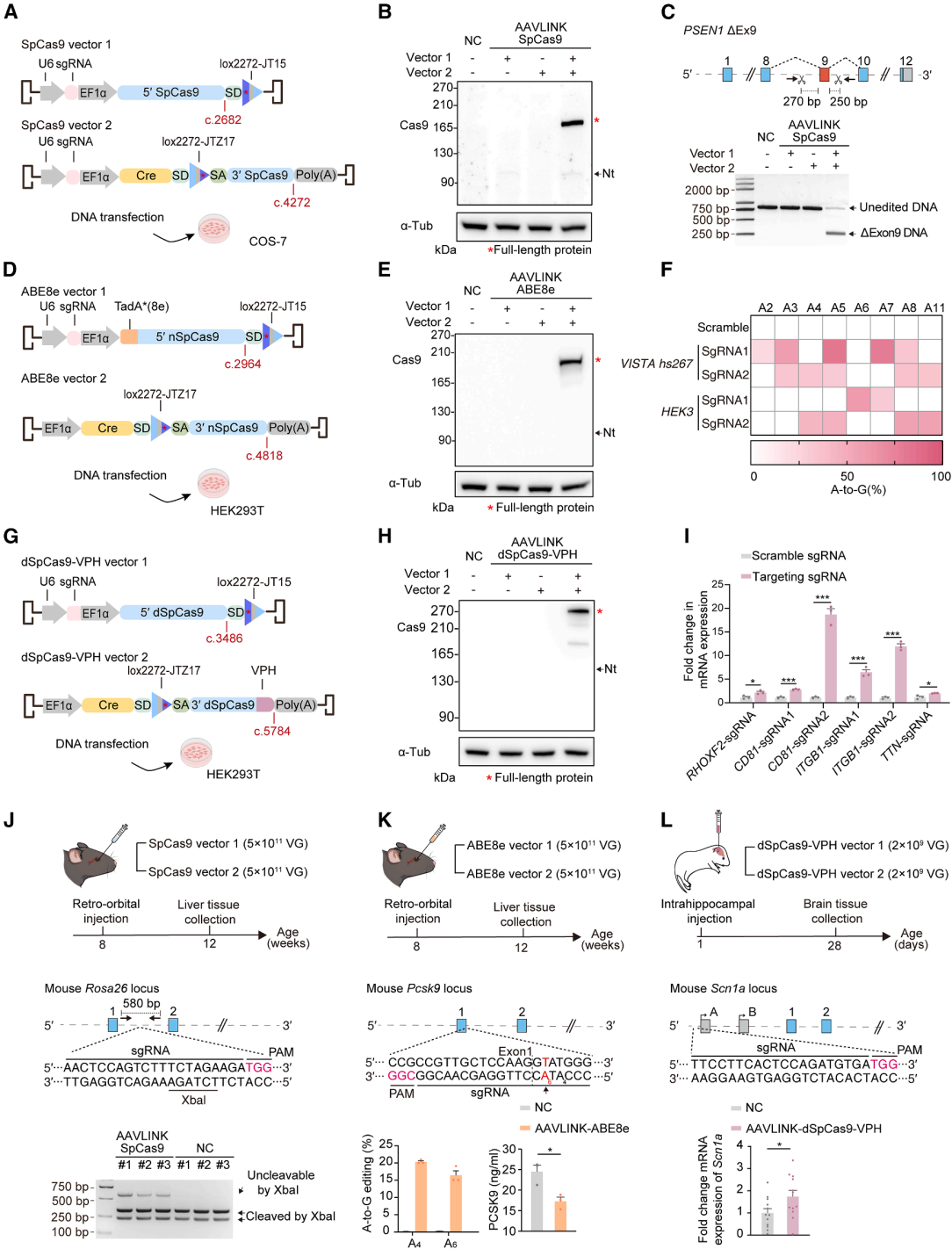
CRISPR-Cas technology holds great potential, but the size of related genes often exceeds the capacity of single AAVs, limiting in vivo application. The authors tested AAVLINK’s ability to deliver such tools. Most CRISPR-Cas tools are based on SpCas9, which is 4.3 kb and challenging for AAV delivery. The SpCas9 gene was split at the c.2682 site and inserted into dual AAVLINK vectors (Figure 5A). After transfection of COS-7 cells containing sgRNA targeting PSEN1, successful recombination of SpCas9 was achieved, precisely deleting the target interval (Figure 5B, 5C). Base editing, which can precisely correct pathogenic mutations, was tested using two large editors: Adenine Base Editor 8e (ABE8e) and the fourth-generation Base Editor containing YE1 mutation (YE1-BE4max). These can mediate A·T to G·C and C·G to T·A base conversions, respectively, with vectors split and loaded at c.2964 and c.3540 (Figure 5D). After transfection into HEK293T cells, editing efficiencies reached up to 80% (Figure 5E, 5F). dCas9 fusion regulatory domains enabled CRISPRoff-V2 (repression) and dSpCas9-VPH (activation). These were split and loaded at c.3675 and c.3486, respectively, and after transfection into HEK293T cells, they effectively repressed or upregulated target gene expression (Figure 5G-5I). In in vivo experiments, AAVLINK delivered SpCas9 to the mouse liver, successfully inducing a break at the Rosa26 locus (Figure 5J). AAVLINK was also used to package ABE8e and sgRNA targeting the Pcsk9 gene (a target for lowering LDL cholesterol) into two AAVs, which were administered systemically to mice. Four weeks later, the A→G conversion rate was 16%, and Pcsk9 expression was reduced (Figure 5K). Delivery of dSpCas9-VPH to the hippocampus successfully upregulated Scn1a expression (Figure 5L), confirming the feasibility of in vivo delivery.

Figure 5. AAVLINK Delivery of CRISPR Tools


Development of AAVLINK2.0: Minimizing Cre Expression

Exogenous Cre recombinase presents a potential biosafety risk. Even though the expression of Cre in AAVLINK is transient (Figure 1D), further optimization was made to reduce its expression (Figure 6A).
 

1. Core Optimization Strategy (from 1.0 to 2.0 Iteration)

Step 1: Screening Weak Promoters (AAVLINK1.1)
After testing six promoters (EF1α, EFS, UbC, SCP1, CMVmini, BGmini), Western Blot (WB) and Immunohistochemistry (IHC) results showed that the SCP1 promoter efficiently maintained high recombination of EYFP while minimizing Cre expression (Figure 6B-6D). Based on this, AAVLINK1.1 was developed (Figure 6A).

Step 2: Adding Unstable Tags (AAVLINK2.0)
The C-terminal of Cre was fused with a potent protein instability tag, UDeg3a, which rendered Cre nearly undetectable without affecting recombination efficiency (Figure 6E-6G). This resulted in the final version, AAVLINK2.0 (Figure 6A).


2. In Vivo Validation Results

Comparing Cre expression in vivo through intracranial and intravenous injection, the two versions of AAVLINK were tested:

AAVLINK1.0:
After dual-vector delivery, IHC detected weak Cre expression, and WB showed no Cre detection, confirming that Cre was inactivated (Figure 1A, 6I, 6J, 6L, 6M).

AAVLINK2.0:
Regardless of the delivery method, both IHC and WB failed to detect Cre expression, and the target gene was efficiently expressed (Figure 6I, 6J, 6L, 6M).
Additionally, experiments in macaques verified that AAVLINK2.0 had no Cre expression and efficiently expressed the target gene (Figure 6N, 6O). AAVLINK2.0, optimized with a "weak promoter + protein degradation tag" combination, resolved the biosafety concerns of Cre expression and enhanced its clinical translation potential.
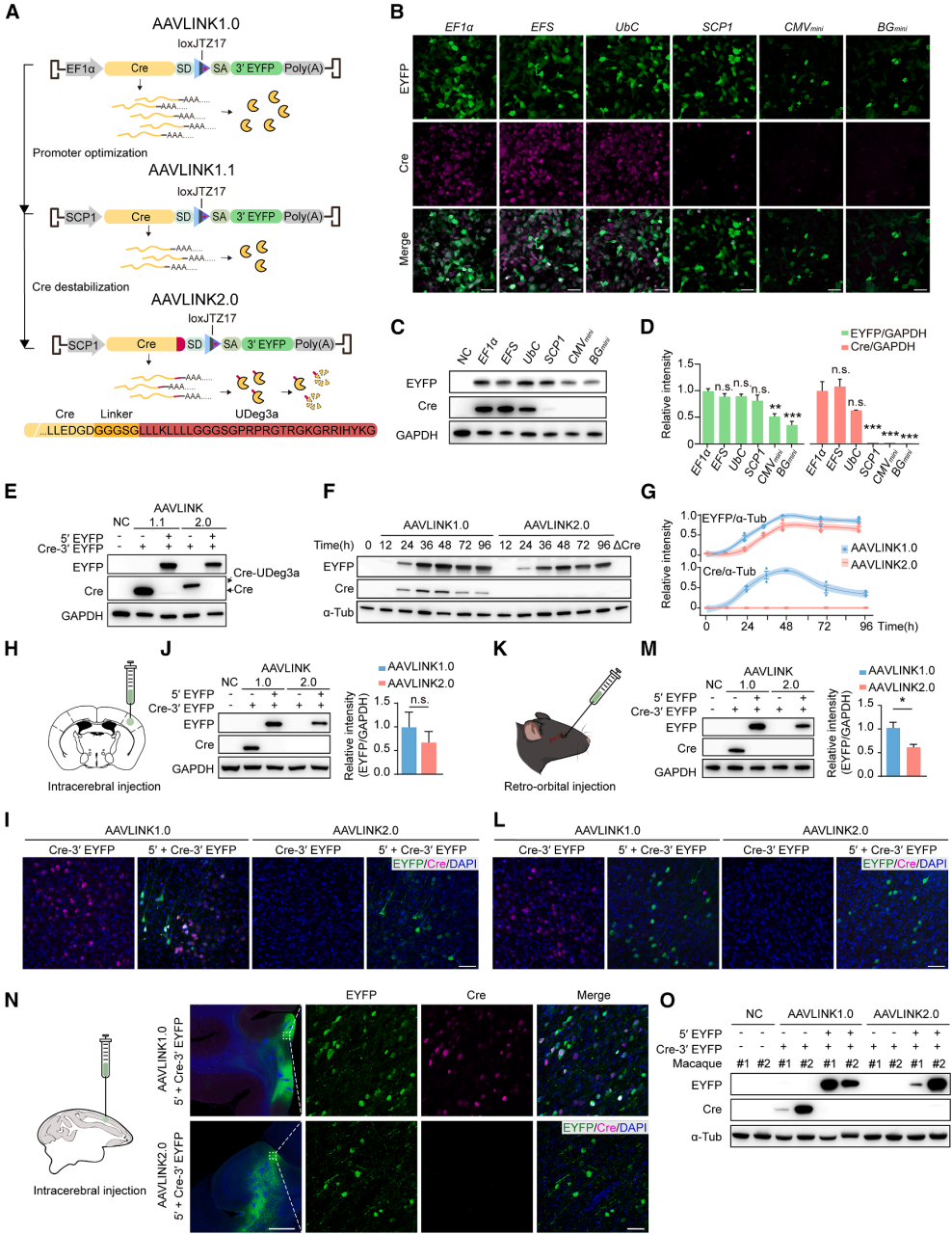
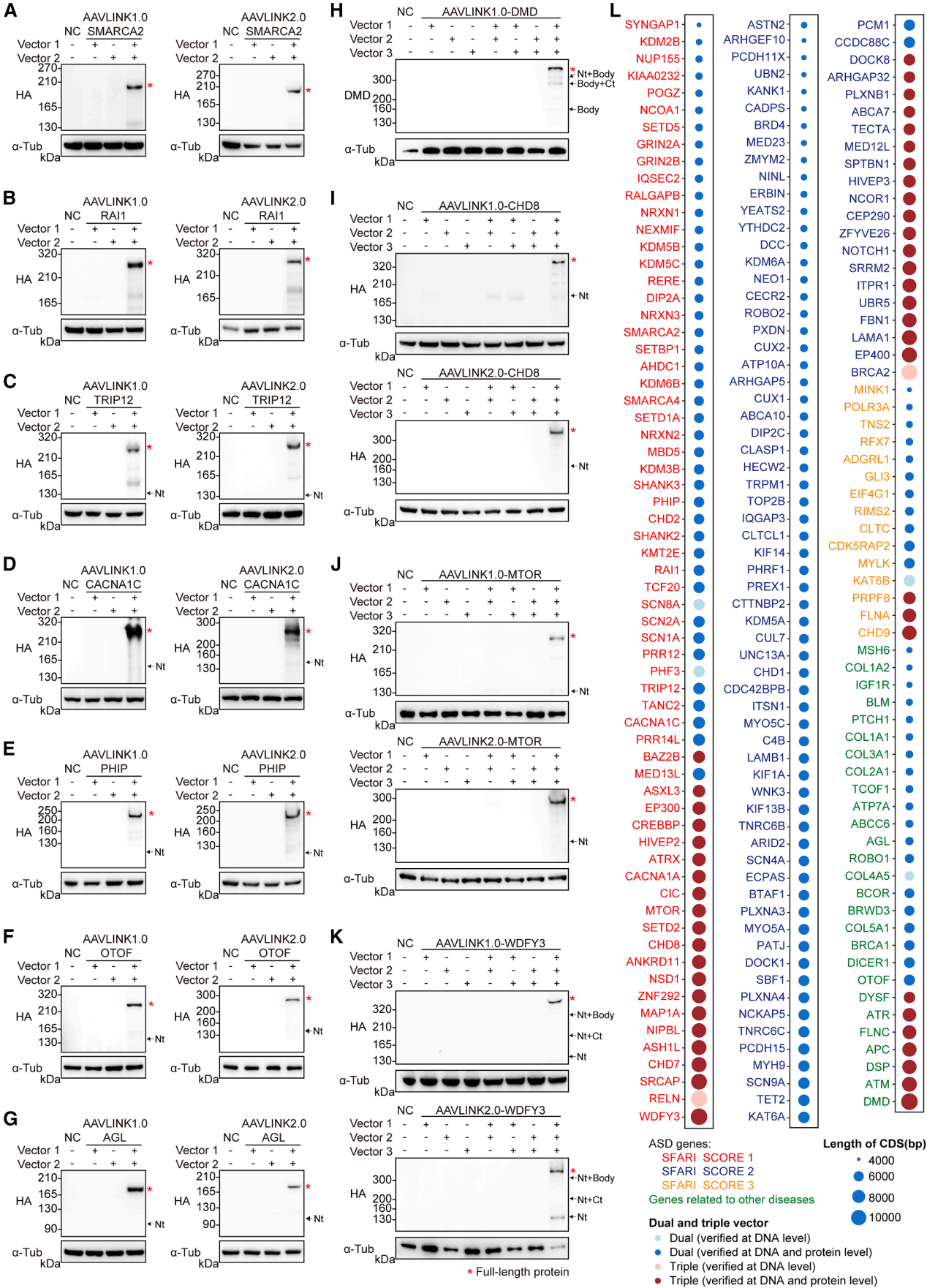
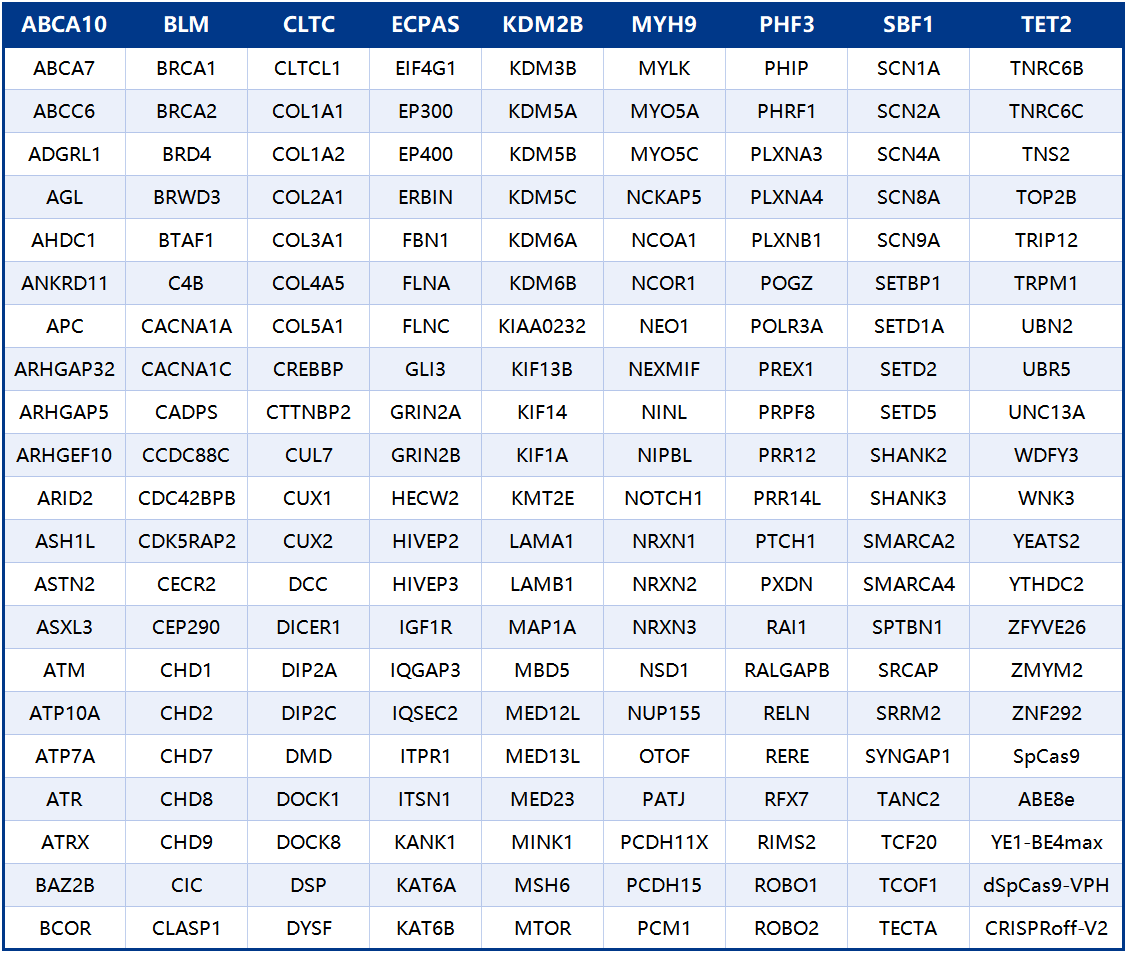
Figure 6. Minimizing Cre Expression in AAVLINK2.0


Building a Resource Library for Large Gene Delivery Using AAVLINK

To enhance the practical utility of AAVLINK, the authors constructed a resource library of large genes related to genetic diseases, focusing on autism spectrum disorder (ASD) risk genes. These genes have strong genetic associations, lack effective treatments, and many are single-gene cases with LoF (Loss of Function) mutations, making them ideal candidates for gene replacement therapy. Most of these genes are larger than 4 kb, making them suitable for delivery via AAVLINK. Genes longer than 4 kb, along with 27 other disease-related genes (e.g., AGL, ATP7A, OTOF, which are linked to Glycogen Storage Disease type III and other conditions), were cloned from the SFARI database and split into dual/three-vector AAVLINK for delivery. DNA and protein-level recombination were verified in cells. A total of 198 genes (193 disease-related and 5 CRISPR-related) were first cloned into AAVLINK1.0 and later modified to AAVLINK2.0 to improve therapeutic applicability. Sanger sequencing confirmed DNA recombination for all genes, and WB verification confirmed full-length protein expression for 192 genes (Figure 7).

Most genes could be recombined with a single split, demonstrating the stability of AAVLINK; however, there were differences in efficiency depending on the splitting strategy, consistent with luciferase assay results (Figure 3A-3F). Some genes required optimal split sites to achieve the best outcomes. Detailed information about the resource library (gene names, lengths, and validation status) can be found in Figure 7L and Table S1, and a dedicated website has been established
(http://AAVLINK.com/) for researchers to access.

Figure 7. AAVLINK Resource for Delivery of Large Genes Associated with Genetic Diseases


Research Limitations

AAVLINK has four limitations:
🔹After systemic administration in primates, the co-transduction efficiency of AAV is relatively low.
🔹The mechanism by which the gene splitting sites affect its efficiency remains unclear.
🔹For all disease-related genes, the AAVLINK1.0 3'CDS vector and CRISPRoffV2 both use the pCALM1 promoter to achieve selective expression in brain neurons. Non-neuronal expression requires the use of an alternative promoter.
🔹To achieve cell specificity or precise expression, optimization of the 5′ CDS promoter is needed.

 
A vector library of 193 disease-related large genes and 5 CRISPR tools
(http://AAVLINK.com/)

A total of 198 large genes were split and loaded into AAVLINK vectors, and their recombination efficiency has been validated in cultured cells.

Service Type :

Select the service you'd like to purchase.

Order Information(Premade-AAVs)

Please provide us some information about the service you'd like to order.

How did you hear about BrainCase Biotech or our products?(Fill in this field to get a discount coupon)

Detailed requirements:

scroll

Order Information(Custom AAV/Lentivirus)

Please provide us some information about the service you'd like to order.

Gene ID or gene information:

Selection of the reporting gene:

Special Instructions:

scroll

Order Information(Others)

Please provide us some information about the service you'd like to order.

Virus name/Detailed requirements:

scroll

Related products

Cell Highlight丨Breaking Through AAV Delivery Bottlenecks! AAVLINK Technology Efficiently Delivers Large Genes to Aid in Genetic Disease Treatment

Cell Highlight丨Breaking Through AAV Delivery Bottlenecks! AAVLINK Technology Efficiently Delivers Large Genes to Aid in Genetic Disease Treatment

Microglia Gene Delivery Solutions: AAV11 Enables High-Efficiency, Microglia-Specific Transduction

Microglia Gene Delivery Solutions: AAV11 Enables High-Efficiency, Microglia-Specific Transduction

Lentivirus (LV) In Vitro Infection Cell Experiment Guide: Procedures, Precautions, and Troubleshooting Tips

Lentivirus (LV) In Vitro Infection Cell Experiment Guide: Procedures, Precautions, and Troubleshooting Tips

Experimental Tips: Rabies virus (RV) Retrograde Trans-Synaptic Labeling System User Guide

Experimental Tips: Rabies virus (RV) Retrograde Trans-Synaptic Labeling System User Guide

map
{dede:global.cfg_webname/}

Pre-made AAV Library

CRISPR
RNAi
Neurotropic virus
Optogenetics activation
Biosensors

News

Corporate News
New Product Launch
Investor News

Support

Literature interpretation
Customer article
Video Zone
FAQs
微信

WhatsApp Business Account

Tel: +8618971215294
E-mail: BD@ebraincase.com

Address:-

Address:-

  • Copyright © 2024 Brain Case All Rights Reserved.