FingRs Tool Aids in Precise Labeling of Excitatory and Inhibitory Synapses
Time:2024-12-19 17:01:56
Research Background
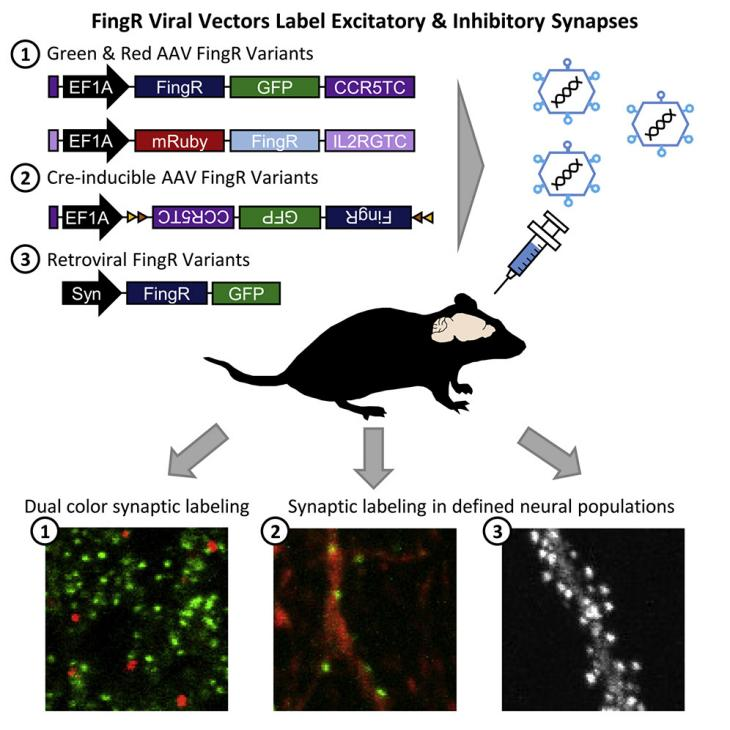
In the field of neuroscience, accurately labeling synapses is crucial for uncovering the principles of neural computation, the connectivity of neural circuits, and their plasticity. However, traditional immunohistochemistry techniques, although capable of labeling synapses, require fixed tissue, which limits the ability to visualize live tissue and makes it difficult to accurately identify synapses originating from specific cells. To address these challenges, the Han Lab published a study on July 24, 2020, titled "A Viral Toolbox of Genetically Encoded Fluorescent Synaptic Tags". The study used fibronectin intrabodies generated by mRNA display technology to develop a viral vector-mediated genetically encoded fluorescent synaptic tagging tool—FingRs (Fibronectin intrabodies generated with mRNA display). These tools enable the multicolor, neuron-type-specific labeling of excitatory or inhibitory synapses across multiple brain regions, without affecting the expression of endogenous synaptic proteins or synaptic transmission. The application of FingRs has not only advanced the understanding of brain function and neurodegenerative diseases but also shown great potential in monitoring the development of synapses in newborn neurons and analyzing synaptic remodeling in disease models.
1. FingRs Structure for Excitatory or Inhibitory Synapse Labeling
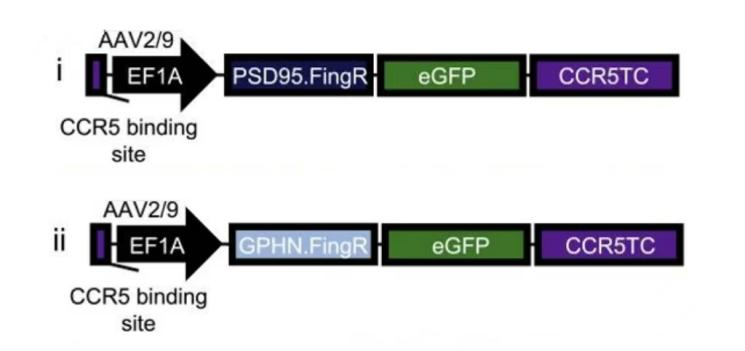
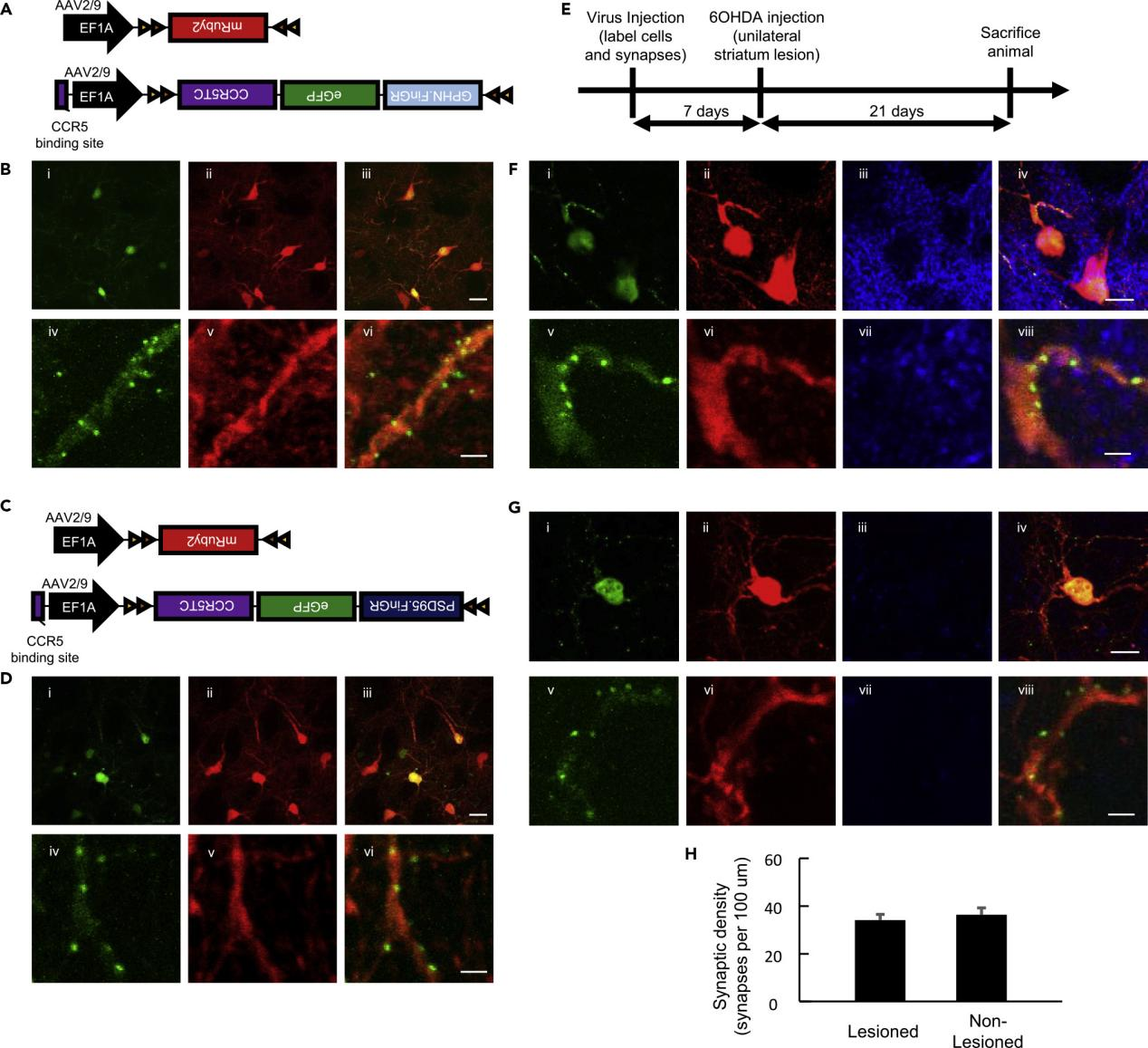
It is well-known that PSD95 and Gephyrin are key scaffold proteins at the postsynaptic membrane of excitatory and inhibitory synapses, respectively. In recent studies, scientists have designed genetically encoded FingR peptide sequences specific to these two proteins—PSD95. FingR and GPHN.FingR. These peptides act as intracellular antibodies in both live and fixed neurons and can specifically bind to PSD95 and Gephyrin. To avoid overexpression of FingRs, the research team introduced a CCR5 transcriptional feedback control domain (CCR5TC) to regulate the expression level of FingRs(Figure 2), ensuring that it is in balance with the endogenous protein targets. This strategy helps to maintain the stability of the intracellular environment.
Figure 2: Schematic Diagram of the Excitatory or Inhibitory Synapse Labeling Tools PSD95.FingR and GPHN.FingR Structures
2. Effective Labeling of Monochromatic Excitatory or Inhibitory Synapses
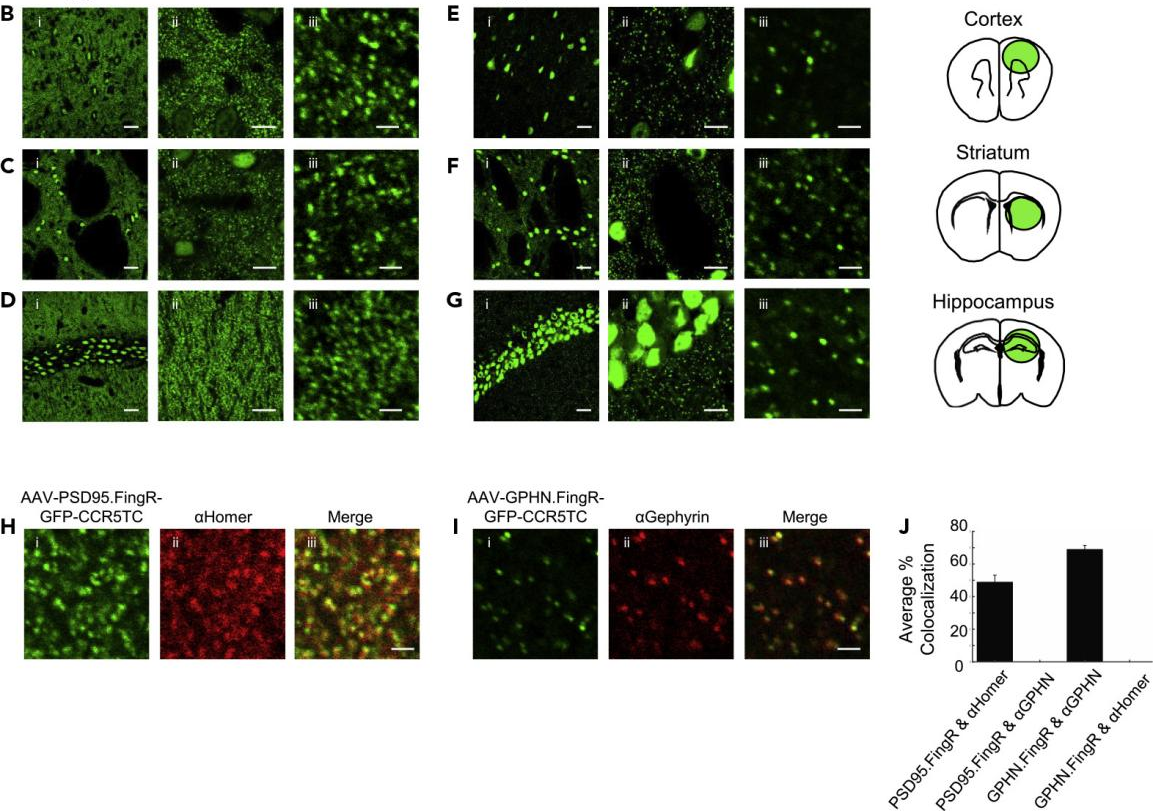
Using AAV as a viral vector tool, researchers precisely injected AAV9-EF1α carrying PSD95.FingR-EGFP and GPHN.FingR-EGFP(Figure 2) into the cortex, striatum, and hippocampus of mice. The results showed strong punctate expression patterns in these regions. Co-staining with the excitatory synapse marker Homer and the inhibitory synapse marker Gephyrin confirmed the co-localization of FingRs with these markers (Figure 3). This result confirms that FingRs can effectively label excitatory or inhibitory synapses in both cortical and subcortical neurons with submicron spatial resolution.
Figure 3: AAV Vectors Carrying PSD95.FingR and Gephyrin.FingR Can Precisely Label Excitatory and Inhibitory Synapses in Mouse Brain Regions with Submicron Accuracy
3. Effective Labeling of Dual-Color Excitatory and Inhibitory Synapses
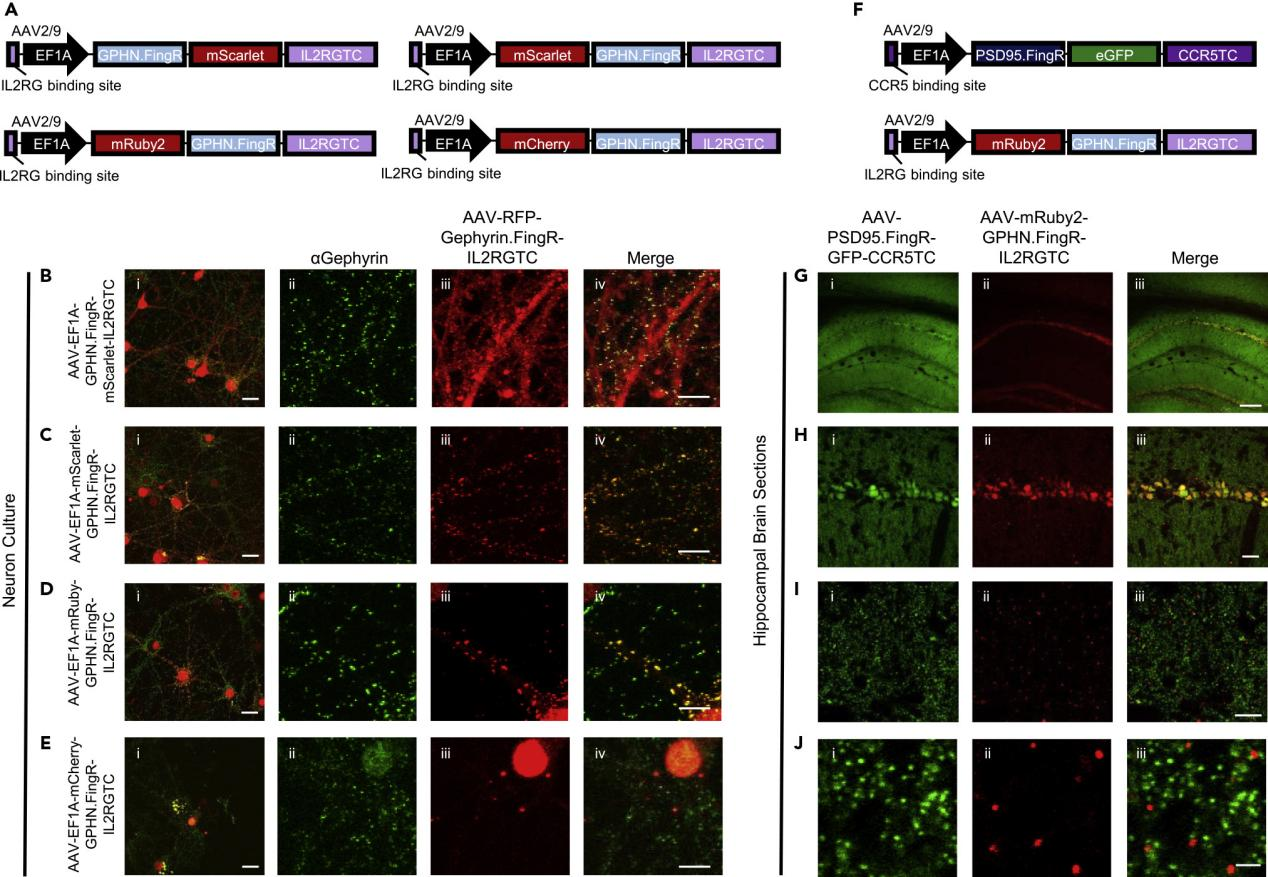
In addition, the researchers modified the inhibitory synapse marker GPHN.FingR-EGFP and screened for a novel, bright red FingR variant—mRuby2-GPHN.FingR. By co-injecting mRuby2-GPHN.FingR with PSD95.FingR-EGFP into the hippocampus, they successfully achieved simultaneous labeling of both excitatory and inhibitory synapses in hippocampal neurons (Figure 4). This technical breakthrough makes it possible to simultaneously identify excitatory and inhibitory synapses within the same cell, which is of great significance for studying the balance of excitatory and inhibitory signals in the brain and their role in neural function.
Figure 4: Optimized Red AAV-Gephyrin.FingR Vector Achieves Dual Labeling of Excitatory and Inhibitory Synapses
4. Cre-Inducible AAV FingR Viral Vectors Enable Synaptic Labeling of Cholinergic Interneurons in the Striatum
The research team utilized the Cre recombinase system to construct a Cre-inducible AAV FingR vector, which successfully enabled precise labeling of synapses in cholinergic interneurons within the striatum (Figure 5). This approach not only allows for synaptic labeling of specific neuronal populations but also shows great potential in analyzing synaptic remodeling in disease models. In particular, this technology will play a critical role in studies exploring how dopamine depletion affects the synaptic density of striatal cholinergic neurons.
The FingRs viral vector tools developed in this study provide a powerful resource for the field of neuroscience. These tools not only enable precise labeling and study of synapses in the live brain but also allow for tracking changes in synaptic populations during development or in disease states. This advancement has greatly enhanced our understanding of brain function and the mechanisms of synaptic changes under disease conditions.
Brain Case excitatory synapse locator PSD95.FingR and inhibitory synapse locator GPHN.FingR products are now available!
In addition to the listed types, custom options are also available based on experimental needs. Please contact bd@ebraincase.com for more details.
References
Bensussen S, Shankar S, Ching KH, Zemel D, Ta TL, Mount RA, Shroff SN, Gritton HJ, Fabris P, Vanbenschoten H, Beck C, Man HY, Han X. A Viral Toolbox of Genetically Encoded Fluorescent Synaptic Tags. iScience. 2020 Jul 24;23(7):101330.
Service Type :
Select the service you'd like to purchase.
Order Information(Premade-AAVs)
Please provide us some information about the service you'd like to order.
Order Information(Custom AAV/Lentivirus)
Please provide us some information about the service you'd like to order.
Order Information(Others)
Please provide us some information about the service you'd like to order.