E-mail:BD@ebraincase.com
Tel:+8618971215294
English 中文版
Pioneering Innovation in Gene Vector Research - BrainCasePioneering Innovation in Gene Vector Research - BrainCase
  • Home
  • Pre-made AAV Library
    CRISPRRNAiHSV-helperRV-helperNeurotropic virusCalcium SensorsOptogenetics activationOptogenetics inhibitionChemical geneticsSparse labelingFluorescent proteinBiosensorsRecombinaseApoptosis & AutophagyDisease ModelNeurotoxicityOther
  • Products & Service

    Product Center

    Virus

    Vesicular Stomatitis Virus-VSV
    RCAS-TVA
    Lentivirus
    Rabies Virus-RABV
    Herpes simplex virus-HSV
    Pseudorabies virus-PRV
    Adeno-Associated Virus-AAV
    Neurotropic virus list
    Baculovirus

    Kits

    EndoFree Plasmid Maxi Kit
    Lentivirus Concentration Kit

    Plasmid Construction & Vector cloning

    Lentiviral Vector
    AAV Vector
    Plasmid
    Plasmid Library

    Popular Applications

    Gene Regulation

    Gene Overexpression-Brain Case
    RNA interference(RNAi)-siRNA-Brain Case
    Gene Editing - CRSIPR cloning - BrainCase

    Neural Circuit Function Research

    Optogenetics - BrainCase
    Chemical genetics-DREADDs-Brain Case
    Calcium signal recording-Gels- Brain Case
    GRAB Neurotransmitter Fluorescent Sensor- Brain Case
    Functional Magnetic Resonance Imaging Technology- Brain Case

    Research on the structure of neural circuits

    Direct Input and Output-viral vectors- Brain Case
    Anterograde Mono-synaptic Tracing -HSV- Brain Case
    Antrograde Muti-synaptic Tracing-HSV & VSV-Brain Case
    Retrograde Mono-synaptic Tracing-Rabies Virus-Brain Case
    Retrograde Muti-synaptic Tracing-PRV-Brain Case

    Featured Services

    AAV Serotype Screening

    AAV Serotypes screening-gene therapy

    Collaboration Products

    Kiryl Piatkevich lab
    Yulong Li lab
    Zhifei Fu lab
    Woo-ping Ge lab

    Oncolytic Virus Modification

    Oncolytic virus-for cancer therapy-Brain Case
    Herpes Virus Vector-anti-tumor- BrainCase
    Vesicular stomatitis virus-killing tumor cells-Brain Case
  • News
    Corporate News New Product Launch Test Report Investor News
  • Support
    Literature interpretation Customer article FAQs Blog Legal
  • About Us
    Pre-made AAV Library Products & Service News Support About Us Contact
  • Contact
    Contact Us Join us
  • 中文
    English 中文版
  • Home
  • Support
  • Customer article
  • Support
  • Literature interpretation
  • Customer article
  • FAQs
  • Blog
  • Legal

Client Article | Neuron | Professor Tianle Xu from Shanghai Jiao Tong University and Professor Juan Song from UNC Unveil the Precise Neural Mechanisms of Circadian Feeding Regulation in Mice

Release time:2026-04-23 14:52:32
Circadian rhythms closely regulate feeding behavior, and chronic circadian rhythm disruption (e.g., shift work, social jetlag) leads to disturbances in feeding timing, which can cause obesity, type 2 diabetes, and other metabolic dysfunctions. Classic studies on feeding and circadian rhythm regulation have mainly focused on the hypothalamus (such as AgRP/NPY neurons in the arcuate nucleus), while the role and circuit mechanisms of NPY interneurons (NPY-INs) in the ventral hippocampus (vHPC) in circadian feeding have not been well understood.

On February 19, 2026, Professor Tianle Xu's team from Shanghai Jiao Tong University, in collaboration with Professor Juan Song's team from the University of North Carolina (UNC), published a study titled "Ventral hippocampal NPY interneurons regulate circadian feeding in mice" in Neuron (IF=15). In this work, the researchers established a mouse model with circadian rhythm disruption and employed techniques such as chemogenetics, calcium imaging, brain slice electrophysiology, regional drug infusion, and functional magnetic resonance imaging (fMRI). They revealed that ventral hippocampal NPY interneurons (vHPC NPY-INs) regulate circadian feeding rhythms through the neuropeptide Y1 receptor (NPY1R) and neuropeptide Y2 receptor (NPY2R) in the downstream brain region, the ventral subiculum (vSub). These findings not only enhance our understanding of the neural mechanisms underlying feeding rhythms but also provide new theoretical insights into the pathogenesis of metabolic diseases related to circadian rhythm disruption.

https://doi.org/10.1016/j.neuron.2025.12.034


Circadian Rhythm Disruption Disrupts Feeding Rhythms in the Light/Dark Cycle

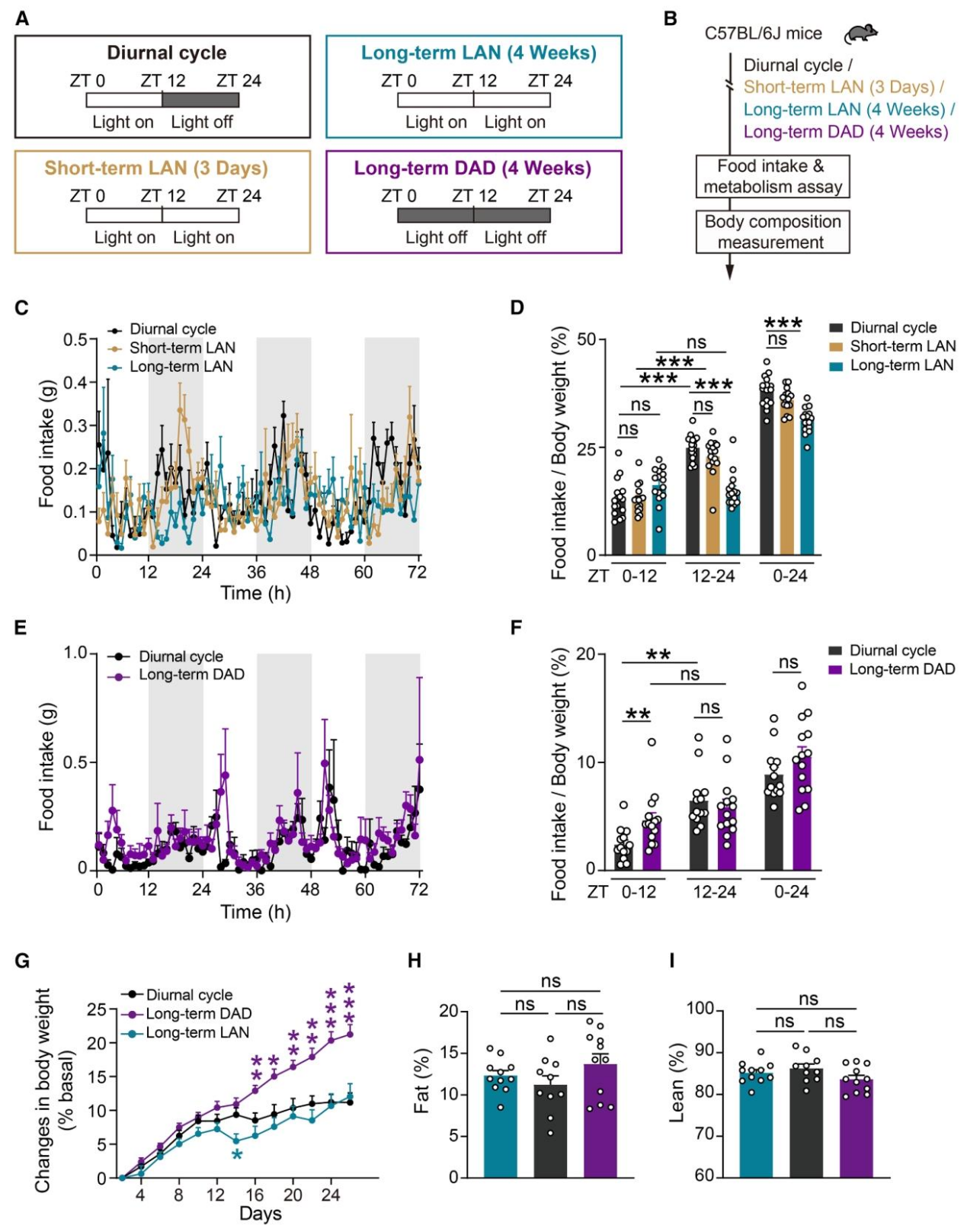
The authors first constructed two mouse models of circadian rhythm disruption to simulate light/dark cycle abnormalities caused by modern lifestyle factors such as staying up late and shift work, and explored their impact on feeding behavior. The groups included a normal circadian cycle group, a short-term/long-term LAN group (light at night, 24h light), and a long-term DAD group (dark at day, 24h darkness). Subsequently, they measured feeding, metabolism, and body composition (Figure 1A-B). Short-term LAN had no significant effect on feeding in mice, while long-term LAN significantly inhibited feeding during the dark phase, leading to a disruption in the overall feeding rhythm (Figure 1C-D). Long-term DAD resulted in a significant increase in feeding during the light phase, similarly disrupting the circadian feeding pattern (Figure 1E-F); long-term LAN mice showed no significant change in body weight, whereas long-term DAD mice gained weight; however, both groups showed no significant changes in fat or lean mass, suggesting that the impact of disrupted feeding rhythms on body composition is model-specific (Figure G-I).

Figure 1 | Long-term LAN and DAD Alter Circadian Feeding Rhythms in Mice
 

vHPC NPY-INs Activity Exhibits Circadian Rhythm, and Chronic Light/Dark Disruption Abolishes This Rhythm

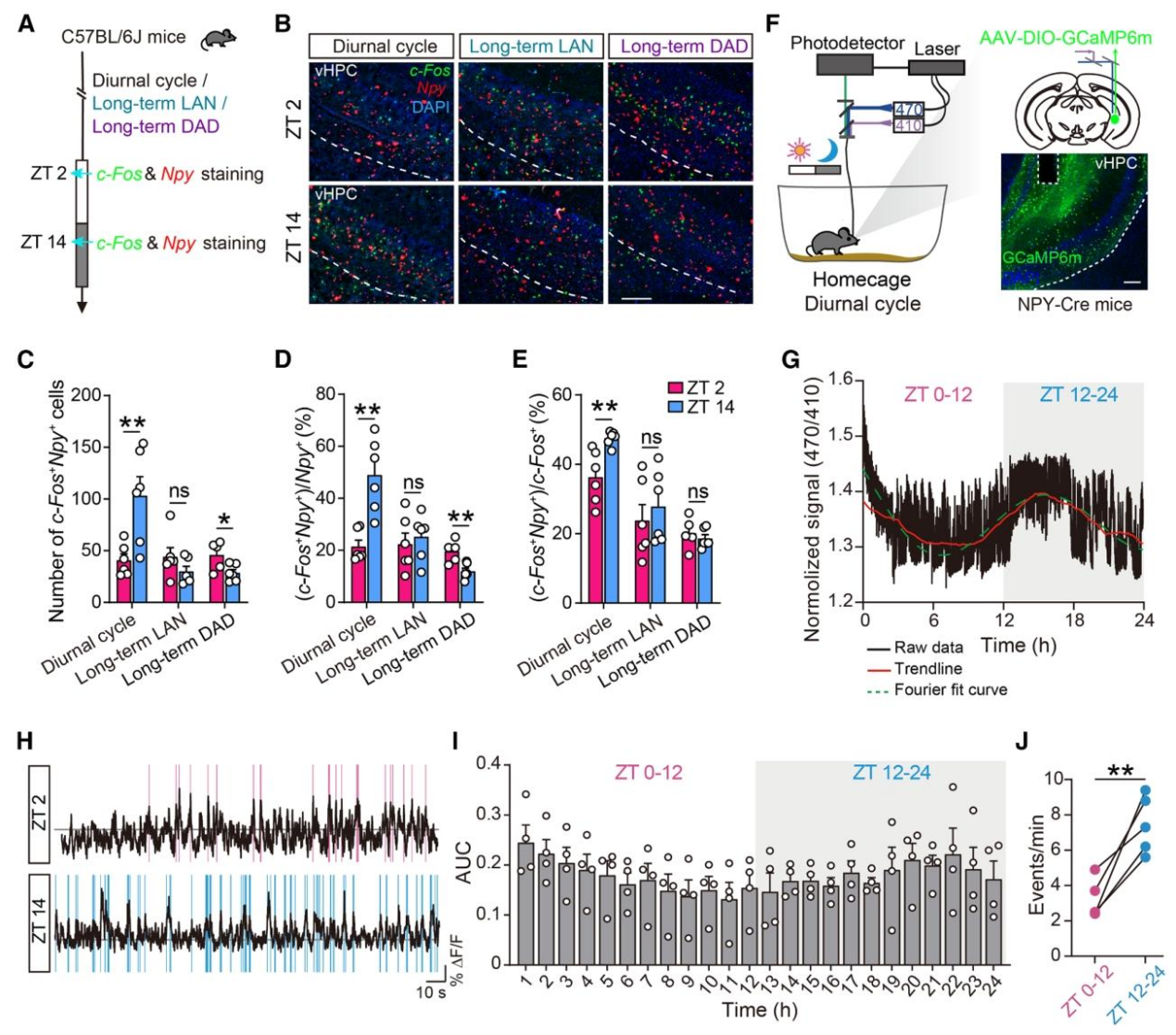
After confirming the phenotypes of disrupted feeding rhythms, the authors used activity labeling and in vivo calcium imaging to screen and verify the circadian activity characteristics of ventral hippocampal NPY interneurons (vHPC NPY-INs), which became the key cell target of the study. Using c-Fos (neuron activation marker) and NPY double staining, they found that under a normal circadian cycle, activation levels of vHPC NPY-INs in the dark phase (ZT14) were significantly higher than in the light phase (ZT2); however, after long-term LAN or DAD treatment, this circadian difference in activation completely disappeared (Figure 2A-E). In vivo calcium signal recordings using fiber photometry further confirmed that, under normal conditions, the calcium signal of vHPC NPY-INs exhibited a 24-hour cyclical fluctuation with higher activity during the dark phase and lower activity during the light phase; the calcium event frequency between the light and dark phases differed significantly, and this rhythm was disrupted in the circadian disruption models (Figure 2F-J).

Figure 2 | Circadian Rhythm Disruption Disrupts the Rhythmic Activity of vHPC NPY-INs


Chemogenetic Modulation of vHPC NPY-INs Activity Can Bi-directionally Regulate Circadian Feeding Behavior in Mice

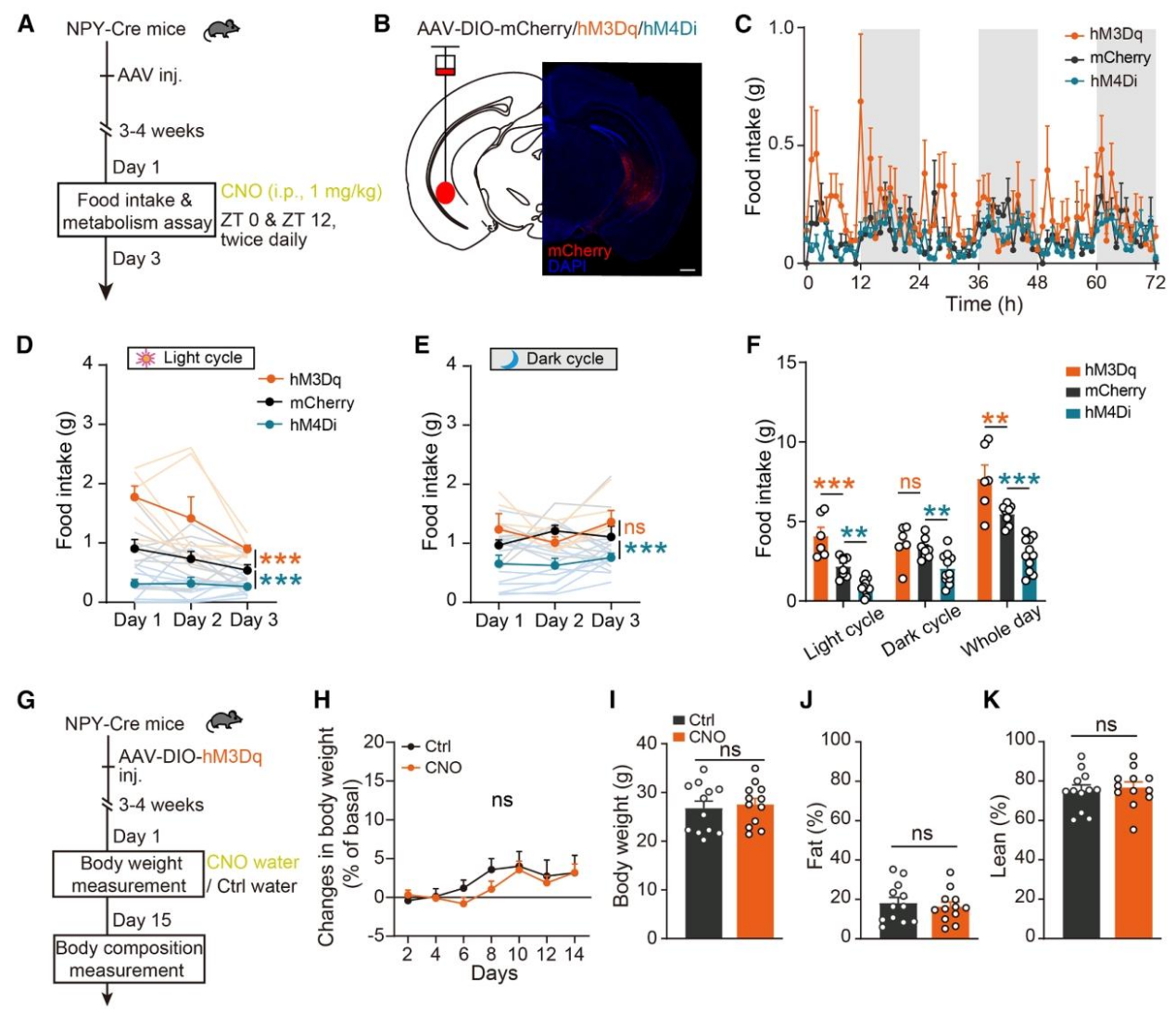
To establish a causal relationship between the activity of vHPC NPY-INs and feeding behavior, the authors used the Cre-loxP system to specifically express excitatory DREADD (hM3Dq) or inhibitory DREADD (hM4Di) in the vHPC of NPY-Cre mice. By administering CNO to regulate neuronal activity, they measured changes in feeding behavior. During the light phase, activation of vHPC NPY-INs (hM3Dq) significantly increased feeding, while inhibition of these neurons (hM4Di) significantly reduced feeding; during the dark phase, these neurons were already highly active, and activation had no additional effect, while inhibition significantly reduced dark-phase feeding. This modulation specifically affected food intake without influencing water intake (Figure 3C-F). Long-term activation of vHPC NPY-INs did not change body weight or composition in mice, as neuronal activation simultaneously increased energy expenditure during the light phase, counteracting the effect of increased feeding (Figure 3G-K). Furthermore, various behavioral experiments (novel object recognition, Y-maze, open field test, etc.) ruled out the possibility that this neuronal modulation of feeding was mediated by indirect effects on memory, anxiety, or other behaviors.

Figure 3 | vHPC NPY-INs Regulate Feeding Behavior in the Circadian Cycle


vHPC NPY-INs Regulate Feeding at Different Times of Day via Switching Between Light Phase NPY and Dark Phase GABA Signals

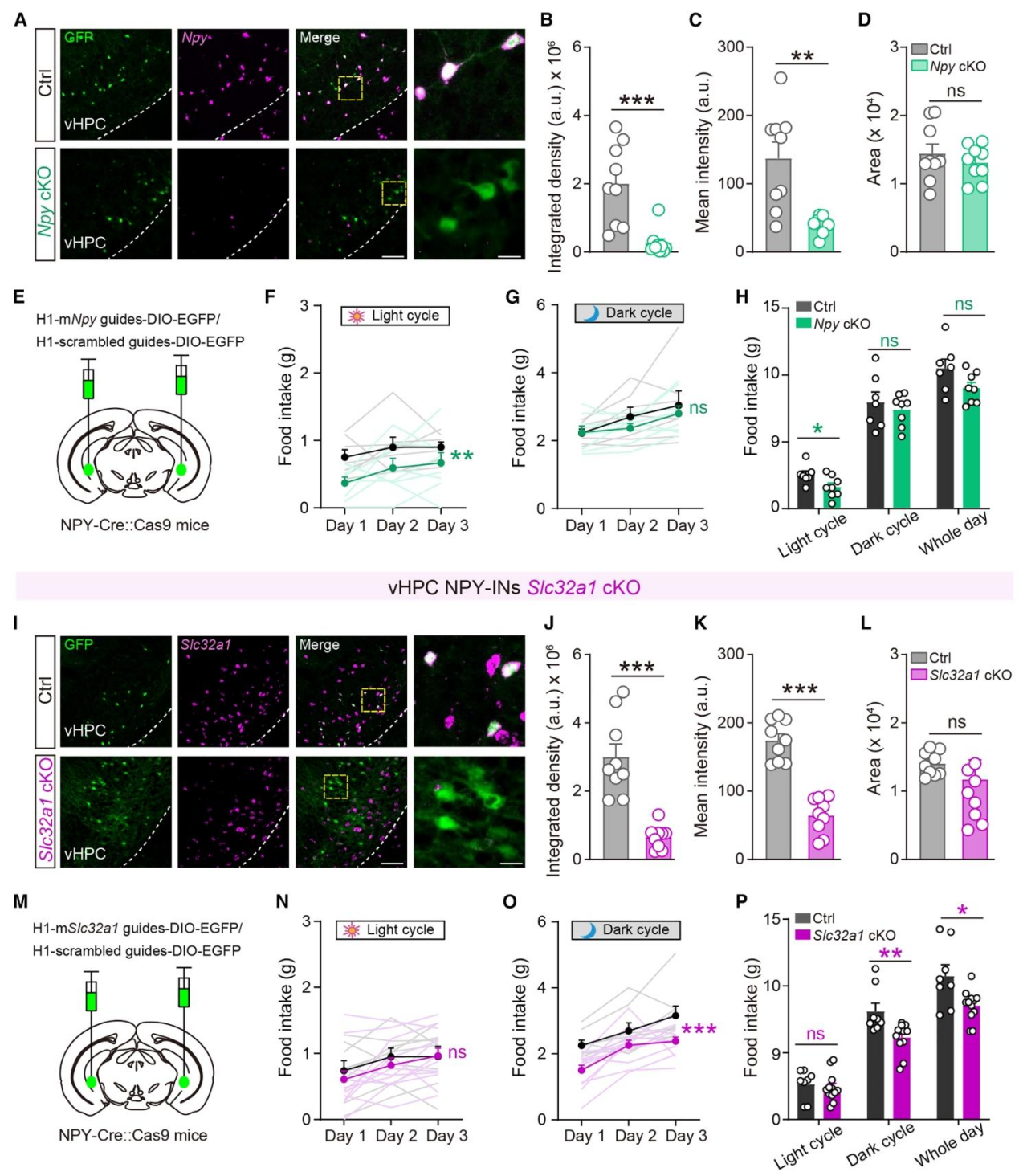
NPY-INs can co-release both NPY and GABA signaling molecules. The authors used CRISPR-Cas9 conditional knockout technology to knock out the Npy gene and the Slc32a1 gene (GABA vesicular transporter, regulating GABA release) in vHPC NPY-INs to investigate the specific roles of these two signaling molecules in circadian feeding. Conditional knockout of Npy (cKO) significantly reduced NPY mRNA expression in the vHPC (Figure 4A-D). Npy cKO mice showed a significant reduction in feeding during the light phase, but no changes in feeding during the dark phase (Figure 4F-H). After verifying the efficiency of Slc32a1 cKO, the expression of GABA transporter mRNA in the vHPC was significantly reduced (Figure 4I-L). Slc32a1 cKO mice showed a significant reduction in feeding during the dark phase, but no significant changes during the light phase (Figure N-P). The findings revealed that vHPC NPY-INs have a circadian signal switching mechanism—during the light phase, the neurons are less active and primarily regulate feeding via NPY signaling; during the dark phase, the neurons are highly active and primarily regulate feeding via GABA signaling. These two signaling molecules function in different phases to maintain the circadian feeding rhythm.

Figure 4 | vHPC NPY-INs Exhibit Circadian Signal Switching Mechanism


MPOA Provides Dual Glutamatergic and GABAergic Synaptic Inputs to vHPC NPY-INs, Mediating Their Circadian Plasticity

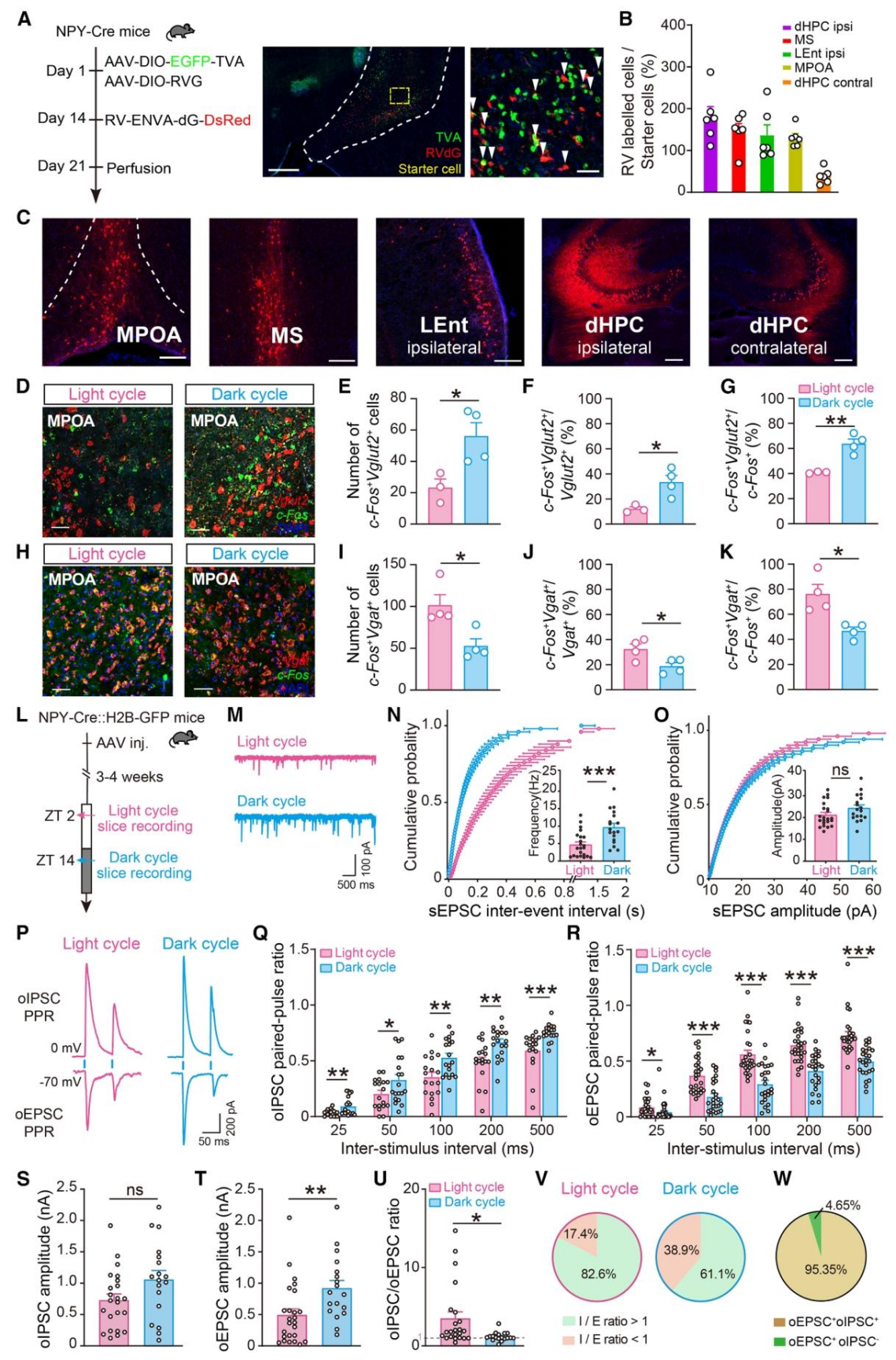
After identifying the core neurons and signaling molecules, the authors used rabies virus retrograde tracing to screen the upstream input nuclei and combined electrophysiological techniques to analyze the circuit mechanism that regulates the circadian activity of vHPC NPY-INs. This was the analysis of the upstream circuit. Rabies virus monosynaptic retrograde tracing revealed that the major upstream input nuclei of vHPC NPY-INs include the medial septum (MS), lateral entorhinal cortex (LEnt), dorsal hippocampus (dHPC), and medial preoptic area (MPOA), with the MPOA being a classic circadian rhythm regulation nucleus and a focus of the study (Figure 5A-C). RNAscope dual labeling revealed that under a normal circadian cycle, GABAergic neurons (Vgat⁺) in the MPOA were more activated during the light phase, while glutamatergic neurons (Vglut2⁺) were more activated during the dark phase, corresponding with the light-dark activity rhythm of vHPC NPY-INs (Figure 5D-K). Electrophysiological recordings showed that the frequency of spontaneous excitatory postsynaptic currents (sEPSC) in vHPC NPY-INs was significantly higher during the light phase than during the dark phase, indicating that their presynaptic inputs exhibit circadian plasticity (Figure 5L-O). Paired-pulse stimulation experiments demonstrated that during the light phase, MPOA provided a higher probability of GABAergic input to vHPC NPY-INs, while during the dark phase, the probability of glutamatergic input was higher. Moreover, over 96% of MPOA neurons simultaneously provided both types of input, regulating the excitatory/inhibitory (I/E) balance to precisely control the circadian activity of vHPC NPY-INs (Figure 5P-W).

Figure 5 | MPOA is a Key Upstream Nucleus Regulating the Circadian Activity of vHPC NPY-INs


MPOA Regulates Circadian Feeding Behavior in Mice via vHPC NPY-INs, with Light-Phase Regulation Dependent on NPY Signaling

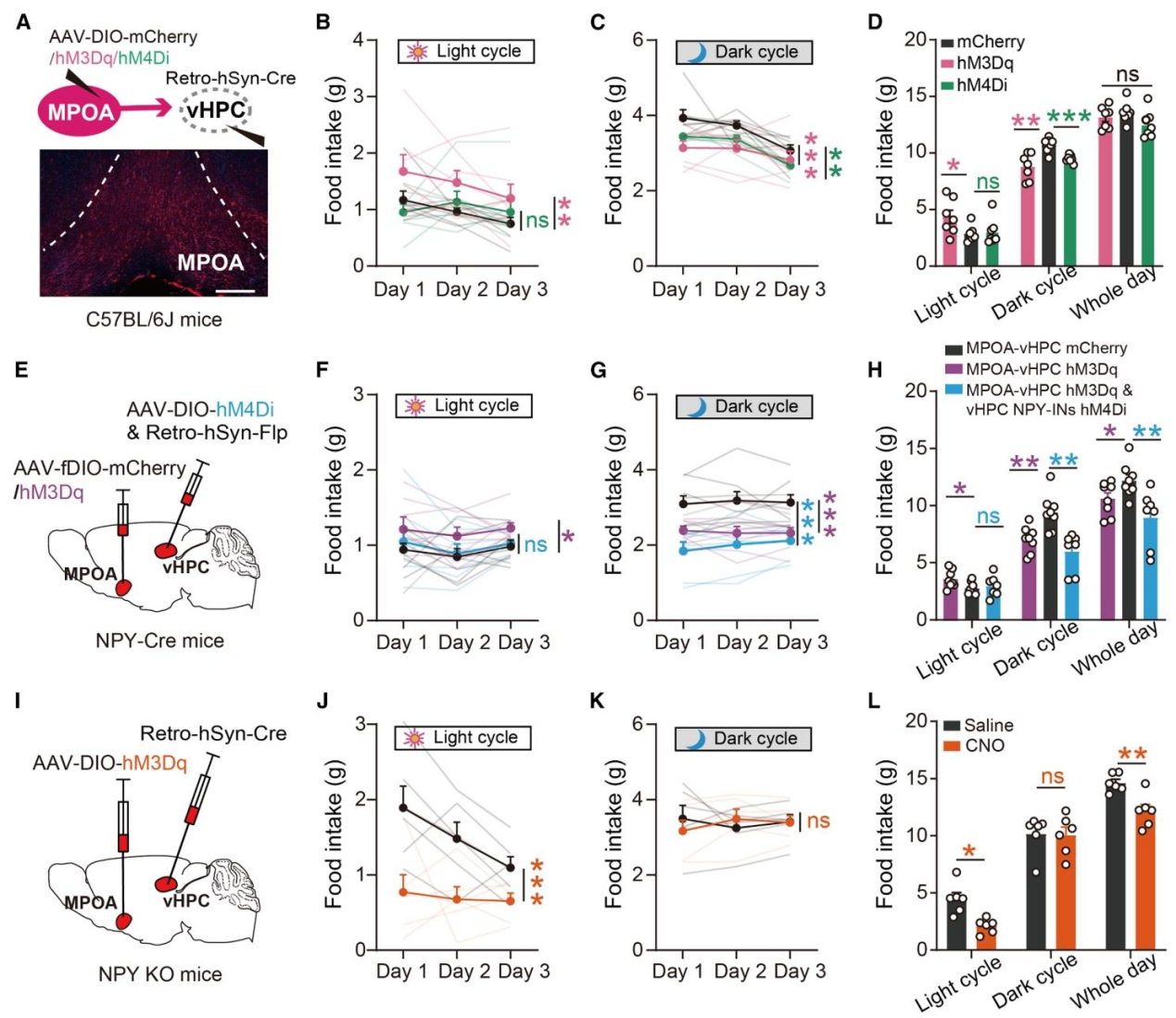
To verify the functional causality of the MPOA → vHPC NPY-INs circuit, the authors combined retrograde viral tracing with chemogenetics to specifically control MPOA neurons projecting to the vHPC, and conducted circuit cross-regulation experiments to confirm the upstream-downstream relationship. Specific activation of MPOA neurons projecting to the vHPC increased feeding during the light phase (activating glutamatergic inputs, enhancing vHPC NPY-INs activity), while reduced feeding during the dark phase (activating GABAergic inputs, inhibiting vHPC NPY-INs activity). Inhibition of this projection resulted in the opposite effect, and manipulation of other upstream nuclei (MS/LEnt/dHPC) had no impact on feeding, confirming the specificity of the MPOA (Figure A-D). Simultaneous activation of MPOA → vHPC projections and inhibition of vHPC NPY-INs completely blocked the increase in light-phase feeding induced by MPOA activation, confirming that vHPC NPY-INs are the downstream key effectors of MPOA's regulation of feeding (Figure E-H). In NPY knockout mice, activation of MPOA → vHPC projections no longer increased light-phase feeding and even decreased it, confirming that MPOA's regulation of light-phase feeding is dependent on NPY signaling released by vHPC NPY-INs (Figure I-L).

Figure 6 | MPOA is the Core Upstream Circuit for MPOA → vHPC NPY-INs Regulation of Circadian Feeding in Mice
 

vHPC NPY-INs Regulate Light-Phase Feeding via NPY₁R/NPY₂R Signaling in vSub

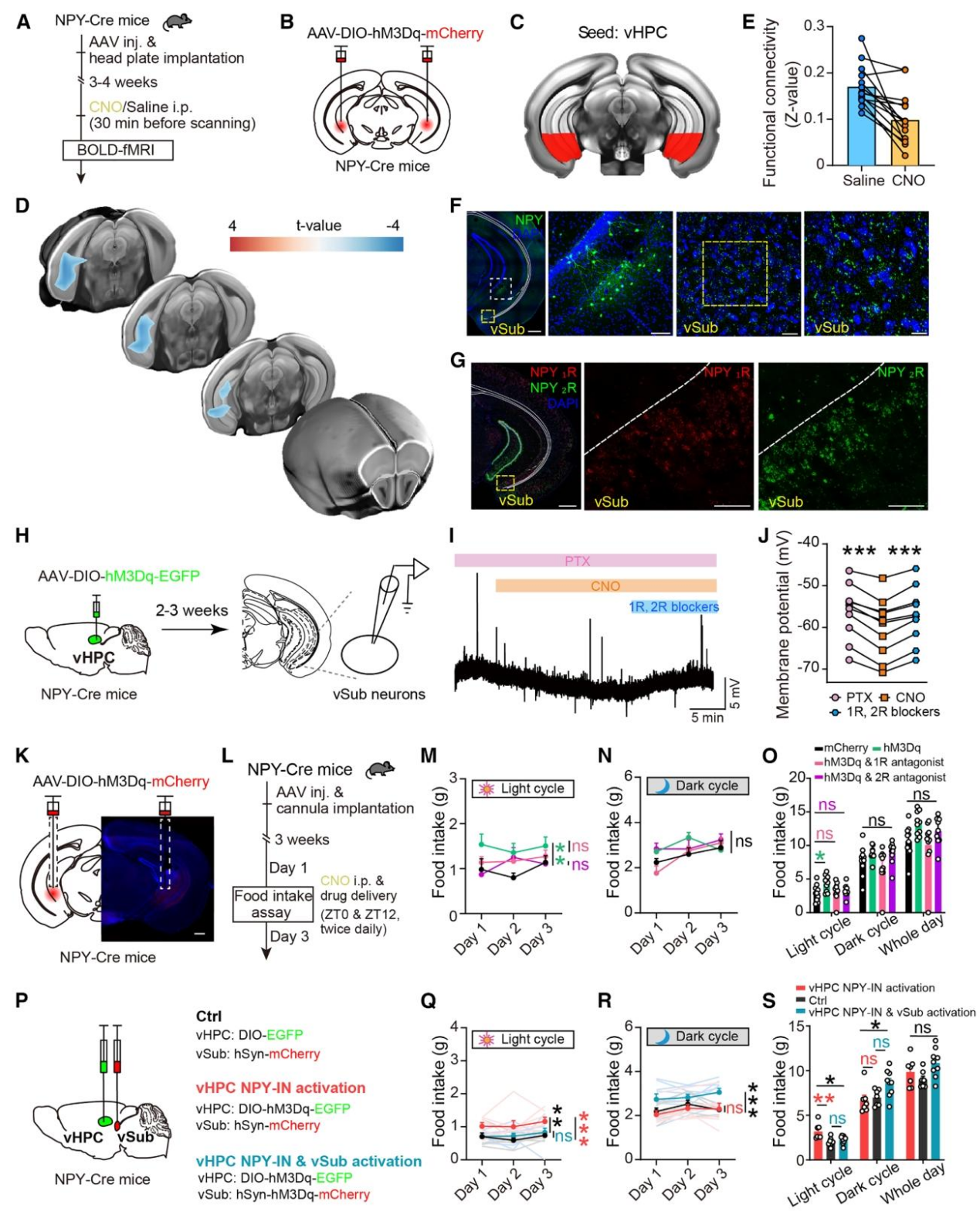
After elucidating the upstream circuit, the authors used in vivo fMRI, anterograde tracing, electrophysiology, and pharmacological interventions to clarify the downstream nuclei and receptor mechanisms through which vHPC NPY-INs regulate feeding, completing the entire circuit analysis. In awake state fMRI, activation of vHPC NPY-INs led to a significant decrease in functional connectivity with the ventral subiculum (vSub), suggesting that vSub is a key downstream nucleus (Figure 7A-E). Anterograde tracing confirmed that vHPC NPY-INs project densely to vSub, and vSub neurons highly express NPY₁R and NPY₂R (the main receptors for NPY) (Figure 7F-G). Electrophysiological recordings showed that activation of vHPC NPY-INs or direct application of NPY caused hyperpolarization (inhibition) of vSub neurons, and this effect was completely blocked by NPY₁R+NPY₂R antagonists, confirming that vHPC NPY-INs inhibit vSub neurons via NPY signaling (Figure H-J). Lateral ventricle injection of NPY₁R or NPY₂R antagonists completely blocked the increase in light-phase feeding caused by activation of vHPC NPY-INs, confirming that light-phase feeding regulation is dependent on NPY₁R/NPY₂R signaling in vSub (Figure K-O). Simultaneous activation of vHPC NPY-INs and vSub neurons blocked the increase in light-phase feeding induced by vHPC NPY-INs activation, confirming that vSub is a necessary downstream nucleus for vHPC NPY-INs regulation of light-phase feeding (Figure 7P-S). vHPC NPY-INs directly project to vSub, releasing NPY and binding to NPY₁R/NPY₂R receptors to inhibit vSub neuronal activity, thereby regulating light-phase feeding behavior in mice.

Figure 7 | vHPC NPY-INs Regulate Light-Phase Feeding via NPY₁R and NPY₂R Signaling in vSub


Summary
Combining all experimental results, Professor Tianle Xu's team has for the first time depicted a novel neural circuit regulating circadian feeding in mice: MPOA (glutamatergic/GABAergic dual input) → vHPC NPY-INs (light-phase NPY/dark-phase GABA signal switching) → vSub (NPY₁R/NPY₂R mediated). This circuit achieves precise regulation from the circadian rhythm center to the hippocampus, and then to downstream effector nuclei, integrating classic circadian rhythm regulation with the higher neural functions of the hippocampus. This offers a new perspective on the regulation of feeding rhythms.


The Tools Used in This Study from Brain Case Biotech:
Product Category Product Number Product Name
Fluorescent Protein BC-0016 rAAV-EF1α-DIO-mCherry
BC-0479 rAAV-hSyn-FDIO-mCherry
BC-0015 rAAV-EF1α-DIO-EGFP
Chemogenetics BC-0146 rAAV-EF1α-DIO-hM3D(Gq)-mCherry
BC-0144 rAAV-hSyn-DIO-hM3D(Gq)-EGFP
BC-0182 rAAV-hSyn-hM3D(Gq)-mCherry
BC-0155 rAAV-EF1α-DIO-hM4D(Gi)-mCherry
BC-4927 rAAV-hSyn-FDIO-hM3D(Gq)-P2A-mCherry
Optogenetics BC-0097 rAAV-hSyn-hChR2(H134R)-mCherry
Calcium Imaging BC-0087 rAAV-EF1α-DIO-GCaMP6m
AAV-helper BC-0442 rAAV-EF1α-DIO-N2cG
BC-0042 rAAV-EF1α-DIO-H2B-EGFP-T2A-TVA
RV BC-RV-CVS EnvA462 CVS-EnvA-ΔG-tdTomato
Recombinase BC-0159 rAAV-hSyn-SV40 NLS-Cre
BC-0172 rAAV-hSyn-SV40 NLS-Flp
 
Brain Case Biotech also offers a variety of customized services.
For more information, please contact

bd@ebraincase.com

Service Type :

Select the service you'd like to purchase.

Order Information(Premade-AAVs)

Please provide us some information about the service you'd like to order.

How did you hear about BrainCase Biotech or our products?(Fill in this field to get a discount coupon)

Detailed requirements:

scroll

Order Information(Custom AAV/Lentivirus)

Please provide us some information about the service you'd like to order.

Gene ID or gene information:

Selection of the reporting gene:

Special Instructions:

scroll

Order Information(Others)

Please provide us some information about the service you'd like to order.

Virus name/Detailed requirements:

scroll

Related products

Client Article | Neuron | Professor Tianle Xu from Shanghai Jiao Tong University and Professor Juan Song from UNC Unveil the Precise Neural Mechanisms of Circadian Feeding Regulation in Mice

Client Article | Neuron | Professor Tianle Xu from Shanghai Jiao Tong University and Professor Juan Song from UNC Unveil the Precise Neural Mechanisms of Circadian Feeding Regulation in Mice

Client Article | Cell Stem Cell | Team of Weixiang Guo at the Chinese Academy of Sciences Uncovers Key Neural Mechanisms Linking Auditory Loss to Cognitive Decline

Client Article | Cell Stem Cell | Team of Weixiang Guo at the Chinese Academy of Sciences Uncovers Key Neural Mechanisms Linking Auditory Loss to Cognitive Decline

400+ Customer Publications Collection.

400+ Customer Publications Collection.

Client Article | Neuron | Reveals the Molecular Mechanism of Astrocytic H3R Regulation of Anxiety Behavior via GABA Signaling

Client Article | Neuron | Reveals the Molecular Mechanism of Astrocytic H3R Regulation of Anxiety Behavior via GABA Signaling

map
{dede:global.cfg_webname/}

Pre-made AAV Library

CRISPR
RNAi
Neurotropic virus
Optogenetics activation
Biosensors

News

Corporate News
New Product Launch
Test Report
Investor News

Support

Literature interpretation
Customer article
FAQs
Blog
Legal
微信

WhatsApp Business Account

Tel: +8618971215294
E-mail: BD@ebraincase.com

Address:-

Address:-

  • Copyright © 2024 Brain Case All Rights Reserved.