- E-mail:BD@ebraincase.com
- Tel:+8618971215294

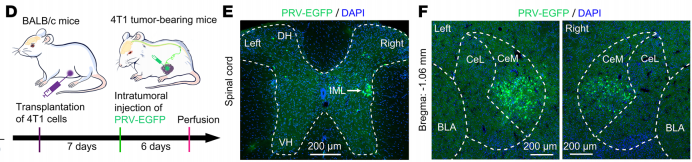
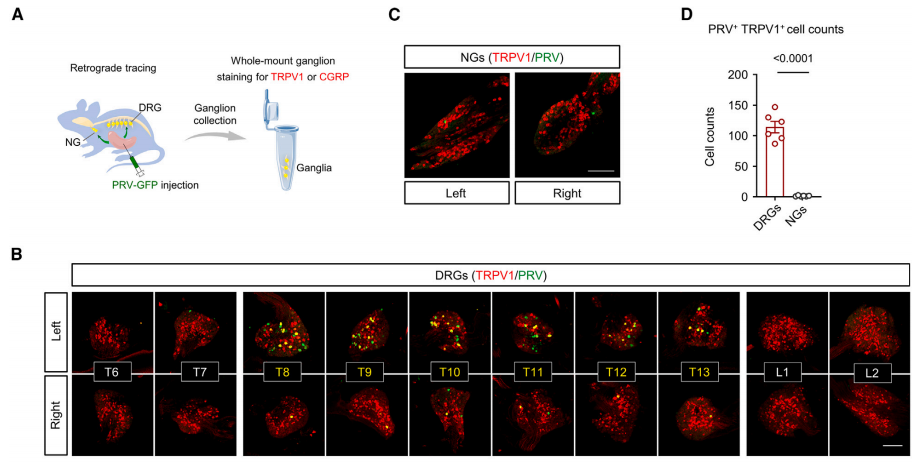
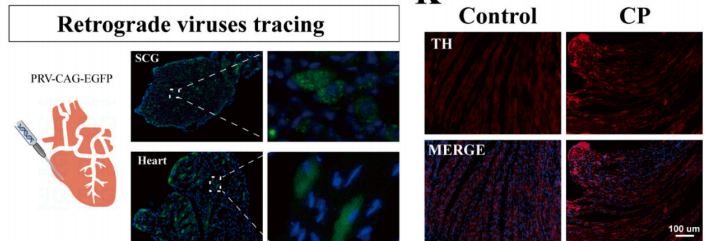
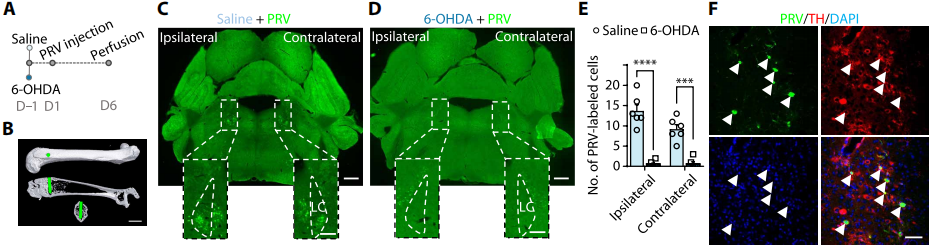
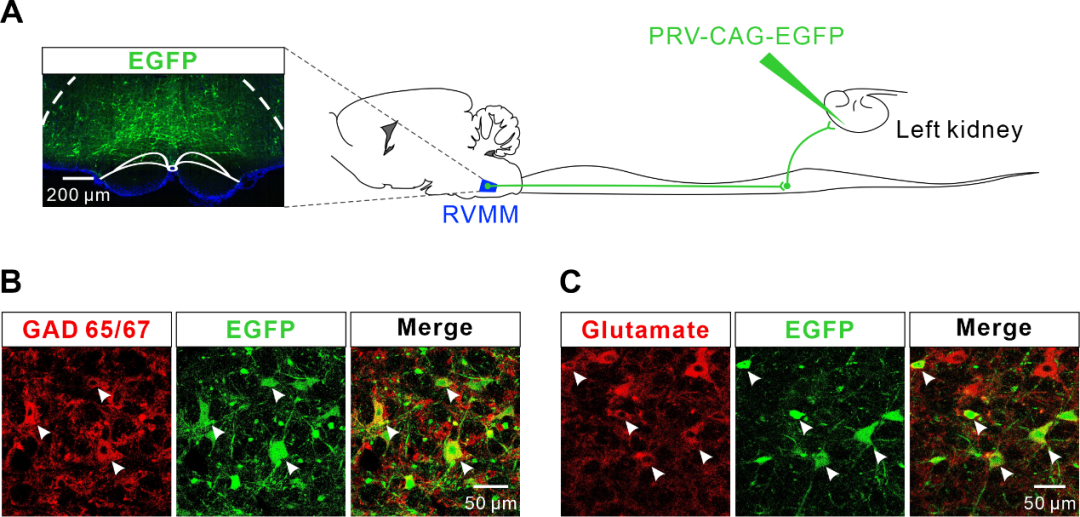
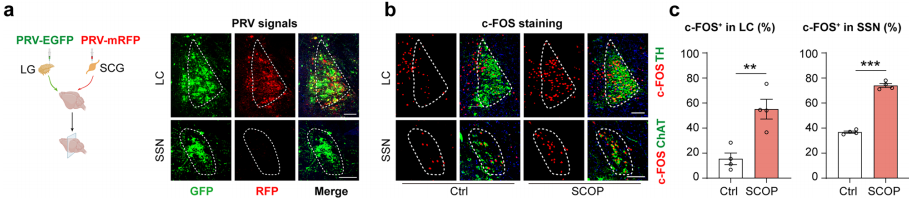
Figure 6. Brain regions providing noradrenergic projections to the lacrimal gland
Original link: https://www.nature.com/articles/s41467-025-60476-z
Published: Nature Communications (2025)
Research group: The Second Xiangya Hospital, Central South University; Ruping Dai / Hui Li
Virus: BC-PRV-531 (PRV-CAG-EGFP, green fluorescence)
Experimental procedure:
PRV was microinjected into multiple sites of the left lung lobe in mice (total volume: 1 μL). Six days after injection, spinal cord and whole-brain sections were collected following transcardial perfusion. Retrograde tracing identified abundant CRH-expressing PRV-positive neurons in the paraventricular nucleus of the hypothalamus (PVN). PRV-positive neurons were also detected throughout the spinal cord and brainstem, providing direct anatomical evidence for a multisynaptic central sympathetic pathway projecting from the PVN to the lung.
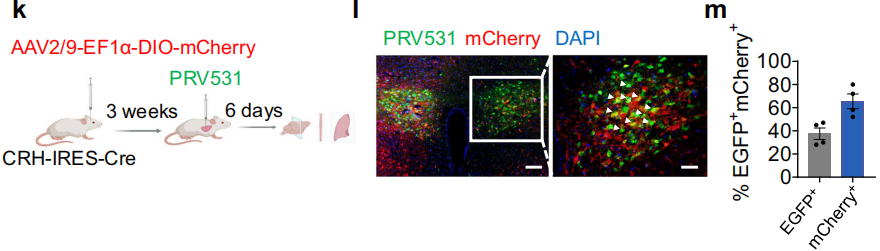
Figure 7. Retrograde PRV tracing in Crh-IRES-Cre mice
Original link: https://www.nature.com/articles/s41467-025-63953-7
Published: Cell Stem Cell (2025)
Research group: Shanghai Institute of Nutrition and Health, Chinese Academy of Sciences; Jun Qin; Shanghai Jiao Tong University; Qi Han; Tongji University; Moubin Lin; Shanghai Institute of Immunity and Infection, Chinese Academy of Sciences; Xiao Su
Virus: BC-PRV-531 (PRV-CAG-EGFP, green fluorescence)
Experimental procedure:
PRV was microinjected into three sites of the mouse duodenum (total volume: 2 μL). Seventy-two hours after injection, tissues were collected following transcardial perfusion. Sections of the intestine, celiac ganglion, spinal cord, and whole brain were prepared for analysis. Retrograde transsynaptic tracing labeled multiple orders of upstream neurons innervating the intestine. Numerous PRV-positive neurons were identified in the dorsal motor nucleus of the vagus (DMV), intermediolateral cell column (IML) of the spinal cord, and celiac ganglion, delineating the complete brain–vagus–gut neural circuit underlying chronic stress–mediated regulation of intestinal stem cells.
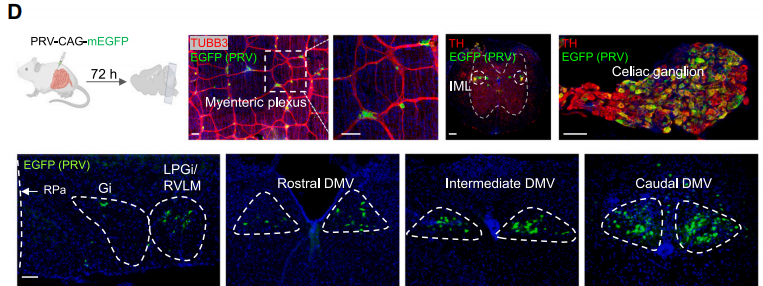
Figure 8. Retrograde transsynaptic PRV tracing delineates the neural circuitry connecting the brain and the intestine
Original link: https://www.sciencedirect.com/science/article/abs/pii/S1934590925000840
Published: Nature Communications (2025)
Research group: Institute of Neuroscience, Chinese Academy of Sciences; Yi Li; Nanjing Medical University; Weihua Cai
Virus: BC-PRV-531 (PRV-CAG-EGFP, green fluorescence)
Experimental procedure:
PRV was microinjected into multiple sites of the tibialis anterior and gastrocnemius muscles in mice. Three injection sites were established within each muscle at a depth of 0.5–1.0 mm, with 1 μL administered per site. Whole-brain clearing and imaging were performed 5.5 days after injection. PRV-EGFP-positive neurons were highly enriched in the caudal lateral hypothalamic area (cLHA) and were broadly distributed throughout the oral pontine reticular nucleus (PnO) and the intermediolateral cell column (IML) of the spinal cord. Retrograde tracing reconstructed the multisynaptic motor circuit extending from peripheral hindlimb muscles to the hypothalamus. Three-dimensional reconstruction further demonstrated that glutamatergic neurons in the cLHA constitute a major upstream neuronal population controlling hindlimb motor function.
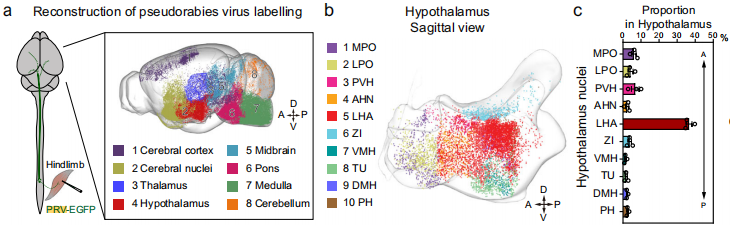
Figure 9. Retrograde labeling of upstream neurons innervating the tibialis anterior and gastrocnemius muscles
Original link: https://www.nature.com/articles/s41467-025-67133-5
Part 10. Tibialis Anterior Muscle | Reconstruction of Motor Circuits Following Thoracic Spinal Cord Organoid Transplantation
Published: Nature Biomedical Engineering (2025)
Research group: Tongji University School of Medicine; Rongrong Zhu / Liming Cheng
Virus: BC-PRV-803 (PRV-CAG-3Ms, red fluorescence)
Experimental procedure:
PRV was microinjected into four sites of the mouse tibialis anterior muscle (0.75 μL per site; 2 × 10⁹ PFU/mL). Spinal cord and whole-brain sections were collected 7 days after injection. PRV-positive signals were detected both within the transplanted engineered thoracic spinal cord organoids (enTsOrg) and in the host thoracic spinal cord ventral horn, demonstrating that the transplanted organoids established functional retrograde motor circuits with the hindlimb skeletal muscles. Combined with anterograde biotinylated dextran amine (BDA) tracing, these findings further confirmed reconstruction of a three-tier neural pathway connecting the host brain, transplanted organoids, and peripheral skeletal muscles.
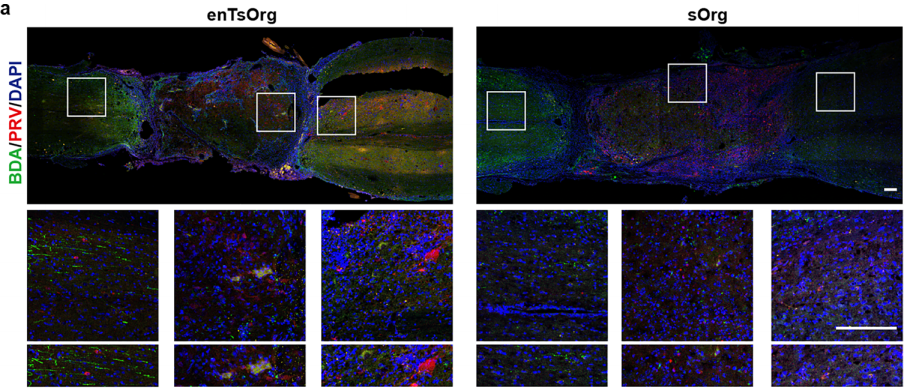
Figure 10. Neuronal tracing using combined BDA anterograde tracing and PRV retrograde tracing
Original link: https://www.nature.com/articles/s41551-025-01549-8
Published: Annals of the Rheumatic Diseases (2025)
Research group: Bone and Joint Rehabilitation Center, Yangzhi Rehabilitation Hospital, Tongji University; Jian Luo
Virus: BC-PRV-531 (PRV-CAG-EGFP, green fluorescence)
Experimental procedure:
PRV was microinjected into the mouse knee joint cavity (2 μL; 7 × 10⁹ PFU/mL) at a depth of 1.0–2.0 mm. Whole-brain and spinal cord sections were collected 96 hours after injection. PRV-EGFP-positive neurons were highly enriched in the paraventricular nucleus of the hypothalamus (PVN) and were also distributed throughout multiple upstream nuclei in the brainstem and spinal cord. Immunofluorescence co-immunostaining demonstrated extensive colocalization of PRV-labeled neurons with CRH in the PVN, providing direct anatomical evidence for a multisynaptic sympathetic pathway connecting PVN CRH-expressing neurons with the knee joint synovium.
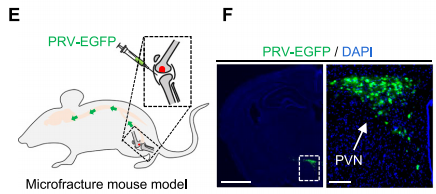
Figure 11. Retrograde transsynaptic labeling of upstream neurons innervating the knee joint
Original link: https://ard.eular.org/article/S0003-4967(25)04597-2/abstract
| No. | Product Name | Exogenous Gene | Function |
|---|---|---|---|
| BC-PRV-531 | PRV-CAG-EGFP | EGFP | Retrograde muti-synaptic tracing, Green |
| BC-PRV-801-Plus | PRV-CAG-3Gc | mClover3 | Retrograde muti-synaptic tracing, Green |
| BC-PRV-803-Plus | PRV-CAG-3Ms | mScarlet | Retrograde muti-synaptic tracing, Red |
| BC-PRV-805 | PRV-△TK-DIO-mCherry | mCherry | Retrograde muti-synaptic tracing, Red |


WhatsApp Business Account
Address:-
Address:-