E-mail:support@braincase.cn
Tel:18971216876
Brain CaseBrain Case
  • Home
  • Virus product library
    CRISPRRNAiHSV-helperRV-helperNeurophilic virusCalcium imagingOptogenetics activationOptogenetics inhibitionChemical geneticsFluorescent proteinFluorescent probeRecombinaseApoptosisDisease modelNeurotoxicityOther
  • Products service

    Product center

    Virus

    AAV
    LV
    RV
    HSV
    PRV
    VSV
    RCAS

    Plasmid

    Lentiviral plasmid
    AAV plasmid
    Plasmid Library

    Animal Model

    Neurological Disease Models
    Tumor Model
    Digestive System Disease Model
    Cardiovascular System Disease Model

    Popular applications

    Gene regulation

    Gene Overexpression
    Gene Interference
    Gene Editing

    Neural circuit function research

    Optogenetics
    Chemical Genetics
    Calcium Imaging and Fiber Optic Recording
    GRAB Neurotransmitter Fluorescent Probe
    Functional Magnetic Resonance Imaging Technology

    Research on the structure of neural circuits

    Direct Input and Output Tags
    Anterograde Tracing
    Polysynaptic Anterograde Tracing
    Retrograde Tracing
    Polysynaptic Retrograde Tracing

    Featured Services

    Animal Experiment Outsourcing Service

    Neural circuit studies
    Behavior Test
    Morphological experiment

    Nervous System Disease Drug Effect

    AD
    Depression
    PD
    Epilepsy

    Cell Experiment

    Cell Line Construction
    Dual Luciferase Experiment
    Cell Activity Detection
    Interferon Activity Detection

    Plasmid Construction

    Regular Plasmid
    Bac
    Library Construction

    Virus Packaging

    AAV
    LV
    HSV
    VSV
    RCAS

    AAV Serotype Screening

    AAV Serotype Screening Introduction

    Virus Modification

    RV
    HSV
    VSV

    Oncolytic Virus Construction Service

    HSV
    VSV

    Tumorigenicity Test

    Tumorigenicity Test Introduction

    Model Building

    Others

    Efficacy of Oncolytic Virus

    Oncolytic virus
    Herpes Simplex Virus
    Oral Stomatitis Virus
  • News
    Corporate news New product launch Product promotion Media activities Investor news
  • Support
    Literature interpretation Customer article Data download Video zone FAQs
  • About Us
    Virus product library Products service News Support About Us Contact
  • Contact
    Contact Join us
  • 中文
    English 中文版
  • Home
  • Support
  • Literature interpretation
  • Support
  • Literature interpretation
  • Customer article
  • Data download
  • Video zone
  • FAQs

Xiaobu tips | Peripheral PRV tracer - fast, accurate and bright! Everything you want is here!

Release time:2023-02-07 14:34:43

The brain is the most complex system in the body, determining physiological activities such as emotion, memory, and learning. Neural circuits are the basis for brain functions. Clarifying the composition and working principles of neural circuits is of great significance for understanding, utilizing and protecting the brain. Currently, neurotropic viruses are widely used in anatomical research on central and peripheral nerves and play an important role in the analysis of neural circuit structure and function.

PRV Bartha was originally used to study efferent nerve pathways by injecting peripheral tissue, and to study peripheral nerve pathways through antibody immunohistochemistry. After intravitreal injection of PRV-152, a PRV Bartha derivative that expresses green fluorescent protein, in hamsters, the virus only spreads retrogradely across synapses through autonomic nervous circuits and infects the suprachiasmatic nucleus [1]. Banfield[2] and others constructed the PRV Bartha recombinant virus PRV-614 expressing red fluorescent protein, established a dual-virus trans-neuron labeling technology, and studied the connection between a single neuron and multiple neural circuits in the brain. Jia et al. [3] optimized the expression level of the reporter gene and constructed two new retrograde trans-polysynaptic tracer viruses, PRV531 and PRV724.

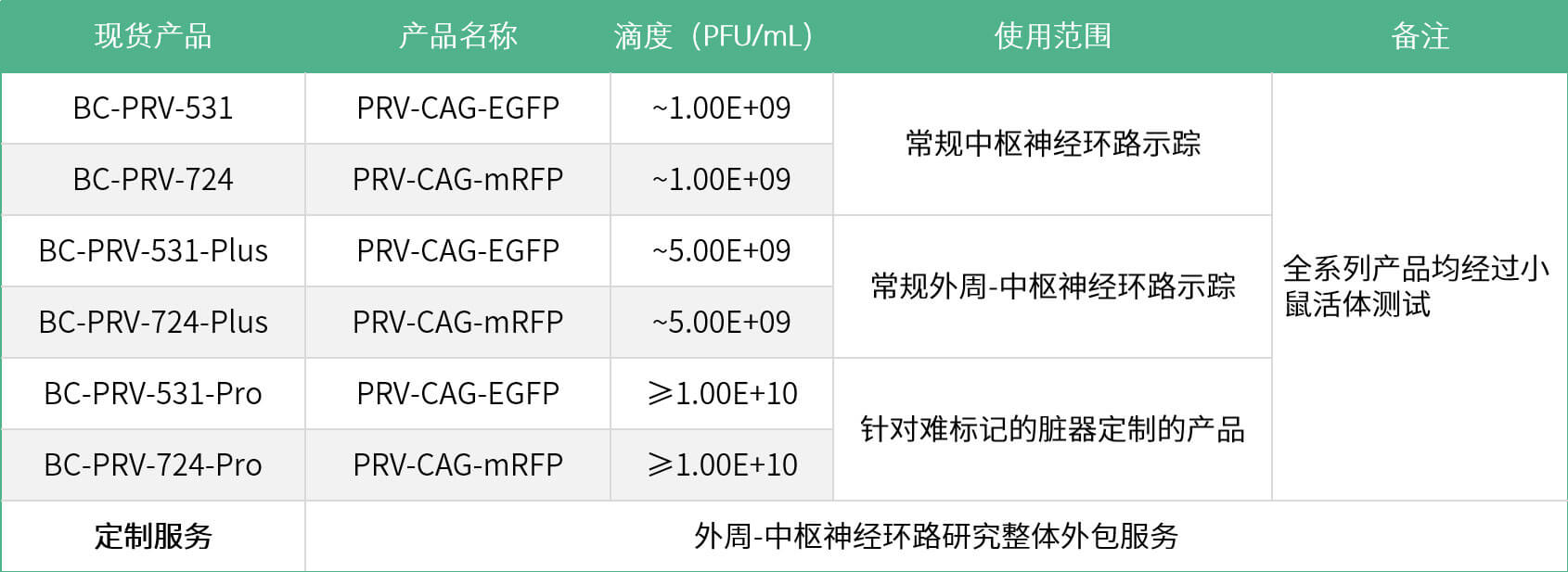
With the widespread application of PRV viruses in the research fields of central nervous circuits and central regulatory networks of peripheral organs, Brinkes has accumulated rich experience in PRV production and use. At present, the use of PRV in central nervous system circuit tracing research is becoming mature. However, in the analysis of the central regulatory network of peripheral organs, there are always problems with poor tracing effects, such as unstable tracing results and weak fluorescence signals. , low marking efficiency, etc. For details, please see previous tweets: Xiaobu tips | Peripheral-central nervous circuit marking overall service

Below, Xiaobu will share some tips for using PRV using the injection test results of our company's PRV at central markers and different peripheral parts as examples.
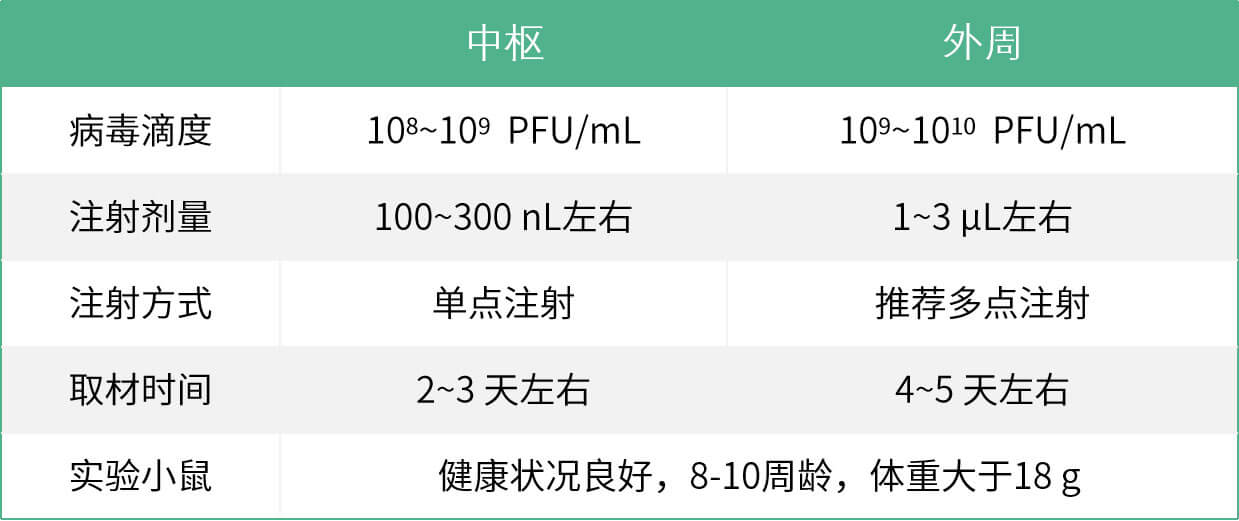
 

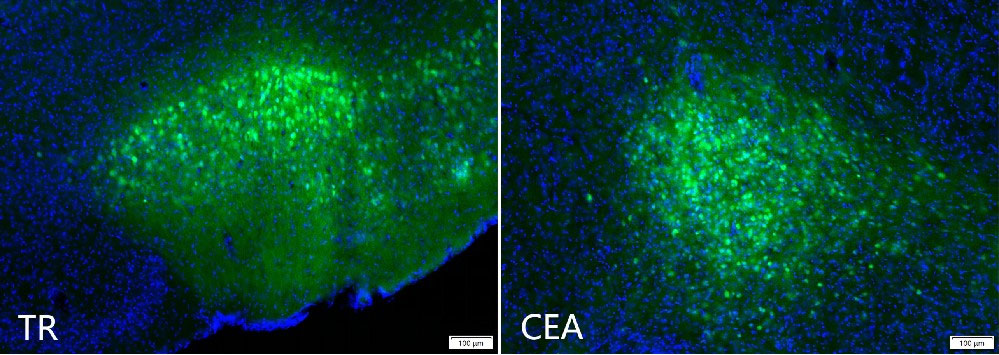
Comparison of central and peripheral use of PRV in mice


Picture of the tracer test effect of PRV in the central and peripheral mice

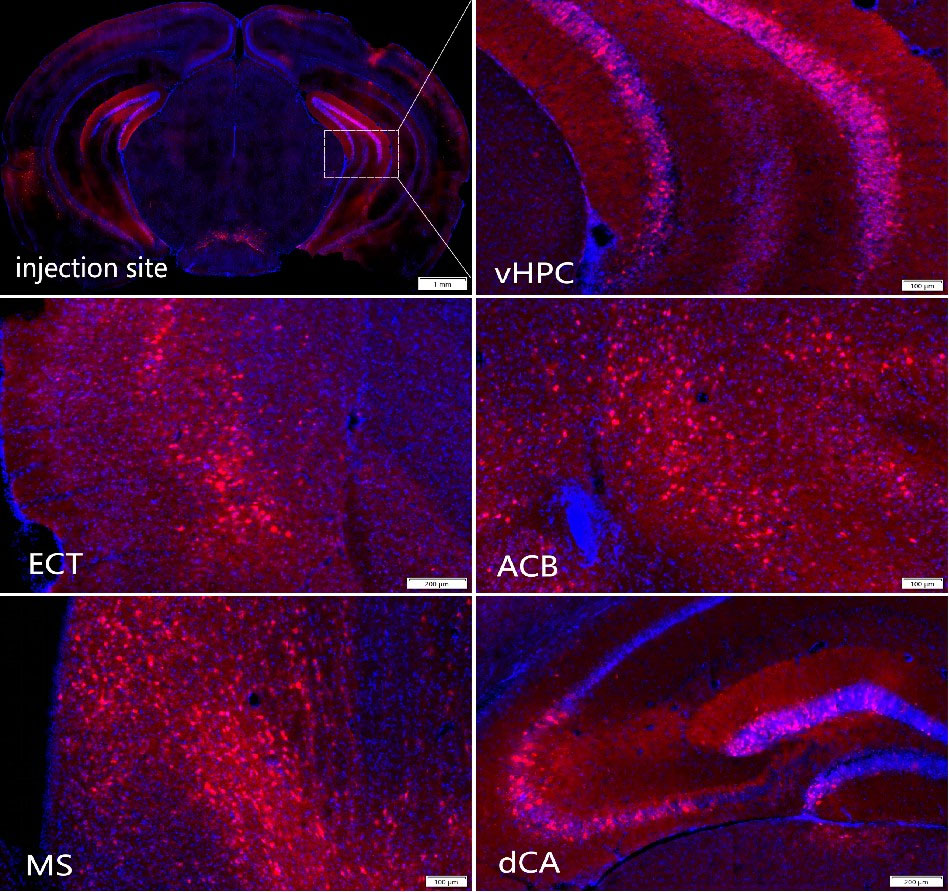
1. Central network tracer

Product: BC-PRV-724;
Dose: 100 nl;
Expression time: 3 days.
 

2. Tracing the neural regulatory network of a certain internal organ

Product: BC-PRV-531-Plus;
dosage: 3 ul;
expression time: 4-5 days.
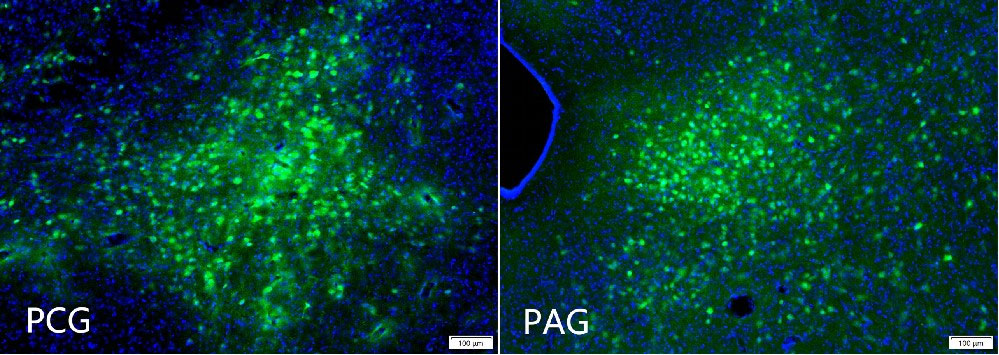
 

3. Tracing the neural regulatory network of a certain gland

Product: BC-PRV-531-Pro;
Dosage: 3 ul;
Expression time: 4-5 days.


Notes:

  • 1. Since the PRV virus has a certain toxic effect on the animal body, it is recommended to select adult and healthy animals to conduct experiments in order to complete relevant tracer research more efficiently.
  • 2. After the PRV virus is injected, the mice will show corresponding symptoms in about 3-5 days. The status of the mice should be monitored regularly. When symptoms such as curling up, twitching, and trembling appear, perfusion can be performed. When the mice are in a dying state, samples can be collected. PRV infection works best.
  • 3. After injection of PRV virus, the time window for mice to develop symptoms is difficult to control. It is recommended to increase the frequency of monitoring mice from the third day after injection;
  • 4. PRV is a reverse trans-polysynaptic virus. During animal experiments, different sampling times can be set according to the number of loop connections. According to the life cycle of the virus, it is estimated that its propagation speed in the center may be 24-36 hours across the first-level synapses; 36-48 hours across the two-level synapses; 60-72 hours across the third-level synapses or more, so it should be based on experimental needs. Arrange sampling time reasonably.
  • 5. In in vivo experiments, if the fluorescence signal is weak due to short expression time and other reasons, the fluorescence signal can be amplified through immunohistochemistry experiments.


PRV related products and services


references

  • 1. Pickard GE, Smeraski CA, Tomlinson CC, Banfield BW, Kaufman J, Wilcox CL, Enquist
  • LW, Sollars P JJ Neurosci., 2002, 22: 2701-2710
  • 2. Banfield BW, Kaufman JD, Randall JA, Pickard GE. J. Virol. , 2003, 77: 10106-10112
  • 3. Jia F, Lv P, Miao H, Shi X, Mei H, Li L, Xu X, Tao S, Xu F.Front. Neuroanat., 2019, 13: 63


If you are interested in other application directions of this product, you
are welcome to negotiate and provide customized services
. For more information, you can call Xiaobu at
18971216876 (same number on WeChat)

Unauthorized reproduction of this article is prohibited.
If necessary, please contact the editor to obtain the original text.


  • Previous: Xiaobu tips | Targeting strategies of virus tools-Heart Chapter
  • Next: Xiaobu’s interpretation | The new variant AAV.cc47 is here, achieving high efficiency and cross-species compatibility
map
{dede:global.cfg_webname/}

Virus product library

CRISPR
RNAi
Neurophilic virus
Optogenetics activation
Fluorescent probe

Products service

Product center
Featured Services
Popular applications

News

Corporate news
New product launch
Product promotion
Media activities
Investor news

Support

Literature interpretation
Customer article
Data download
Video zone
FAQs
微信

WeChat official account

Tel: 18971216876
E-mail: support@braincase.cn

Address(Wuhan):Room 409, Unit 1, Building F10, Huazhong Zhigu, Haitang Road, Hanyang District, Wuhan City, Hubei Province

Address(Shenzhen):Building A, Mingzhu Campus, Shenzhen University of Technology, Xinhu Street, Guangming District, Shenzhen City, Guangdong Province


  • Copyright © 布林凯斯生物技术股份有限公司 | 鄂ICP备090793554号
  • 互联网药品信息服务资格证书| (鄂)-非经营性-2021-0079