Bone Section | Applications of AAV in Gene Therapy: Serotype Selection, Promoter Choice, and Injection Strategies
Release time:2026-06-30 17:24:06
The skeletal system maintains overall health by supporting the body, protecting internal organs, enabling movement, participating in hematopoiesis, and regulating mineral balance. However, due to the interaction of multiple factors, its function is prone to degeneration, leading to conditions such as osteoporosis, bone non-union, and inherited bone diseases. Adeno-associated virus (AAV) is one of the most commonly used gene delivery vectors in gene therapy. In skeletal applications, specific AAV serotypes are often selected to deliver therapeutic genes—such as anti-inflammatory factors (IL-1Ra) and cartilage-protective factors (PRG4)—to articular cartilage, bone marrow mesenchymal stem cells (AAV2, AAV6.2), or osteoblasts (AAV9). These approaches help alleviate osteoarticular inflammation, promote bone tissue repair and regeneration, and restore bone metabolic balance, offering new strategies for treating skeletal diseases.
1. Osteotropicity of different AAV serotypes in skeletal tissues
Bone tissue in the skeletal system consists of osteoprogenitor cells, osteoblasts, osteocytes, and osteoclasts (which resorb old bone), as well as chondrocytes in articular cartilage that maintain cartilage elasticity and resistance to compression.
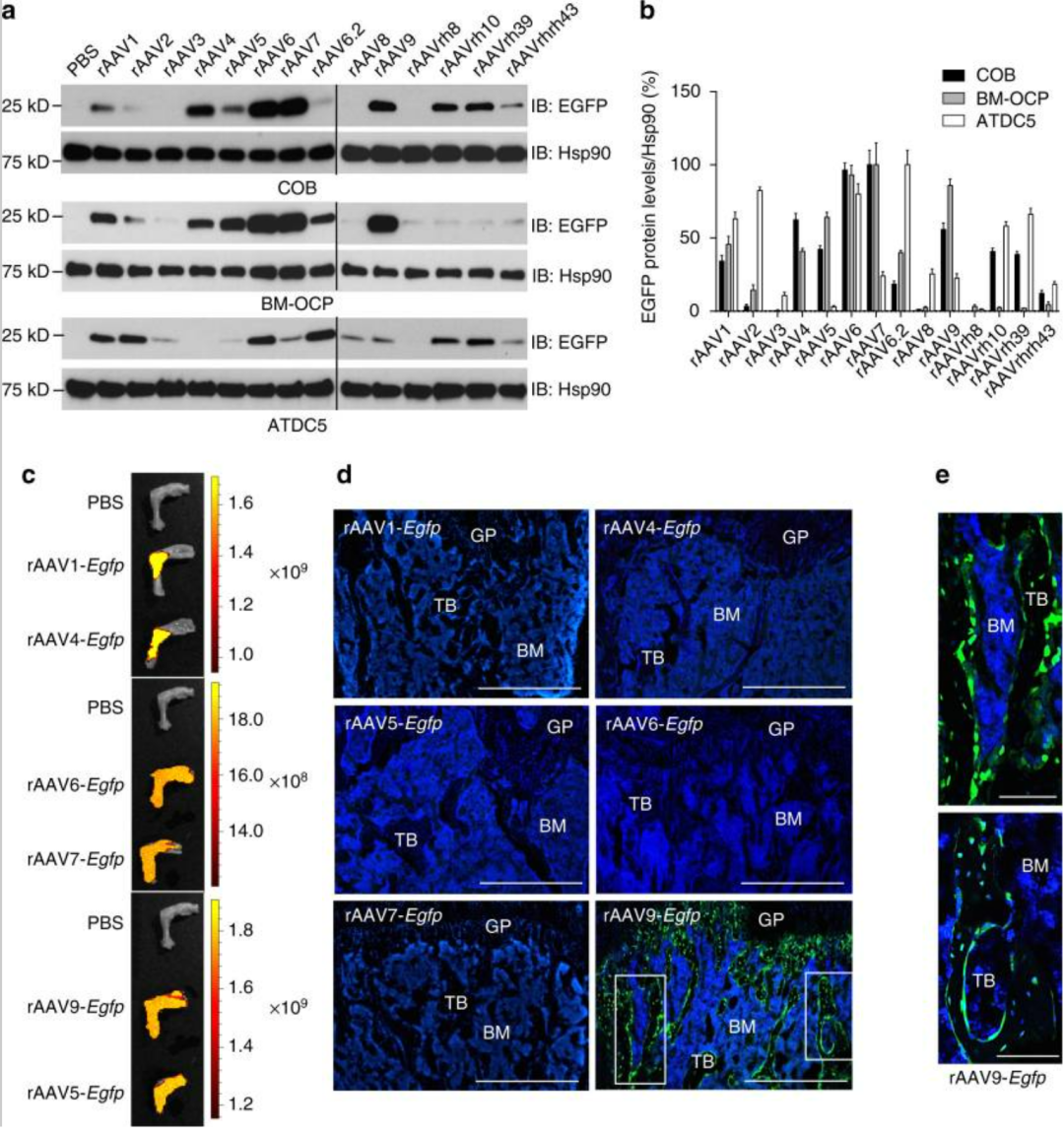
In vitro studies show that rAAV1, rAAV4, rAAV5, rAAV6, rAAV7, rAAV9, rAAVrh.10, and rAAVrh.39 can transduce osteoblast cells (COBs). rAAV1, rAAV4, rAAV5, rAAV6, rAAV7, and rAAV9 can transduce bone marrow osteoclast precursors (BM-OCPs). rAAV1, rAAV6, rAAVrh.10, and rAAVrh.39 can transduce chondrocyte progenitor cells (ATDC5).
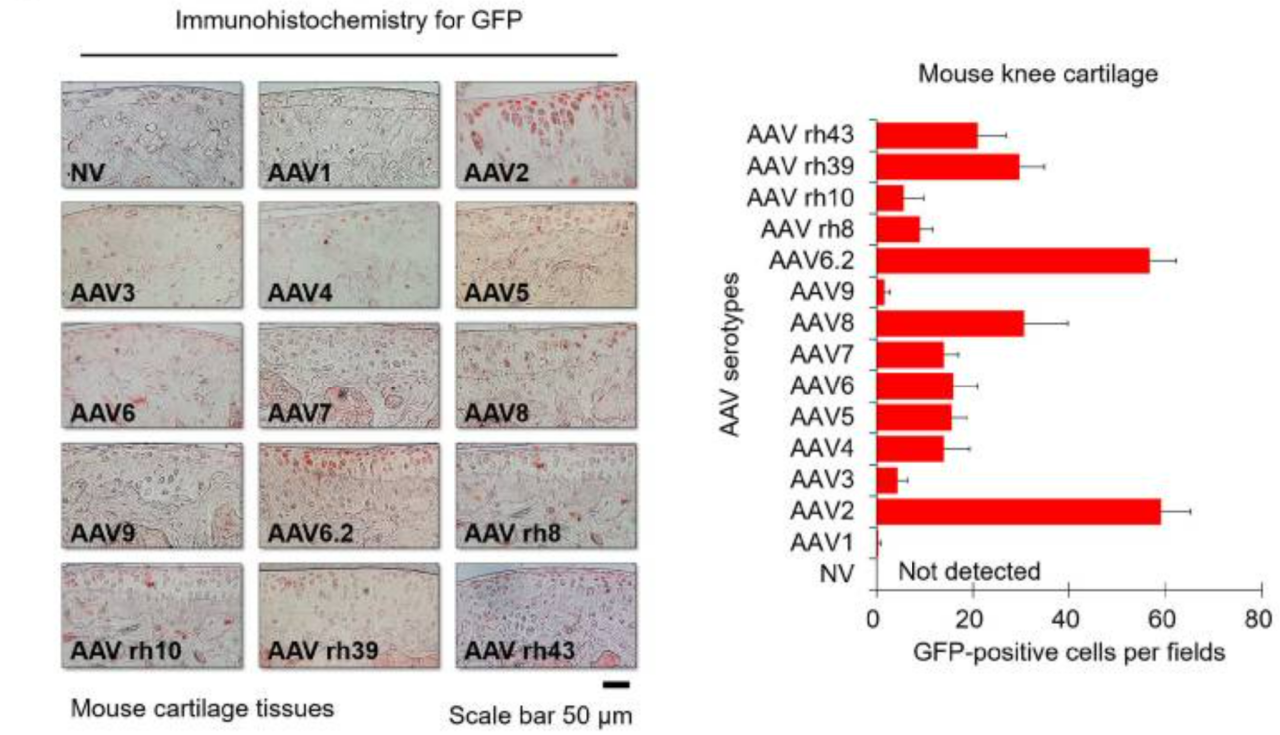
In in vivo experiments, AAV9 efficiently transduces osteoblasts, osteoclasts, and osteocytes. AAV2 and AAV6.2 can effectively transduce chondrocytes in both in vitro and in vivo settings.
Figure 1. Evaluation of transduction efficiency of different AAV serotypes in skeletal tissues in vitro and in vivo
Figure 2. In vivo transduction efficiency of different AAV serotypes in chondrocytes
2. Injection methods for AAV delivery to skeletal tissues
Common injection routes for targeting the skeletal system include tail vein injection, intra-articular injection, and intraosseous injection.
Tail vein injection is a systemic delivery method. It is simple to perform and minimally invasive, but it has relatively low tissue specificity and requires a higher viral dose.
In contrast, intra-articular injection (into joint cavities) and intraosseous injection (targeting bone marrow) offer improved specificity and higher transduction efficiency, although they are more technically demanding.
3. Literature examples
Example 1: TIPE2 treatment in Z24−/− mice with knee osteoarthritis (OA)
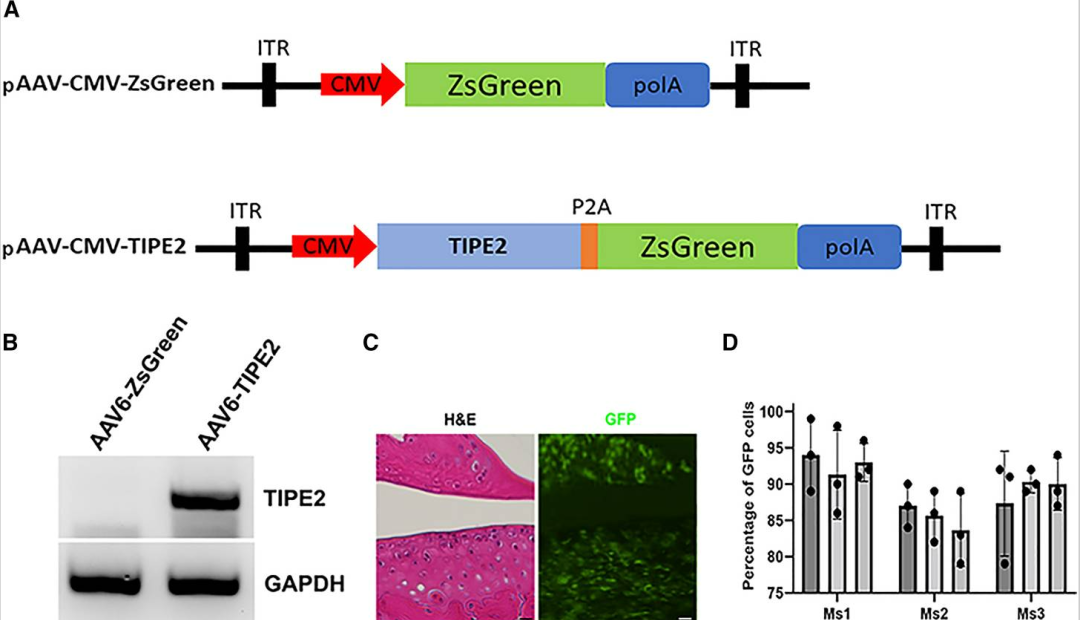
🔹Serotype: AAV6 🔹Promoter: CMV 🔹Animal model: Accelerated aging Z24−/− mice 🔹Injection protocol: Intra-articular knee injection, 2.5 × 10¹² vg per mouse, expression for 8 weeks 🔹Results:To achieve delivery of TIPE2 into the knee joints of Z24−/− mice, rAAV-CMV-TIPE2-GFP was injected intra-articularly. After 8 weeks of expression, GFP fluorescence was observed in articular cartilage under fluorescence microscopy, and GFP-positive cells co-localized with H&E staining. Quantitative analysis of three mice showed that more than 89% of chondrocytes in the injected knee were GFP-positive, indicating high gene delivery efficiency in cartilage cells of the knee joint using this system.
Figure 3. Successful delivery of AAV6-TIPE2 vector into articular cartilage of Z24−/− mouse knee joints
Example 2: AAV-mediated miRNA delivery regulating osteoblast/osteoclast activity for osteoporosis treatment
🔹Serotype: AAV9
🔹Promoter: CBA
🔹Animal model: C57BL/6J mice
🔹Injection protocol: Tail vein injection, single dose of 5 × 10¹³ vg per mouse, expression for 8 weeks
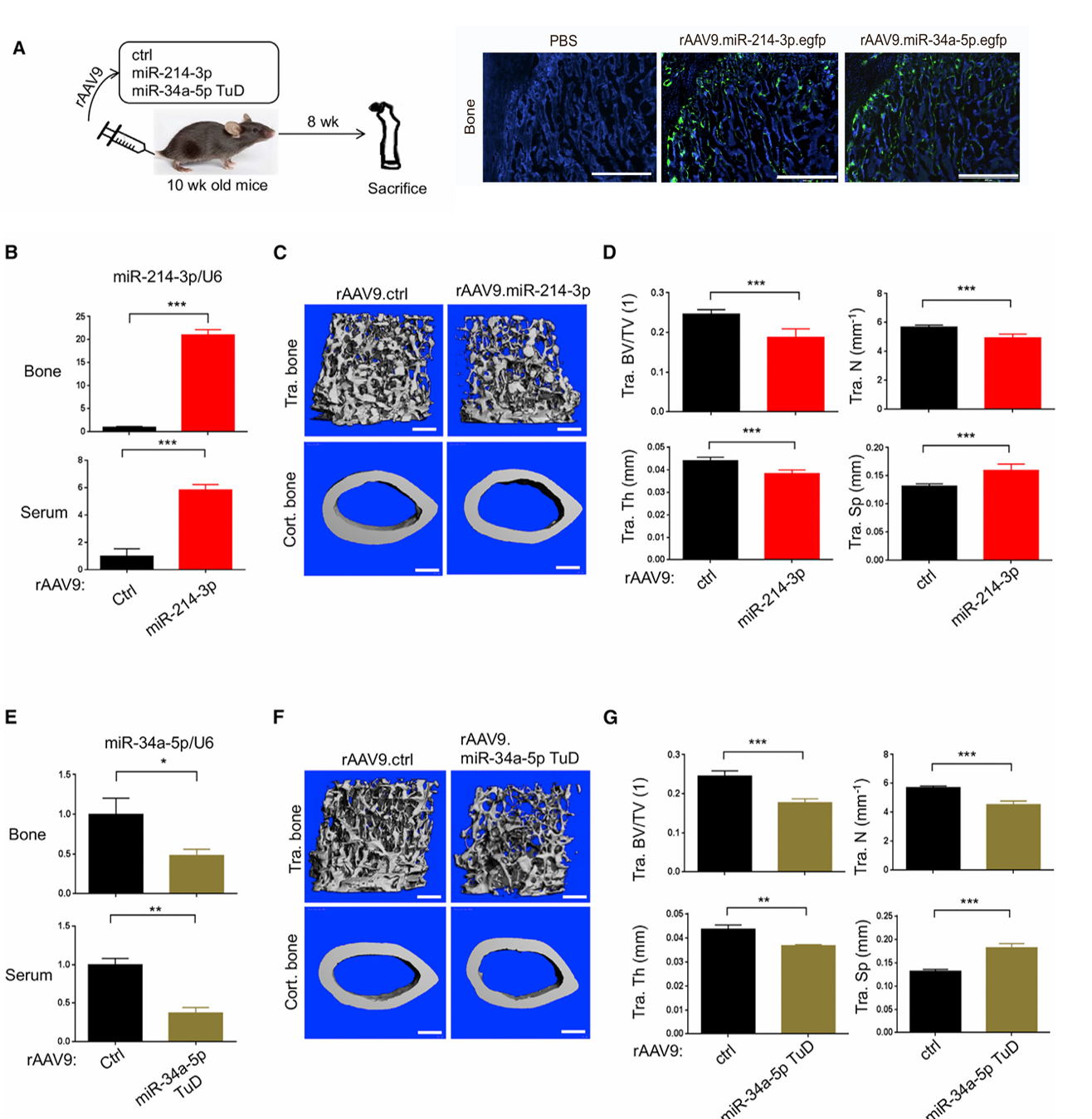
🔹Results: Ten-week-old mice received a single intravenous injection of rAAV9 carrying control, miR-214-3p TuD, or miR-34a-5p TuD. After 8 weeks, RT-PCR and micro-CT were used to assess the expression levels of miR-214-3p and miR-34a-5p in tibia and serum, as well as bone mass in the femur. Fluorescence microscopy of the femoral epiphyseal region showed EGFP-positive cells, indicating targeting of osteoblast and osteoclast lineage cells within bone tissue.
Micro-CT analysis revealed that mice treated with miR-214-3p or miR-34a-5p TuD had reduced femoral bone mass compared with controls, with significant decreases in trabecular bone volume fraction (BV/TV), trabecular number, and trabecular thickness. These findings demonstrate that systemic delivery of rAAV9 enables effective expression of miR-214-3p and miR-34a-5p TuD in osteoblast and osteoclast lineage cells, leading to bone loss in vivo.
Figure 4. rAAV9-mediated expression of miR-214-3p or miR-34a-5p TuD induces bone loss in mice
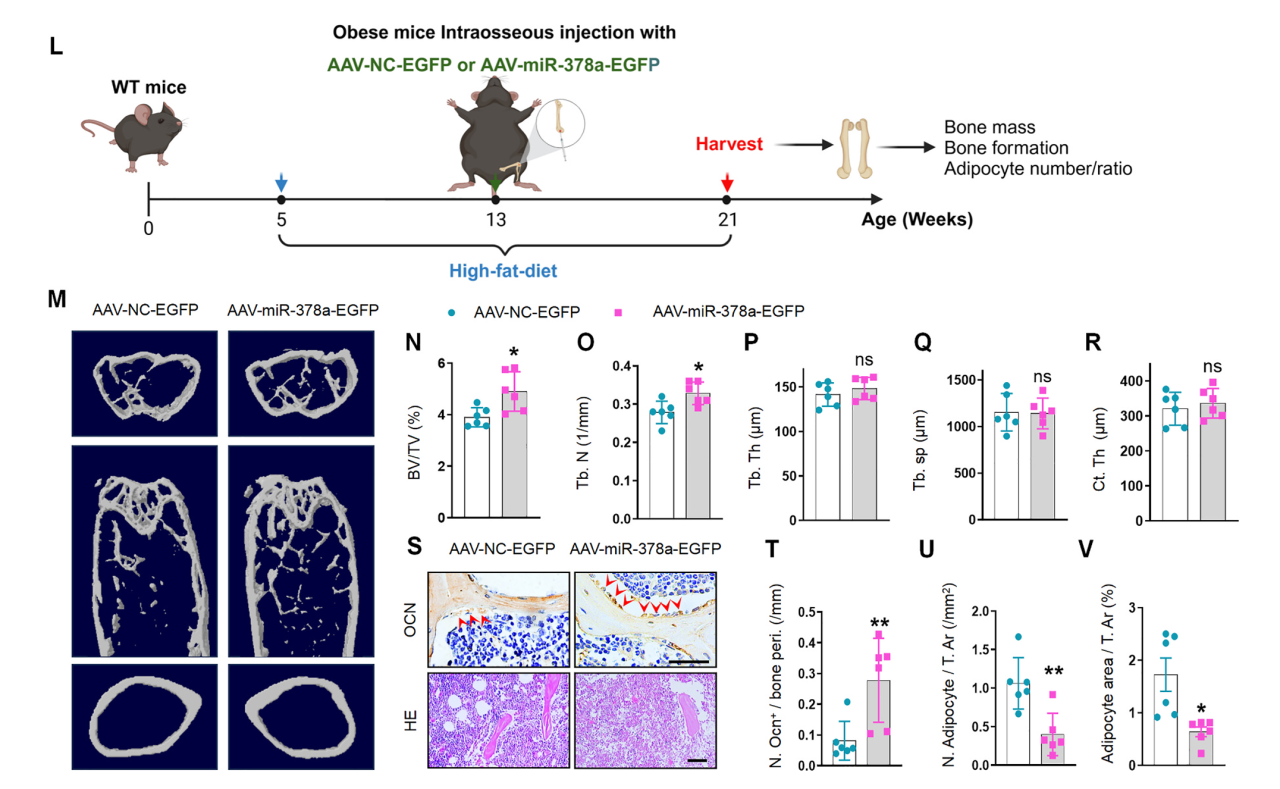
Example 3: miR-378a overexpression increases bone mass in obese mice
🔹Promoter: CMV
🔹Animal model: Obese mice
🔹Injection protocol: Intramedullary injection, 1 × 10¹¹ vg per mouse, expression for 8 weeks 🔹Results:
Intramedullary injection of AAV-miR-378a-3p-EGFP in obese mice enabled overexpression of miR-378a in bone tissue. After 8 weeks of injection, micro-CT analysis showed that, compared with the control group, mice in the miR-378a treatment group exhibited significantly increased trabecular bone volume and trabecular number.
Immunohistochemical staining revealed that miR-378a-3p treatment increased the number of osteoblasts on trabecular bone surfaces in obese mice, while reducing both the number and area of lipid droplets in the bone marrow. These findings suggest that miR-378a therapy alleviates bone degeneration in obese mice.
Figure 5. miR-378a overexpression regulates bone mass and bone marrow adiposity
References 1. Yang YS, Xie J, Wang D, et al. Bone-targeting AAV-mediated silencing of Schnurri-3 prevents bone loss in osteoporosis. Nat Commun. 2019;10(1):2958. 2. Yoon DS, Lee KM, Cho S, et al. Cellular and Tissue Selectivity of AAV Serotypes for Gene Delivery to Chondrocytes and Cartilage. Int J Med Sci. 2021;18(15):3353-3360. 3. Guo P, Gao X, Nelson AL, et al. TIPE2 gene transfer ameliorates aging-associated osteoarthritis in a progeria mouse model by reducing inflammation and cellular senescence. Mol Ther. 2024;32(9):3101-3113. 4. John AA, Xie J, Yang YS, et al. AAV-mediated delivery of osteoblast/ osteoclast -regulating miRNAs for osteoporosis therapy. Mol Ther Nucleic Acids. 2022;29: 296-311. Published 2022 Jul 11. 5. He C, Hu C, He WZ, et al. Macrophage-derived extracellular vesicles regulate skeletal stem/progenitor Cell lineage fate and bone deterioration in obesity. Bioact Mater. 2024;36:508-523. Published 2024 Jul 4.
For technical consultation, custom vector design, or viral packaging services,
please contact:bd@ebraincase.com
Service Type :
Select the service you'd like to purchase.
Order Information(Premade-AAVs)
Please provide us some information about the service you'd like to order.
Order Information(Custom AAV/Lentivirus)
Please provide us some information about the service you'd like to order.
Order Information(Others)
Please provide us some information about the service you'd like to order.