E-mail:BD@ebraincase.com
Tel:+8618971215294
English 中文版
Virus Vector - Viral Vector Production - BrainCaseVirus Vector - Viral Vector Production - BrainCase
  • Home
  • Virus product library
    CRISPRRNAiHSV-helperRV-helperNeurophilic virusCalcium SensorsOptogenetics activationOptogenetics inhibitionChemical geneticsSparse labelingFluorescent proteinBiosensorsRecombinaseApoptosis & AutophagyDisease ModelNeurotoxicityOther
  • Products & Service

    Product Center

    Virus

    VSV-vaccine and gene therapy research
    Retrovirus-RCAS-TVA
    Lentivirus Vector-Lentivirus Production
    Rabies Virus Vector-RBV Vector
    Herpes simplex virus-Oncolytic and anterograde tracing
    PRV-retrograd multisynaptic-Peripheral
    AAV-gene therapy vectors-neuroscience

    Animal Model

    Neurological Disease Models
    Tumor animal models-anti-tumor
    Digestive System Disease Animal Model
    Cardiovascular System Disease Animal Models

    Plasmid Construction

    Library Construction
    Plasmid design and construction

    Popular Applications

    Gene Regulation

    Gene Overexpression-Brain Case
    RNA interference(RNAi)-siRNA-Brain Case
    Gene Editing - CRSIPR cloning - BrainCase

    Neural Circuit Function Research

    Optogenetics - BrainCase
    Chemical genetics-DREADDs-Brain Case
    Calcium signal recording-Gels- Brain Case
    GRAB Neurotransmitter Fluorescent Sensor- Brain Case
    Functional Magnetic Resonance Imaging Technology- Brain Case

    Research on the structure of neural circuits

    Direct Input and Output-viral vectors- Brain Case
    Anterograde Mono-synaptic Tracing -HSV- Brain Case
    Antrograde Muti-synaptic Tracing-HSV & VSV-Brain Case
    Retrograde Mono-synaptic Tracing-Rabies Virus-Brain Case
    Retrograde Muti-synaptic Tracing-PRV-Brain Case

    Featured Services

    Nervous System Disease Drug Effect

    Alzheimer's disease-AD
    Depression-mental disorders
    Parkinson's disease--PD
    Epilepsy-an ancient neurological disorder

    AAV Serotype Screening

    AAV Serotypes screening-gene therapy

    Collaboration Products

    Kiryl Piatkevich lab
    Yulong Li lab
    Zhifei Fu lab
    Woo-ping Ge lab

    Efficacy of Oncolytic Virus

    Oncolytic virus-for cancer therapy-Brain Case
    Herpes Virus Vector-anti-tumor- BrainCase
    Vesicular stomatitis virus-killing tumor cells-Brain Case
  • News
    Corporate News New Product Launch Team Investor News
  • Support
    Literature interpretation Customer article Video Zone FAQs
  • About Us
    Virus product library Products & Service News Support About Us Contact
  • Contact
    Contact Us Join us
  • 中文
    English 中文版
  • Home
  • Support
  • Customer article
  • Support
  • Literature interpretation
  • Customer article
  • Video Zone
  • FAQs

Literature Insight | Neuroscience Bulletin | Fuqiang Xu, Pengjie Wen, and Jie Wang Reveal a Non-spinal Bladder–Brain Vagal Neural Pathway

Release time:2026-01-30 16:19:40
As a pelvic organ, the bladder is responsible for the storage and elimination of metabolic waste and plays a critical role in maintaining body fluid homeostasis. Its normal physiological function relies on efficient communication with the nervous system. Previous studies have primarily focused on neural circuits involved in micturition, such as the spinal–pontine–bladder pathway. However, the neural mechanisms underlying bladder homeostasis under non-pathological conditions have remained largely unclear.

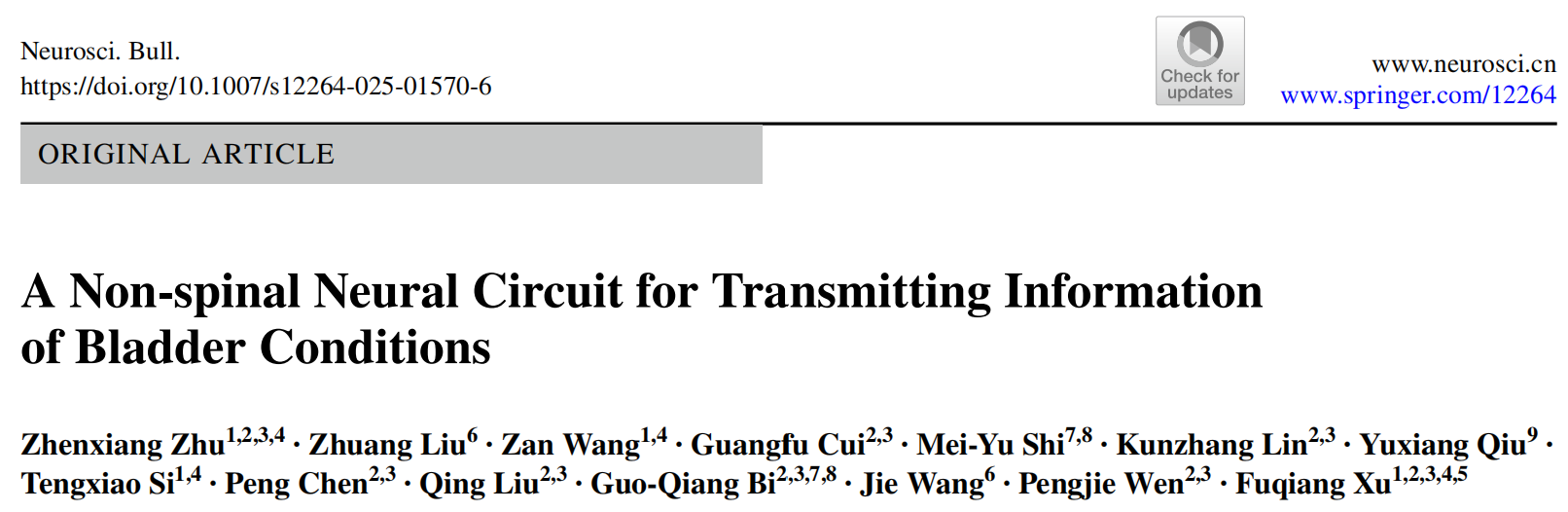
A research team led by Fuqiang Xu and Pengjie Wen from the Innovation Academy for Precision Measurement Science and Technology, Chinese Academy of Sciences, and the Shenzhen Institutes of Advanced Technology, Chinese Academy of Sciences, together with Jie Wang from the Songjiang Research Institute, Songjiang Hospital Affiliated to Shanghai Jiao Tong University School of Medicine, published a study entitled “A Non-spinal Neural Circuit for Transmitting Information of Bladder Conditions” in Neuroscience Bulletin.

Using viral tracing, chemogenetics combined with functional magnetic resonance imaging (DREADD-fMRI), and immunohistochemistry, the researchers identified for the first time a non-spinal bladder–brain vagal pathway. In this circuit, pseudounipolar neurons in the nodose ganglion (NG) of the vagus nerve project bidirectionally to both the bladder and the nucleus of the solitary tract (NTS), and further connect to multiple brain regions, including the bed nucleus of the stria terminalis and the paraventricular nucleus of the hypothalamus, encompassing a total of 12 core areas.

Notably, this pathway does not involve the primary motor cortex (M1), indicating that it is unrelated to conscious control of urination. Using a cystitis model, the authors further demonstrated that this circuit is capable of transmitting inflammatory signals from the bladder. These findings suggest that the primary function of this non-spinal bladder–brain vagal pathway is to maintain intrinsic bladder homeostasis.

https://doi.org/10.1007/s12264-025-01570-6
 

Tracing the Neural Connection Between the Bladder Wall and the Brain

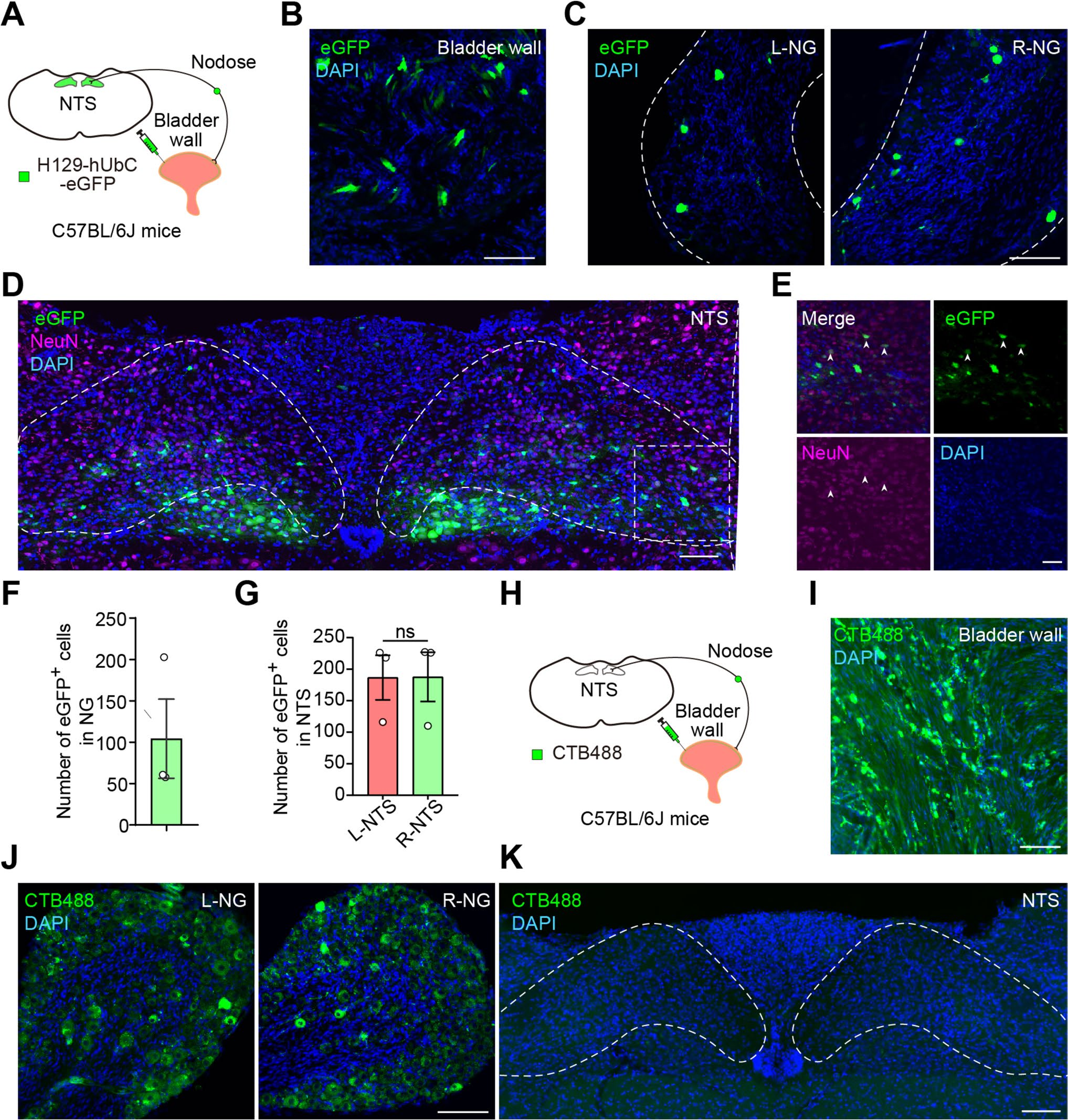
To determine whether the bladder is connected to the brain via vagal sensory afferents, the authors injected a high-brightness anterograde trans-multisynaptic viral tracer, HSV129-hUbC-HBEGFP, into the bladder wall of C57BL/6J mice (Fig. 1A). Eight days after infection, eGFP-labeled cells were observed in the bladder wall (Fig. 1B), indicating accurate localization of HSV infection. Labeled neurons were detected bilaterally in the NG (Fig. 1C, F), which are inferior sensory ganglia of the vagus nerve located near the skull base. The NG contain large numbers of pseudounipolar primary sensory neuron somata and serve as a central relay station for vagal sensory fibers.

Previous studies have shown that the NTS processes vagal sensory input and regulates homeostatic reflexes. In this study, subsets of neurons in the bilateral NTS were labeled by HSV (Fig. 1D, E), with no significant difference in labeling between the two sides (Fig. 1G), confirming structural connectivity between the bladder, NG, and NTS.

To further clarify the anatomical relationships, the retrograde tracer CTB488 was injected into the bladder wall (Fig. 1H). Six days later, labeled nerve fibers were observed in the bladder wall (Fig. 1I). Labeled neurons were detected exclusively in the bilateral NG (Fig. 1J, K), consistent with previous reports, indicating that NG neurons directly innervate the bladder, whereas the NTS does not.

Figure 1. Identification of retrograde and trans-synaptic labeling in the NG following HSV injection into the bladder wall
 

Bidirectional Projections of NG Neurons to the Bladder and the NTS

To verify whether bladder-projecting NG neurons also innervate the NTS, the authors injected rAAV9-Retro-CAG-Cre into the bladder wall (retrograde tracing, with rAAV9-Retro showing higher efficiency than rAAV2-Retro), and rAAV9-CAG-DIO-tdTomato into the right NG to specifically label target neurons (Fig. 2A). Robust tdTomato signals were observed in the right NG (Fig. 2B), and dense red fibers and terminals were detected in the NTS (Fig. 2C). After signal amplification with a dsRed antibody, sparse nerve fibers were observed in the bladder wall (Fig. 2D).

Anterograde labeling of the NG in Ai14 mice mediated by rAAV1-Cre (Fig. 2E) revealed that neurons in the right NG co-expressed tdTomato and eGFP (Fig. 2F). In the NTS, tdTomato-positive fibers were abundant while labeled neuronal somata were sparse, and only a small number of labeled cells were observed in the bladder wall (Fig. 2G, H).

Together, these results demonstrate the presence of pseudounipolar neurons in the NG that project simultaneously to the bladder wall and the central NTS. This specialized population of NG sensory neurons may provide a pathway for transmitting physiological sensory information from the bladder to the brain.

Figure 2. Direct projections of vagal sensory neurons to the bladder
 

Central Circuit Mapping of Bladder-Projecting NG Sensory Neurons

To determine how brain nuclei receive bladder signals via NG sensory neurons, rAAV9-Retro-CAG-Cre was injected into the bladder wall of C57BL/6J mice. After 30 days of expression, a Cre-dependent anterograde trans-multisynaptic virus, H129ΔTK-CAG-LSL-tdT-2A-TK, was injected into the right NG (Fig. 3A, B). Four days after injection, tdTomato-positive neurons were detected in the right NG (Fig. 3C), indicating that bladder-projecting NG neurons had been labeled as starter cells.

Whole-brain analysis revealed specific labeling in 12 discrete brain regions, including the bed nucleus of the stria terminalis (BST), gustatory cortex (GU), and paraventricular hypothalamic nucleus (PVH) (Fig. 3D). Quantitative analysis confirmed that these labeled neurons participate in sensory information transmission between the bladder and the brain.

Following injection of HSV129-hUbC-HBEGFP into the bladder, eGFP-positive cells were mainly distributed across 10 brain regions, including M1 and PVH, while GU, central amygdala (CeA), and BST showed no labeling—markedly different from the bladder–vagus pathway-labeled regions. These findings indicate that the two HSV-labeled brain region sets only partially overlap, suggesting that bladder-derived HSV traverses fewer synapses.

The presence of M1 exclusively in the bladder central circuit indicates that M1 does not receive bladder signals via the vagus nerve, whereas GU, CeA, and BST can receive input through this pathway.

Figure 3. Central pathways of bladder-projecting vagal sensory outputs


Functional Neural Circuits of Bladder-Projecting NG Sensory Neurons

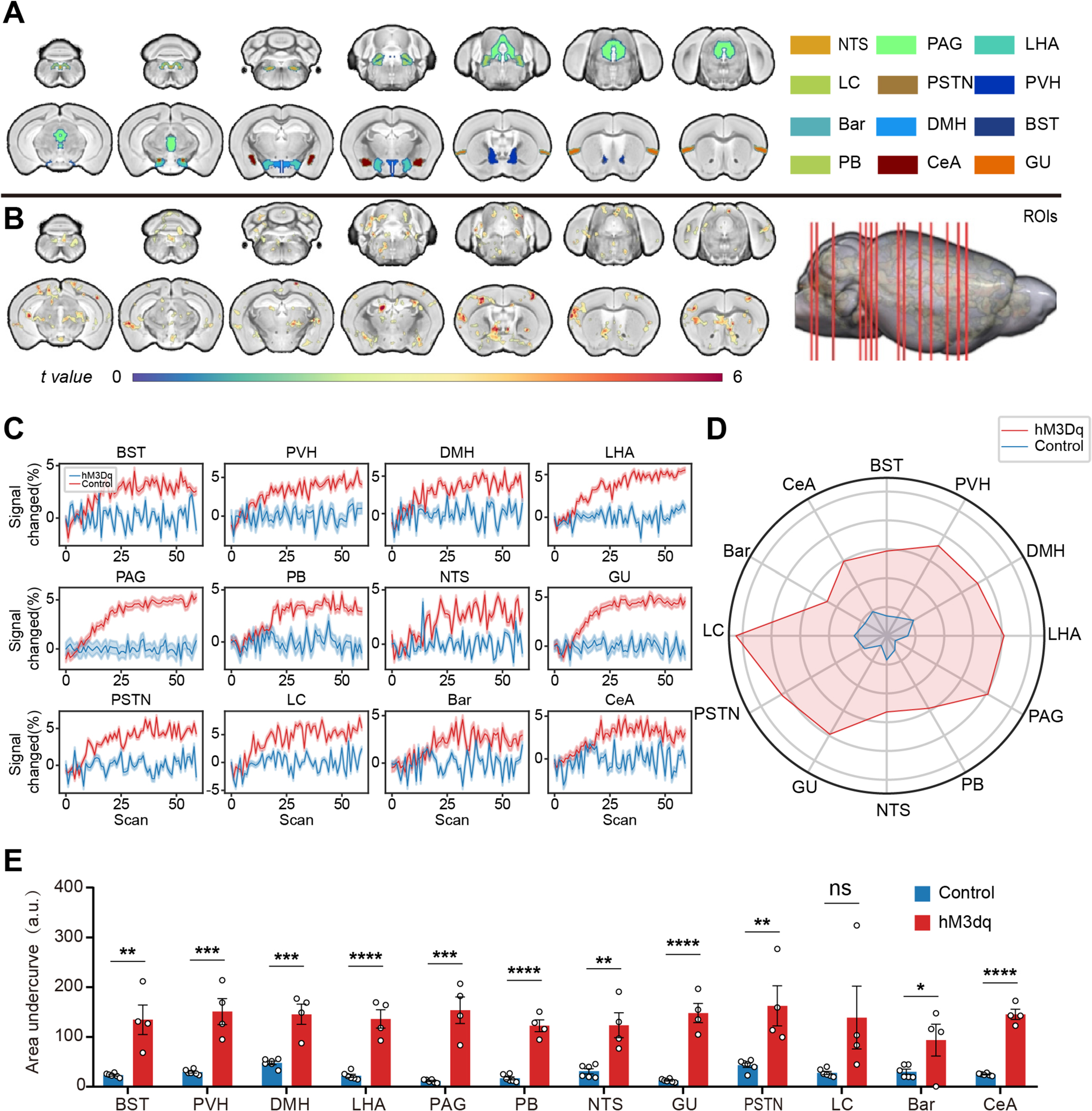
DREADD-fMRI was employed to investigate whether HSV-labeled brain regions receive functional bladder signals via the vagal pathway. rAAV9-Retro-CAG-Cre was injected into the bladder wall, and the experimental virus rAAV9-hSyn-DIO-hM3D(Gq)-mCherry was injected into the NG. Intraperitoneal injection of CNO activated hM3D(Gq)-expressing bladder-projecting NG neurons.

Twelve regions of interest (ROIs) related to micturition and visceral sensory regulation were identified and delineated on the TMBTA template (Fig. 4A). Compared with controls, the experimental group exhibited significant BOLD responses in multiple downstream brain regions (Fig. 4B). Area-under-the-curve (AUC) analysis showed significantly enhanced ROI signals following CNO injection, with higher mean AUC values in the experimental group (Fig. 4C, D). Except for the locus coeruleus (LC), which showed a trend toward activation, all other regions displayed statistically significant functional activation (Fig. 4E), confirming that these 12 brain regions receive bladder signals via the vagal pathway.

Figure 4. Projections of vagal sensory afferents functionally connected to bladder activity

Validation of Brain Region Activation by c-Fos Expression Following DREADD-fMRI

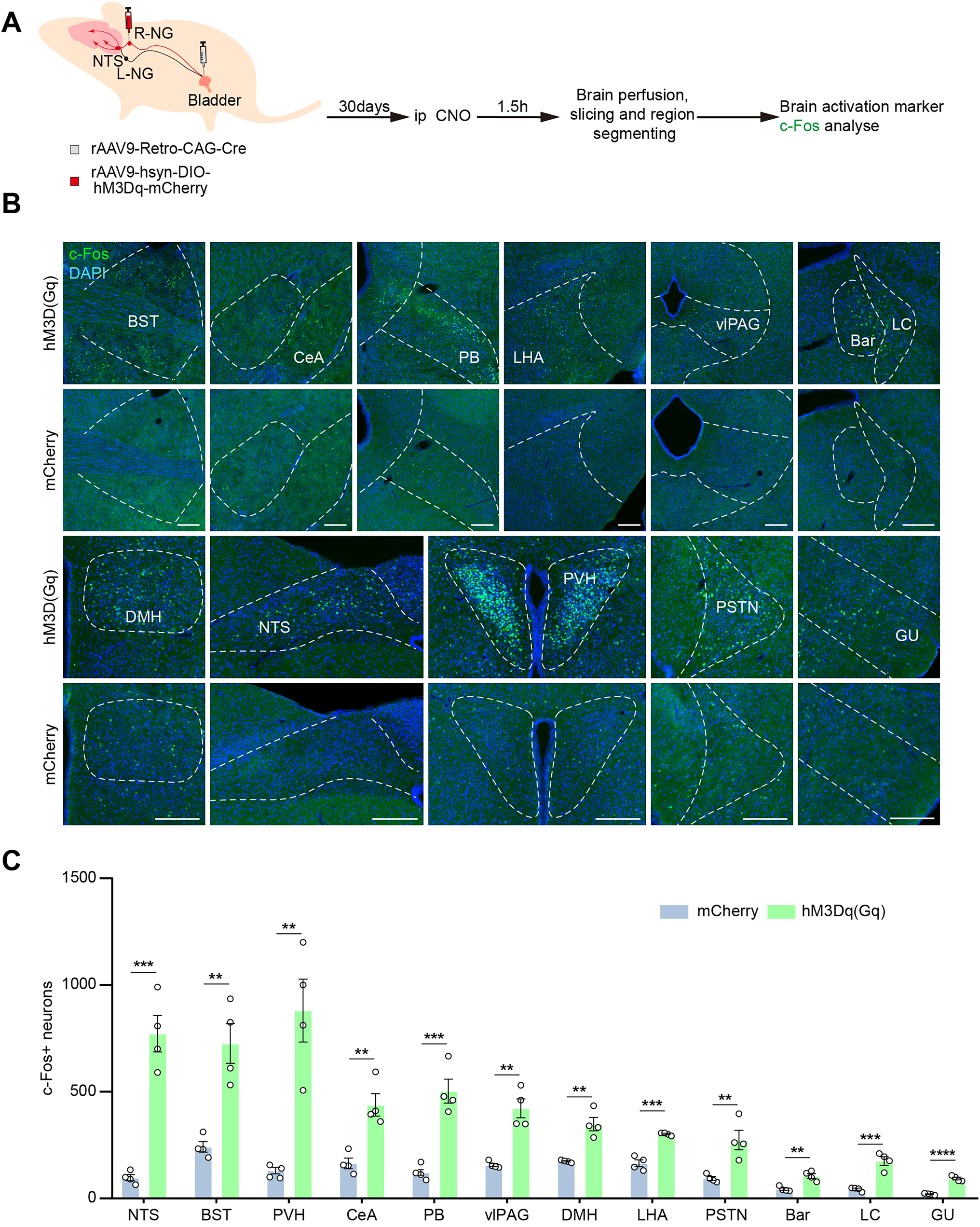
To validate the functional brain nuclei associated with the bladder vagal pathway identified by DREADD-fMRI, mice were injected with CNO one month after viral expression (Fig. 5A). Brain tissues were collected 1.5 hours after activation and analyzed using immunostaining for the neuronal activity marker c-Fos.

The results showed higher c-Fos expression in all 12 brain regions in the hM3Dq group compared with controls (Fig. 5B). Quantitative analysis revealed significant increases in c-Fos-positive cells in the NTS, parabrachial nucleus (PB), lateral hypothalamic area (LHA), LC, and GU (Fig. 5C), indicating neuronal activation. Correlation analysis between BOLD signals and c-Fos expression demonstrated a significant positive relationship, confirming that the brain regions exhibiting enhanced BOLD signals indeed receive functional input from the bladder vagal pathway.

Figure 5. c-Fos expression induced by activation of bladder-projecting vagal sensory neurons
 

Activation of NG and NTS Neurons Under Cystitis Conditions

To explore the potential role of the bladder–NG–brain pathway, the authors first assessed whether it is activated by bladder distension. No significant differences were observed in bilateral NG pERK1/2 levels or NTS c-Fos expression between the micturition and control groups; only the Barrington’s nucleus (Bar) showed a significant increase in c-Fos expression. These results suggest that under physiological conditions, this circuit does not participate in mechanosensory detection of bladder distension.

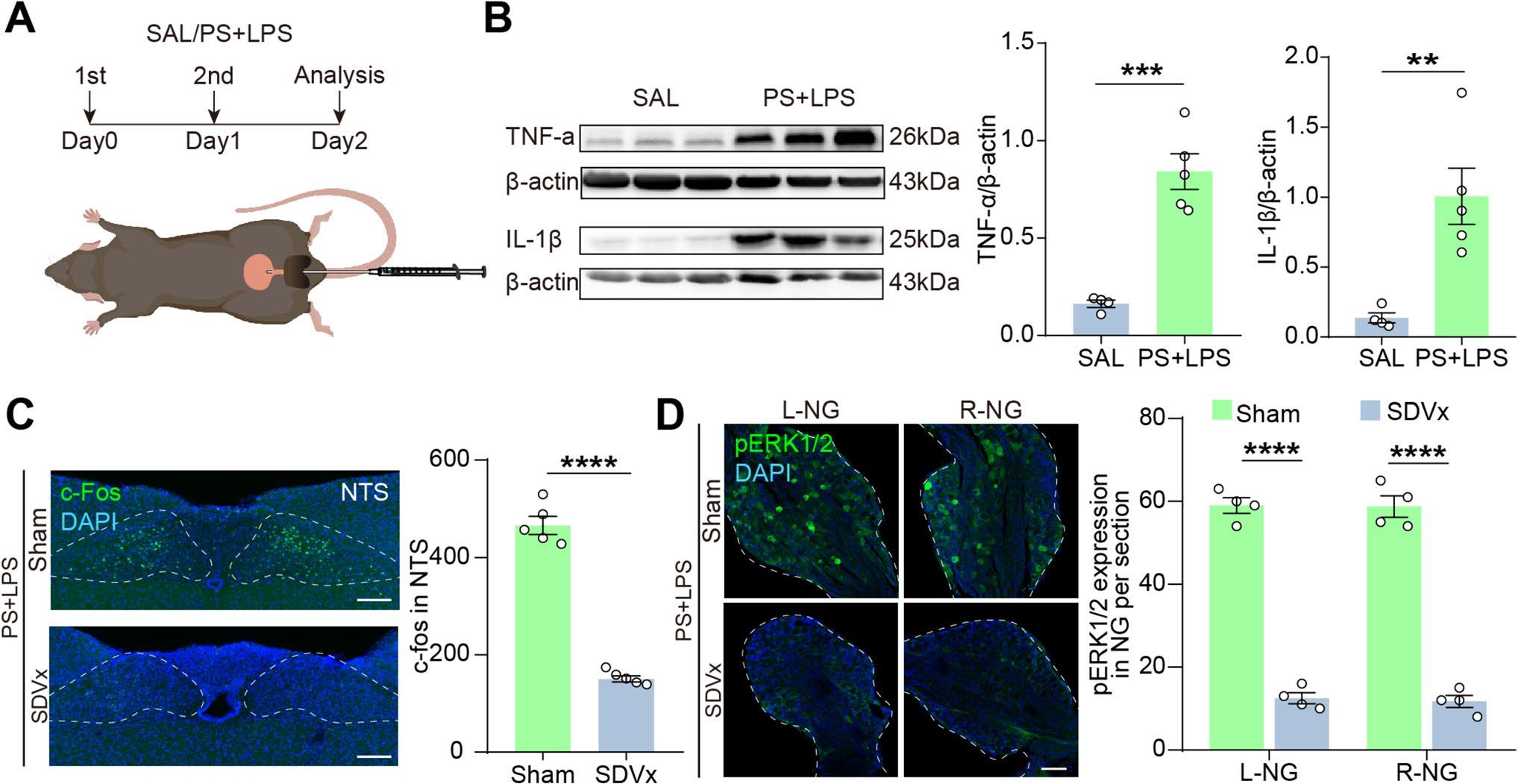
A cystitis model was established by intravesical infusion of PS (prostaglandin E2, which increases urothelial permeability) combined with LPS (lipopolysaccharide, which induces immune inflammation). Mice received two injections of either saline or PS+LPS, and bladder tissues were collected on day 3 for cytokine analysis (Fig. 6A). PS+LPS treatment significantly increased IL-1β and TNF-α levels, confirming successful model induction (Fig. 6B), consistent with previous studies.

Subdiaphragmatic vagotomy (SDVx) was performed in cystitis model mice, with gastric enlargement confirming surgical efficacy. Analysis revealed that c-Fos expression in the NTS and pERK1/2 levels in bilateral NG were significantly lower in the SDVx group compared with sham-operated controls (Fig. 6C, D), indicating that the bladder–NG–brain circuit may play a role in regulating cystitis.

Figure 6. Activation of the brain by cystitis via vagal sensory neurons
 

Conclusion

This study identifies a non-spinal, non-micturition-related bladder–brain vagal neural pathway, whose core function is to transmit inflammatory signals from the bladder and maintain intrinsic bladder homeostasis. In addition, retrograde tracing experiments demonstrate that rAAV9-Retro is a highly efficient tool for labeling bladder-projecting NG neurons, providing an important technical reference for research on visceral neural circuits.
 

Research Tools Used in This Study

Product Category Product No. Product Name
HSV BC-HSV-HBEGFP H129-hUbC-HBEGFP
BC-HSV-H356 H129ΔTK-CAG-LSL-tdT-2A-TK
Fluorescent Protein BC-0870 rAAV-CAG-DIO-tdTomato
BC-0025 rAAV-hSyn-DIO-mCherry
Recombinase BC-0160 rAAV-hSyn-EGFP-P2A-Cre
Chemogenetics BC-0143 rAAV-hSyn-DIO-hM3D(Gq)-mCherry
Brain Case Biotech also provides a full range of
custom viral vector and genetic tool services.
For more information,

 please contact:
bd@ebraincase.com

Service Type :

Select the service you'd like to purchase.

Order Information(Premade-AAVs)

Please provide us some information about the service you'd like to order.

How did you hear about BrainCase Biotech or our products?(Fill in this field to get a discount coupon)

Detailed requirements:

scroll

Order Information(Custom AAV/Lentivirus)

Please provide us some information about the service you'd like to order.

Gene ID or gene information:

Selection of the reporting gene:

Special Instructions:

scroll

Order Information(Others)

Please provide us some information about the service you'd like to order.

Virus name/Detailed requirements:

scroll

Related products

Literature Insight | Neuroscience Bulletin | Fuqiang Xu, Pengjie Wen, and Jie Wang Reveal a Non-spinal Bladder–Brain Vagal Neural Pathway

Literature Insight | Neuroscience Bulletin | Fuqiang Xu, Pengjie Wen, and Jie Wang Reveal a Non-spinal Bladder–Brain Vagal Neural Pathway

Customer Article | Nature Communications | Teams led by Zhi Zhang, Xia Zhu, and Wei Wang at USTC reveal how the nose–brain axis regulates behavioral responses to rancid odors

Customer Article | Nature Communications | Teams led by Zhi Zhang, Xia Zhu, and Wei Wang at USTC reveal how the nose–brain axis regulates behavioral responses to rancid odors

Client Article | Molecular Psychiatry | Zhejiang University Team Reveals That Gut Microbiota Contribute to the Pathology of Bipolar Depression by Regulating Synaptic Plasticity and Dopamine Transmission in the VTA–mPFC Pathway

Client Article | Molecular Psychiatry | Zhejiang University Team Reveals That Gut Microbiota Contribute to the Pathology of Bipolar Depression by Regulating Synaptic Plasticity and Dopamine Transmission in the VTA–mPFC Pathway

Client Article | Neuron | Prof. Jingdun Xie’s Team at Sun Yat-sen University Decodes PDAC Comorbidity: How the Tumor–Metabolism–Neuron Axis Drives Pain and Depression

Client Article | Neuron | Prof. Jingdun Xie’s Team at Sun Yat-sen University Decodes PDAC Comorbidity: How the Tumor–Metabolism–Neuron Axis Drives Pain and Depression

map
{dede:global.cfg_webname/}

Virus product library

CRISPR
RNAi
Neurophilic virus
Optogenetics activation
Biosensors

News

Corporate News
New Product Launch
Team
Investor News

Support

Literature interpretation
Customer article
Video Zone
FAQs
微信

WhatsApp Business Account

Tel: +8618971215294
E-mail: BD@ebraincase.com

Address:-

Address:-

  • Copyright © 2024 Brain Case All Rights Reserved.