E-mail:BD@ebraincase.com
Tel:+8618971215294
English 中文版
Virus Vector - Viral Vector Production - BrainCaseVirus Vector - Viral Vector Production - BrainCase
  • Home
  • Virus product library
    CRISPRRNAiHSV-helperRV-helperNeurophilic virusCalcium SensorsOptogenetics activationOptogenetics inhibitionChemical geneticsSparse labelingFluorescent proteinBiosensorsRecombinaseApoptosis & AutophagyDisease ModelNeurotoxicityOther
  • Products & Service

    Product Center

    Virus

    VSV-vaccine and gene therapy research
    Retrovirus-RCAS-TVA
    Lentivirus Vector-Lentivirus Production
    Rabies Virus Vector-RBV Vector
    Herpes simplex virus-Oncolytic and anterograde tracing
    PRV-retrograd multisynaptic-Peripheral
    AAV-gene therapy vectors-neuroscience

    Animal Model

    Neurological Disease Models
    Tumor animal models-anti-tumor
    Digestive System Disease Animal Model
    Cardiovascular System Disease Animal Models

    Plasmid Construction

    Library Construction
    Plasmid design and construction

    Popular Applications

    Gene Regulation

    Gene Overexpression-Brain Case
    RNA interference(RNAi)-siRNA-Brain Case
    Gene Editing - CRSIPR cloning - BrainCase

    Neural Circuit Function Research

    Optogenetics - BrainCase
    Chemical genetics-DREADDs-Brain Case
    Calcium signal recording-Gels- Brain Case
    GRAB Neurotransmitter Fluorescent Sensor- Brain Case
    Functional Magnetic Resonance Imaging Technology- Brain Case

    Research on the structure of neural circuits

    Direct Input and Output-viral vectors- Brain Case
    Anterograde Mono-synaptic Tracing -HSV- Brain Case
    Antrograde Muti-synaptic Tracing-HSV & VSV-Brain Case
    Retrograde Mono-synaptic Tracing-Rabies Virus-Brain Case
    Retrograde Muti-synaptic Tracing-PRV-Brain Case

    Featured Services

    Nervous System Disease Drug Effect

    Alzheimer's disease-AD
    Depression-mental disorders
    Parkinson's disease--PD
    Epilepsy-an ancient neurological disorder

    AAV Serotype Screening

    AAV Serotypes screening-gene therapy

    Collaboration Products

    Kiryl Piatkevich lab
    Yulong Li lab
    Zhifei Fu lab
    Woo-ping Ge lab

    Efficacy of Oncolytic Virus

    Oncolytic virus-for cancer therapy-Brain Case
    Herpes Virus Vector-anti-tumor- BrainCase
    Vesicular stomatitis virus-killing tumor cells-Brain Case
  • News
    Corporate News New Product Launch Team Investor News
  • Support
    Literature interpretation Customer article Video Zone FAQs
  • About Us
    Virus product library Products & Service News Support About Us Contact
  • Contact
    Contact Us Join us
  • 中文
    English 中文版
  • Home
  • Support
  • Customer article
  • Support
  • Literature interpretation
  • Customer article
  • Video Zone
  • FAQs

Client Article | Neuron | Prof. Jingdun Xie’s Team at Sun Yat-sen University Decodes PDAC Comorbidity: How the Tumor–Metabolism–Neuron Axis Drives Pain and Depression

Release time:2025-12-16 11:13:54
Patients with pancreatic ductal adenocarcinoma (PDAC) often suffer from severe, difficult-to-control pain and comorbid depression, which markedly impair quality of life and survival. However, the central mechanisms underlying these comorbidities remain unclear. Neuro–tumor interactions and metabolic reprogramming play important roles in PDAC-associated comorbidity, yet the precise mechanisms by which they regulate neural dysfunction are still to be elucidated. N⁶-methyladenosine (m⁶A) modification and methyltransferase 14 (METTL14) have been implicated in cancer as well as in the regulation of pain and depression. S-adenosylmethionine (SAM), the key substrate for m⁶A methylation, also participates in cancer progression. Nevertheless, whether METTL14-mediated epigenomic modification in the central nervous system contributes to PDAC-induced comorbidities remains unknown.

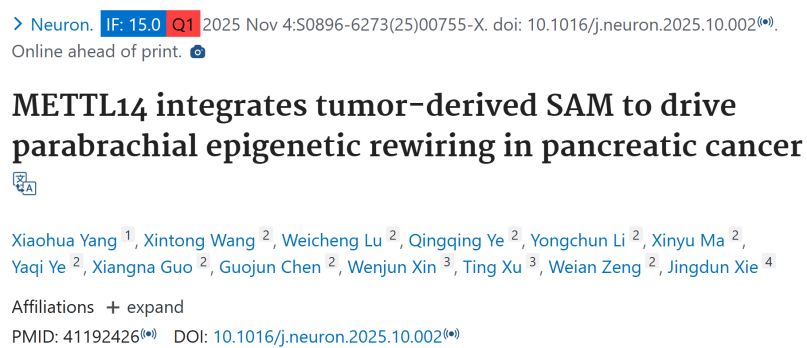
On November 4, 2025, Prof. Jingdun Xie’s team at Sun Yat-sen University published a study in Neuron entitled “METTL14 integrates tumor-derived SAM to drive parabrachial epigenetic rewiring in pancreatic cancer.” This work uncovers a novel mechanism underlying PDAC-induced pain–depression comorbidity. PDAC upregulates METTL14 expression in glutamatergic neurons of the lateral parabrachial nucleus (LPBN^Glu) in mice. Together with tumor-derived SAM, elevated METTL14 enhances m⁶A modification of adrenomedullin (ADM) and increases its expression, leading to hyperexcitability of LPBN^Glu neurons and activation of the LPBN^Glu→PVT^Glu/LH^Glu circuits, ultimately driving comorbidity. Targeted inhibition or deletion of METTL14 in LPBN^Glu neurons, or reduction of SAM levels through a methionine-restricted diet, alleviates comorbid symptoms and suppresses tumor growth.

https://doi.org/10.1016/j.neuron.2025.10.002


Severe Pain–Depression Comorbidity in PDAC Mice Is Accompanied by Elevated METTL14 Expression in Glutamatergic Neurons of the Lateral Parabrachial Nucleus (LPBN^Glu)

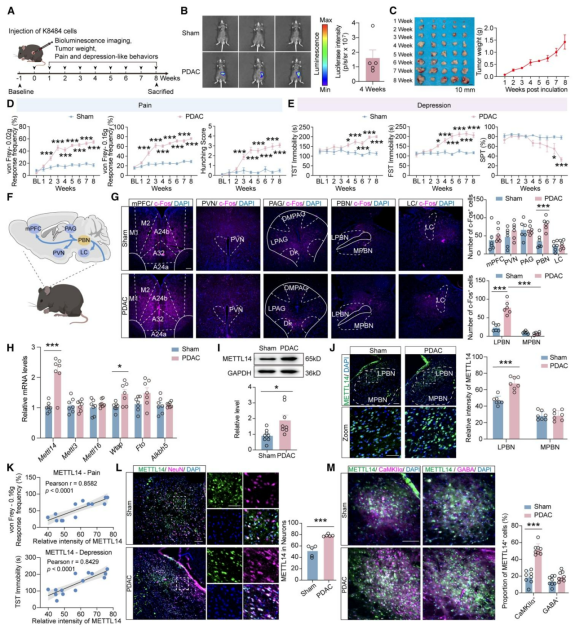
Using an orthotopic PDAC model established by intrapancreatic injection of luciferase-expressing K8484 cells (Fig. 1A–C), the study found that tumor-bearing mice exhibited persistent pain-like behaviors (Fig. 1D) and depression-like behaviors (Fig. 1E). Because comorbid phenotypes stabilized in both male and female mice at 4 weeks post-surgery, subsequent experiments focused on this time point, with male mice used as the primary subjects. c-Fos staining further identified the LPBN as the principal brain region showing tumor-induced neural activation, rather than other related regions (Fig. 1G). In this region, the m⁶A methyltransferase METTL14 showed specific and enriched upregulation at both RNA and protein levels (Fig. 1H–J), and METTL14 expression was strongly positively correlated with pain-like and depression-like behaviors in PDAC mice (Fig. 1K). Cell-type–specific analyses revealed that METTL14 was predominantly expressed in neurons (Fig. 1L) and was specifically enriched in LPBN glutamatergic neurons (Fig. 1M). These findings indicate that METTL14 in LPBN^Glu neurons plays a critical role in PDAC-associated comorbidity.

Figure 1. PDAC mice exhibit severe pain–depression comorbidity, accompanied by increased METTL14 expression in LPBN^Glu neurons.


METTL14 in LPBN^Glu Neurons Promotes PDAC-Induced Pain–Depression Comorbidity

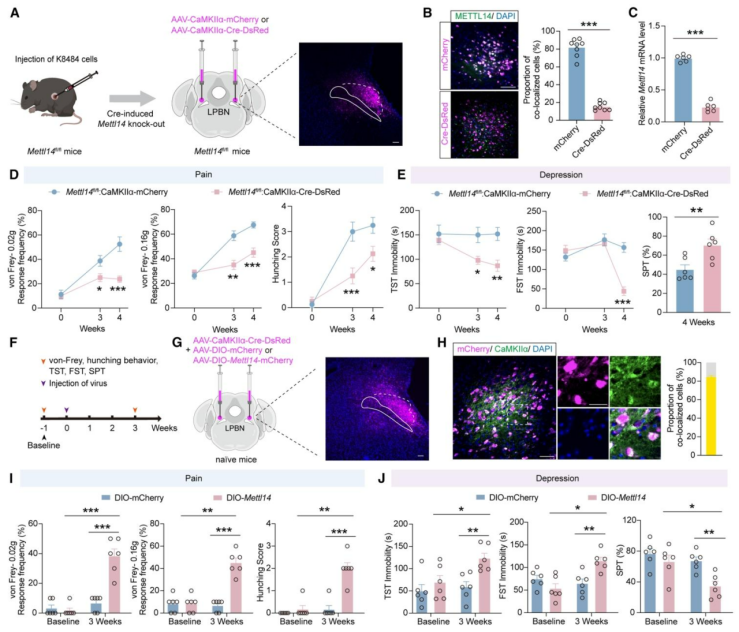
To determine the functional specificity of METTL14 in LPBN^Glu neurons during PDAC-induced comorbidity, Mettl14^flox/flox (Mettl14^f/f) mice were generated and injected in the LPBN with AAV-CaMKIIα-Cre-DsRed to produce conditional knockout (Mettl14-cKO) mice (Fig. 2A). Cre-mediated deletion markedly reduced METTL14 expression in LPBN^Glu neurons (Fig. 2B–C) and significantly alleviated PDAC-induced nociceptive hypersensitivity and depression-like behaviors (Fig. 2D–E).

Conversely, co-injection of AAV-CaMKIIα-Cre-DsRed and AAV-DIO-Mettl14-mCherry into the LPBN of wild-type mice (Fig. 2F–H) revealed that, compared with empty vector controls (AAV-DIO-mCherry), METTL14 overexpression induced abdominal mechanical hyperalgesia, increased hunching scores, prolonged immobility times in the TST and FST, and reduced sucrose preference in the SPT—hallmark behaviors of pain–depression comorbidity (Fig. 2I–J). Collectively, these results demonstrate that METTL14 in LPBN^Glu neurons is essential for the initiation and progression of PDAC-induced pain–depression comorbidity.

Figure 2. METTL14 in LPBN^Glu neurons promotes PDAC-induced pain–depression comorbidity.


Hyperexcitability of LPBN^Glu Neurons Contributes to METTL14-Mediated Comorbidity

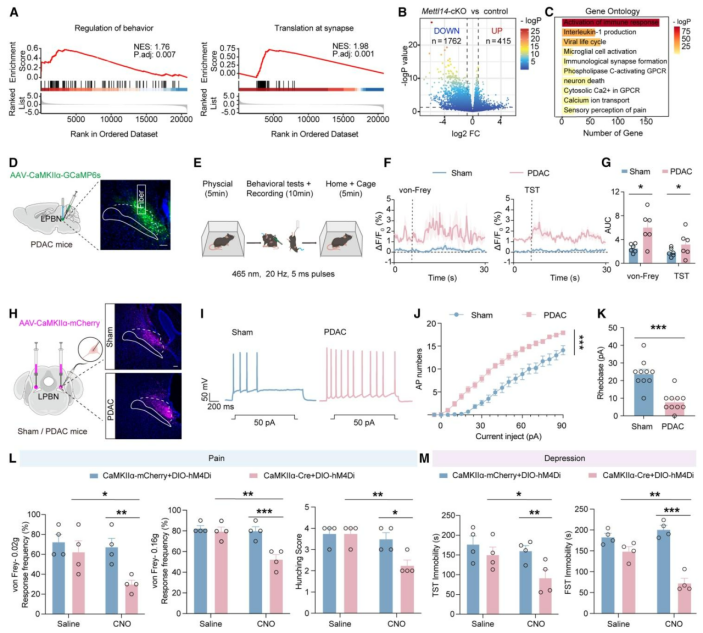
To investigate the mechanisms by which METTL14 in LPBN^Glu neurons contributes to PDAC-induced comorbidity, RNA sequencing (RNA-seq) was performed on the LPBN from PDAC and control mice. Pathway enrichment analysis revealed PDAC-associated enrichment of pathways related to behavioral regulation and synaptic translation (Fig. 3A). In the LPBN of Mettl14-cKO mice, 2,177 differentially expressed genes were identified (Fig. 3B). Gene Ontology analysis indicated that METTL14 regulates LPBN neural activity through pathways involving cytosolic calcium dynamics, calcium transport, and pain perception within G protein–coupled receptor signaling (Fig. 3C).

Fiber photometry recordings showed that spontaneous calcium signals and calcium transients evoked by von Frey and TST stimuli were significantly enhanced in LPBN^Glu neurons of PDAC mice (Fig. 3D–G). Whole-cell patch-clamp recordings confirmed intrinsic hyperexcitability of these neurons at both spontaneous and evoked levels (Fig. 3H–K). Chemogenetic inhibition of LPBN^Glu neurons by co-injecting AAV-CaMKIIα-Cre and AAV-DIO-hM4Di-mCherry into the LPBN of PDAC mice, followed by intraperitoneal CNO administration, markedly improved nociceptive hypersensitivity and depression-like behaviors and slowed tumor growth (Fig. 3L–M). These findings indicate that hyperexcitability of LPBN^Glu neurons not only mediates PDAC-induced pain–depression comorbidity but also promotes peripheral tumor growth.

Figure 3. Hyperexcitability of LPBN^Glu neurons participates in METTL14-mediated pain–depression comorbidity.
 

METTL14 in LPBN^Glu Neurons Regulates Neuronal Excitability and Contributes to Pain–Depression Comorbidity

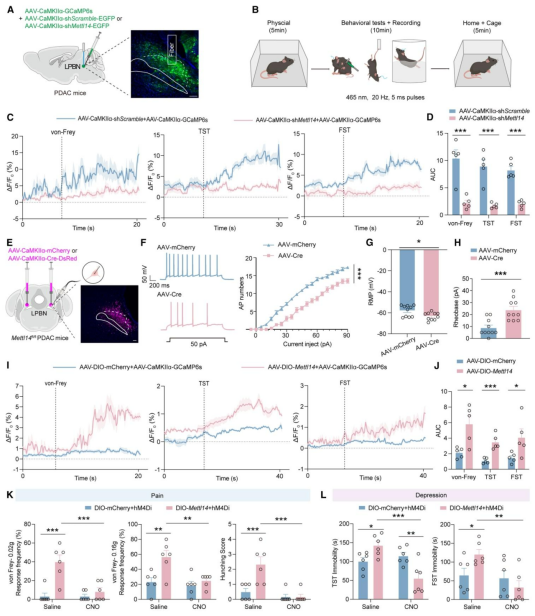
To determine whether METTL14 affects PDAC-induced comorbidity by regulating LPBN^Glu neuronal excitability, PDAC mice received co-injections of AAV-CaMKIIα-GCaMP6s and AAV-CaMKIIα-shMettl14-EGFP into the LPBN (Fig. 4A). Baseline neuronal activity was recorded, followed by behavioral testing with concurrent monitoring of stimulus-evoked calcium dynamics (Fig. 4B). METTL14 knockdown significantly reduced calcium signals in LPBN^Glu neurons during 0.16 g von Frey stimulation, tail suspension, and forced swim tests (Fig. 4C–D). Whole-cell patch-clamp recordings further demonstrated that loss of METTL14 reduced LPBN^Glu excitability, as evidenced by decreased action potential firing frequency, more negative resting membrane potential, and increased rheobase (Fig. 4E–H).

Conversely, co-injection of AAV-DIO-Mettl14-mCherry and AAV-CaMKIIα-GCaMP6s into the LPBN of CaMKIIα-Cre mice (Fig. S7A–B) showed that METTL14 overexpression increased neuronal excitability, particularly under behaviorally relevant stimuli (Fig. 4I–J). Subsequent chemogenetic inhibition via AAV-DIO-hM4Di-mCherry significantly alleviated METTL14 overexpression–induced pain–depression comorbidity (Fig. 4K–L). Together, these results demonstrate that METTL14 modulates LPBN^Glu neuronal excitability and plays a pivotal role in PDAC-induced pain–depression comorbidity.

Figure 4. METTL14 in LPBN^Glu neurons regulates neuronal excitability and contributes to pain–depression comorbidity.


METTL14-Mediated m⁶A Modification Regulates LPBN^Glu Neuron–Associated Comorbidity via ADM

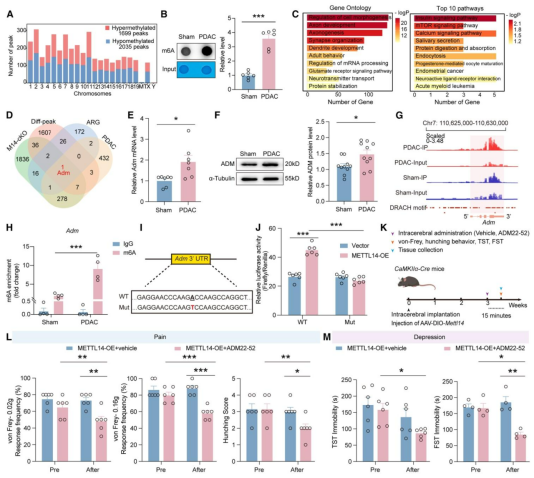
To elucidate how METTL14-mediated m⁶A modification drives PDAC-induced neural adaptation, methylated RNA immunoprecipitation sequencing (MeRIP-seq) revealed widespread m⁶A modifications in the LPBN of PDAC mice, with dot blot assays confirming a significant global increase (Fig. 5A–B). Enrichment analysis showed that differentially methylated genes were associated with neurobiological processes closely linked to neuronal hyperexcitability, including synaptic organization, glutamate receptor signaling, calcium signaling pathways, and neuroactive ligand–receptor interactions (Fig. 5C).

Integrative analysis of activity-regulated genes (ARGs), differentially expressed genes, and significant MeRIP-seq peaks identified Adm as a key overlapping gene (Fig. 5D). Adm mRNA and protein levels were markedly elevated in the LPBN of PDAC mice and showed strong spatial overlap with METTL14 expression (Fig. 5E–F). Epitranscriptomic profiling revealed specific m⁶A enrichment within the CDS and 3′UTR regions of Adm mRNA in PDAC mice (Fig. 5G), with MeRIP-qPCR confirming increased methylation (Fig. 5H). Luciferase reporter assays demonstrated that METTL14 overexpression selectively enhanced the activity of reporters containing the wild-type Adm 3′UTR m⁶A sites, an effect that was significantly attenuated when these sites were mutated (Fig. 5I–J).

Functionally, local administration of the ADM receptor antagonist ADM22–52 reduced c-Fos expression in relevant neurons and reversed METTL14 overexpression–induced comorbid behaviors (Fig. 5K–M). Together, these findings delineate a critical METTL14–m⁶A–ADM axis in the LPBN that drives PDAC-induced pain–depression comorbidity.

Figure 5. In LPBN^Glu neurons, METTL14-mediated m⁶A modification of ADM drives pain–depression comorbidity.


The LPBN^Glu→PVT^Glu/LH^Glu Circuit Regulates PDAC-Induced Pain–Depression Comorbidity

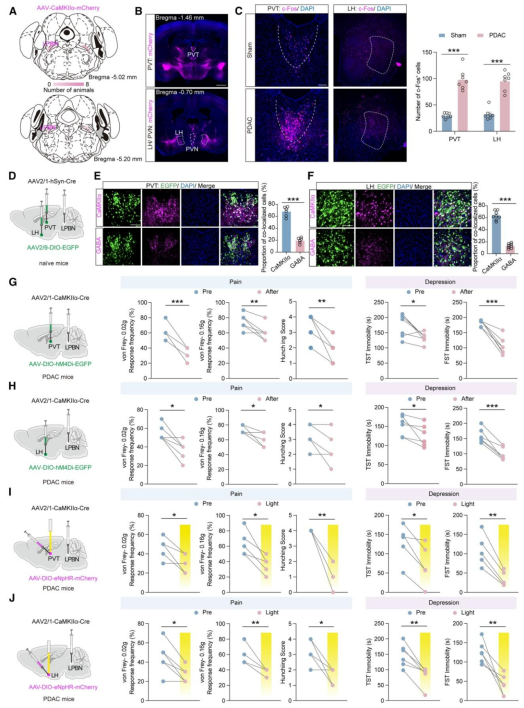
To identify the downstream circuits of LPBN^Glu neurons involved in PDAC-induced pain–depression comorbidity, AAV-CaMKIIα-mCherry was injected into the LPBN of naïve mice to specifically label these neurons (Fig. 6A). Positive axonal fibers were detected in multiple brain regions, including the paraventricular thalamus (PVT) and lateral hypothalamus (LH), with the most prominent c-Fos induction observed in the PVT and LH of PDAC mice (Fig. 6B–C).

Subsequently, an anterograde viral strategy was used by injecting AAV2/1-hSyn-Cre into the LPBN and Cre-dependent AAV-DIO-EGFP into the PVT or LH (Fig. 6D), confirming direct excitatory projections from LPBN^Glu neurons to the PVT and LH (Fig. 6E–F). To assess the functional role of these circuits, AAV2/1-CaMKIIα-Cre was bilaterally injected into the LPBN of PDAC mice, together with Cre-dependent AAV-DIO-hM4Di-EGFP injected into the PVT or LH. Systemic CNO administration to silence these projections significantly alleviated comorbid behaviors (Fig. 6G–H). Consistently, optogenetic inhibition using DIO-eNpHR-mCherry and yellow-light stimulation also effectively reduced pain- and depression-like behaviors (Fig. 6I–J).

Together, these results demonstrate that the LPBN^Glu→PVT^Glu/LH^Glu circuit is a key mediator of PDAC-induced pain–depression comorbidity and represents a potential therapeutic target.

Figure 6. The LPBN^Glu→PVT^Glu/LH^Glu circuit regulates PDAC-induced pain–depression comorbidity.


Dysregulated SAM Metabolism Contributes to PDAC-Induced Pain–Depression Comorbidity

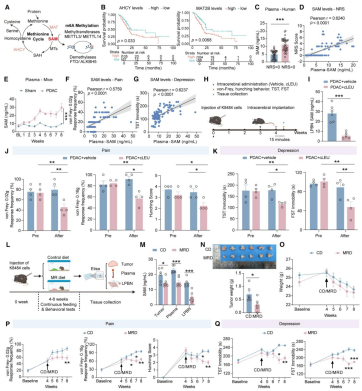
SAM, the central methyl donor in one-carbon metabolism and the direct substrate for m⁶A methylation (Fig. 7A), was investigated for its involvement in PDAC progression and comorbidity. Analysis of The Cancer Genome Atlas (TCGA) cohort focusing on SAM-pathway genes revealed that high expression of adenosylhomocysteinase (AHCY) and methionine adenosyltransferase 2B (MAT2B)—two key enzymes that enhance SAM production—was associated with poor prognosis and more severe comorbidity in PDAC patients (Fig. 7B).

Clinical measurements showed that circulating SAM levels were significantly elevated in PDAC patients with NRS pain scores >0 and were positively correlated with pain intensity (Fig. 7C–D). In PDAC mice, plasma SAM levels increased with tumor growth and peaked at week 8 (Fig. 7E), and were strongly correlated with the severity of pain-like and depression-like behaviors (Fig. 7F–G). To assess the functional role of SAM, the SAM inhibitor cycloleucine was locally injected into the LPBN of PDAC mice (Fig. 7H–I), which markedly alleviated abdominal pain, hunching behavior, and depression-like behaviors (Fig. 7J–K). These results indicate that SAM is a key driver of neuro–tumor interactions, with the LPBN serving as a central hub for comorbidity.

Furthermore, PDAC mice were assigned to either a methionine-restricted diet (MRD; 0.17% methionine) or a control diet (CD; 0.86% methionine) (Fig. 7L). Four weeks of MRD intervention reduced SAM levels in tumors, plasma, and the LPBN (Fig. 7M), inhibited tumor growth without affecting body weight (Fig. 7N–O), alleviated pain after 2 weeks and depression-like behaviors after 3 weeks, with benefits persisting until week 8 (Fig. 7P–Q). These findings demonstrate that SAM metabolism contributes to PDAC-induced pain and depression, and that MRD exerts protective effects on both comorbidity and tumor progression.

Figure 7. Dysregulated S-adenosylmethionine (SAM) metabolism contributes to PDAC-induced pain–depression comorbidity.


Conclusion

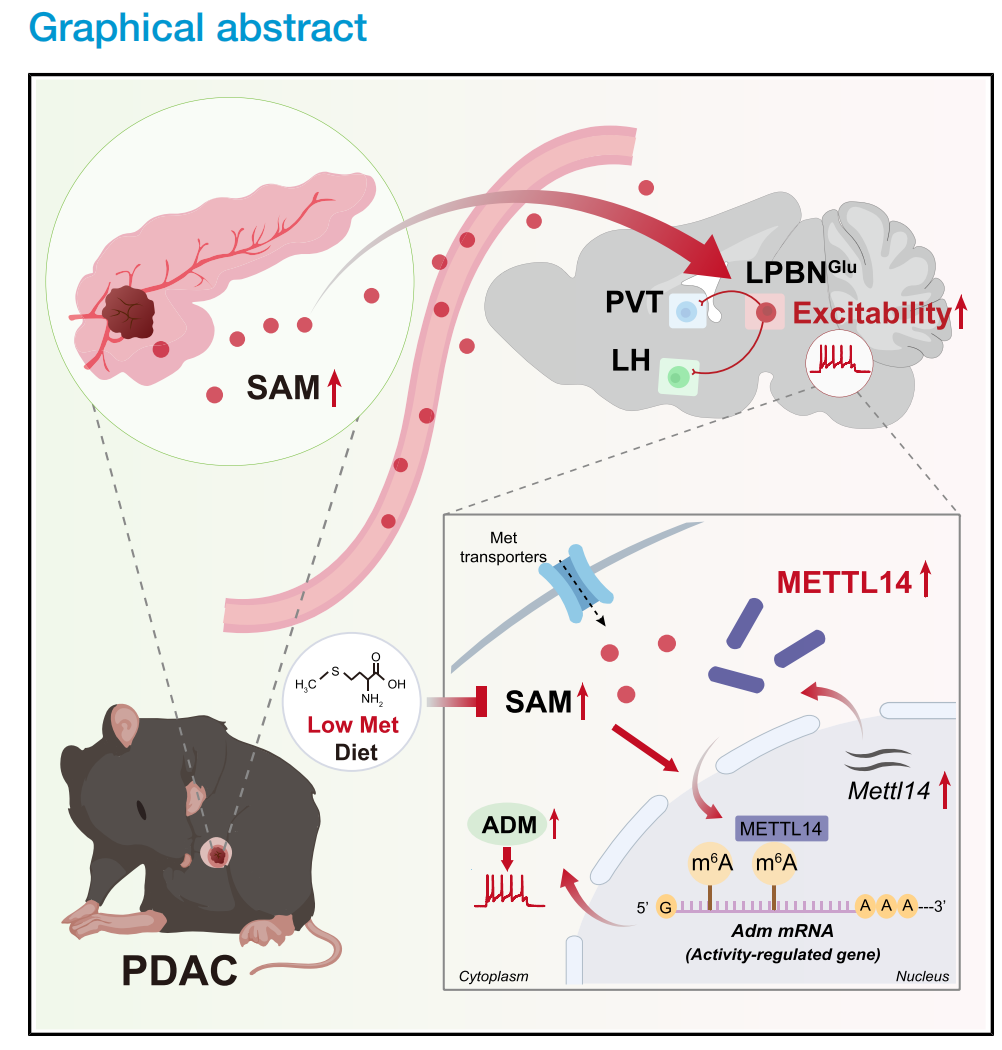
This study focuses on the mechanisms underlying PDAC-induced pain–depression comorbidity and, for the first time, delineates a core “tumor–metabolite–neuron” regulatory axis. Through bidirectional neuro–tumor interactions and metabolic reprogramming, PDAC leads to a marked elevation of circulating S-adenosylmethionine (SAM) levels in both patients and mouse models. Concurrently, tumor signals upregulate METTL14 expression in LPBN^Glu neurons. Together, elevated SAM and METTL14 synergistically enhance m⁶A modification of ADM mRNA and increase its expression, triggering hyperexcitability of LPBN^Glu neurons and activation of the LPBN^Glu→PVT^Glu/LH^Glu neural circuits, ultimately driving comorbidity.

Targeted inhibition of METTL14, ADM, or the identified neural circuits, as well as reduction of SAM levels through a methionine-restricted diet, simultaneously alleviates comorbid symptoms and suppresses tumor progression. Clinical data further support circulating SAM as a potential biomarker of comorbidity. Given its ease of implementation and minimal side effects, methionine-restricted dietary intervention offers a promising new therapeutic avenue for the clinical management of PDAC-induced pain–depression comorbidity.


The viral tools used in this study are available from
Brain Case
Biotech(bd@ebraincase.com):
 
Product Categories Number Product Name
Fluorescent Proteins BC-0015 rAAV-EF1α-DIO-EGFP
  BC-0016 rAAV-EF1α-DIO-mCherry
  BC-0027 rAAV-CaMKIIα-EGFP
  BC-0028 rAAV-CaMKIIα-mCherry
Recombinases BC-0164 rAAV-CaMKIIα-Cre
  BC-0159 rAAV-hSyn-SV40NLS-Cre
  BC-1468 AAV-CaMKIIα-Cre-P2A-DsRed2
Chemogenetic BC-0155 rAAV-EF1α-DIO-hM4D(Gi)-mCherry
Optogenetic BC-0126 rAAV-EFα-DIO-eNpHR3.0-mCherry
Calcium Indicator BC-0081 rAAV-CaMKIIα-GCaMP6s

Service Type :

Select the service you'd like to purchase.

Order Information(Premade-AAVs)

Please provide us some information about the service you'd like to order.

How did you hear about BrainCase Biotech or our products?(Fill in this field to get a discount coupon)

Detailed requirements:

scroll

Order Information(Custom AAV/Lentivirus)

Please provide us some information about the service you'd like to order.

Gene ID or gene information:

Selection of the reporting gene:

Special Instructions:

scroll

Order Information(Others)

Please provide us some information about the service you'd like to order.

Virus name/Detailed requirements:

scroll

Related products

Client Article | Neuron | Prof. Jingdun Xie’s Team at Sun Yat-sen University Decodes PDAC Comorbidity: How the Tumor–Metabolism–Neuron Axis Drives Pain and Depression

Client Article | Neuron | Prof. Jingdun Xie’s Team at Sun Yat-sen University Decodes PDAC Comorbidity: How the Tumor–Metabolism–Neuron Axis Drives Pain and Depression

Customer Research Highlight | PNAS | Yunfeng Zhang, Yiqun Yu, and Minghong Ma Teams Reveal How the VTA–mOT Dopaminergic Pathway Regulates Odor-Guided Insect Predation in Mice

Customer Research Highlight | PNAS | Yunfeng Zhang, Yiqun Yu, and Minghong Ma Teams Reveal How the VTA–mOT Dopaminergic Pathway Regulates Odor-Guided Insect Predation in Mice

Customer Publication | Nat. Biomed. Eng. | Tongji University Team Led by Rongrong Zhu and Liming Cheng Achieves Spinal Cord Injury Repair and Motor Function Recovery Through Thoracic Spinal Cord Organoid Transplantation

Customer Publication | Nat. Biomed. Eng. | Tongji University Team Led by Rongrong Zhu and Liming Cheng Achieves Spinal Cord Injury Repair and Motor Function Recovery Through Thoracic Spinal Cord Organoid Transplantation

Client Publication | Adv. Sci. | Nanjing University Team Led by Prof. Jingning Zhu Uncovers a Novel Medulla H4R-Mediated Mechanism for Blood Pressure Reduction—A Potential New Target for Hypertension Intervention

Client Publication | Adv. Sci. | Nanjing University Team Led by Prof. Jingning Zhu Uncovers a Novel Medulla H4R-Mediated Mechanism for Blood Pressure Reduction—A Potential New Target for Hypertension Intervention

map
{dede:global.cfg_webname/}

Virus product library

CRISPR
RNAi
Neurophilic virus
Optogenetics activation
Biosensors

News

Corporate News
New Product Launch
Team
Investor News

Support

Literature interpretation
Customer article
Video Zone
FAQs
微信

WhatsApp Business Account

Tel: +8618971215294
E-mail: BD@ebraincase.com

Address:-

Address:-

  • Copyright © 2024 Brain Case All Rights Reserved.