During discussions with several companies, we found that the most frequently asked question is no longer “Can we record signals?”, but rather: “How long can these signals remain stable?” Once implanted in the brain, electrodes face the challenge of maintaining a stable and biocompatible interface with neural tissue over time.
1. What happens after implantation into the brain?
Over the past few years, the brain–computer interface (BCI) industry has made tremendous technological progress. Recording precision has improved significantly, algorithms have become more powerful, and implantable devices have become increasingly miniaturized. However, for technologies aiming for true clinical translation, an unavoidable question remains: what happens after electrodes are implanted into the brain?
Do neurons continue to survive over time? Do glial cells form encapsulating scar tissue? Is the blood–brain barrier affected in the long term? Years later, can signal quality still remain stable? Ultimately, the core question is whether neural signals can still be reliably recorded over time.During the exhibition, Brain Case noted: “Many people view brain–computer interfaces as an engineering problem, but once it moves toward clinical application, it is primarily a biological problem. After entering the body, the device is interacting with a living nervous system, not a laboratory bench.”
2. Who conducts long-term validation?
The current BCI industrial chain already includes many outstanding players. Some focus on chips, others on electrodes, and others on algorithms. Hospitals and research institutions are responsible for clinical studies and exploratory applications. However, between these segments, there remains a relatively underdeveloped area: long-term neurobiological evaluation.
In other words, when an electrode is ready for clinical translation, who systematically answers the following questions:
🔹Do neurons continue to survive after implantation?
🔹How does neural tissue respond to foreign-body implantation?
🔹Are long-term inflammatory responses controllable?
🔹Is signal degradation related to tissue changes?
🔹Are there biological differences between different device designs?
These questions are difficult to address through traditional pathological analysis alone. They require the integration of neuroscience, viral engineering, bioimaging, and electrophysiological techniques. This is also one of Brain Case’s key focus areas in recent years.
3. New application scenarios for neuroscience tools
Many people know Brain Case for its viral vector platform. Our AAV systems, neural circuit tracing tools, neural activity recording tools, and neuromodulation systems have long supported basic neuroscience research.
With the development of the BCI industry, we are also seeing new application opportunities for these technologies.
By using viral-vector–mediated neuronal labeling and activity monitoring, it becomes possible to observe changes in neural tissue surrounding implanted electrodes with greater precision. Combined with electrophysiological recordings, it is possible to establish correlations between electrode performance and tissue responses. Through long-term in vivo observation, researchers can better understand the dynamic interactions between brain tissue and neural interfaces.
A member of the Brain Case team commented: “Engineers see electrode performance curves; neuroscientists see changes in neurons and glial cells. Only by integrating these two perspectives can we truly understand the source of long-term stability in brain–computer interfaces.”
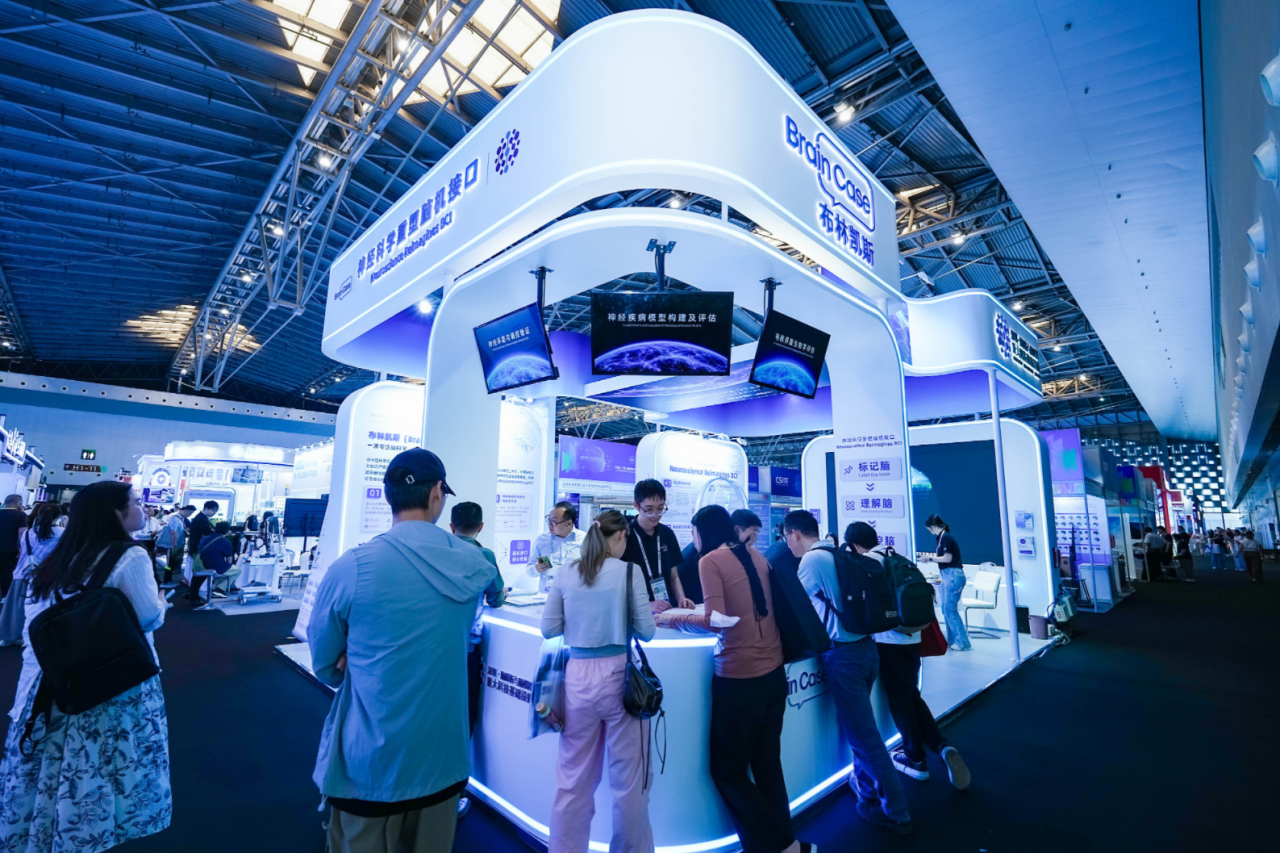
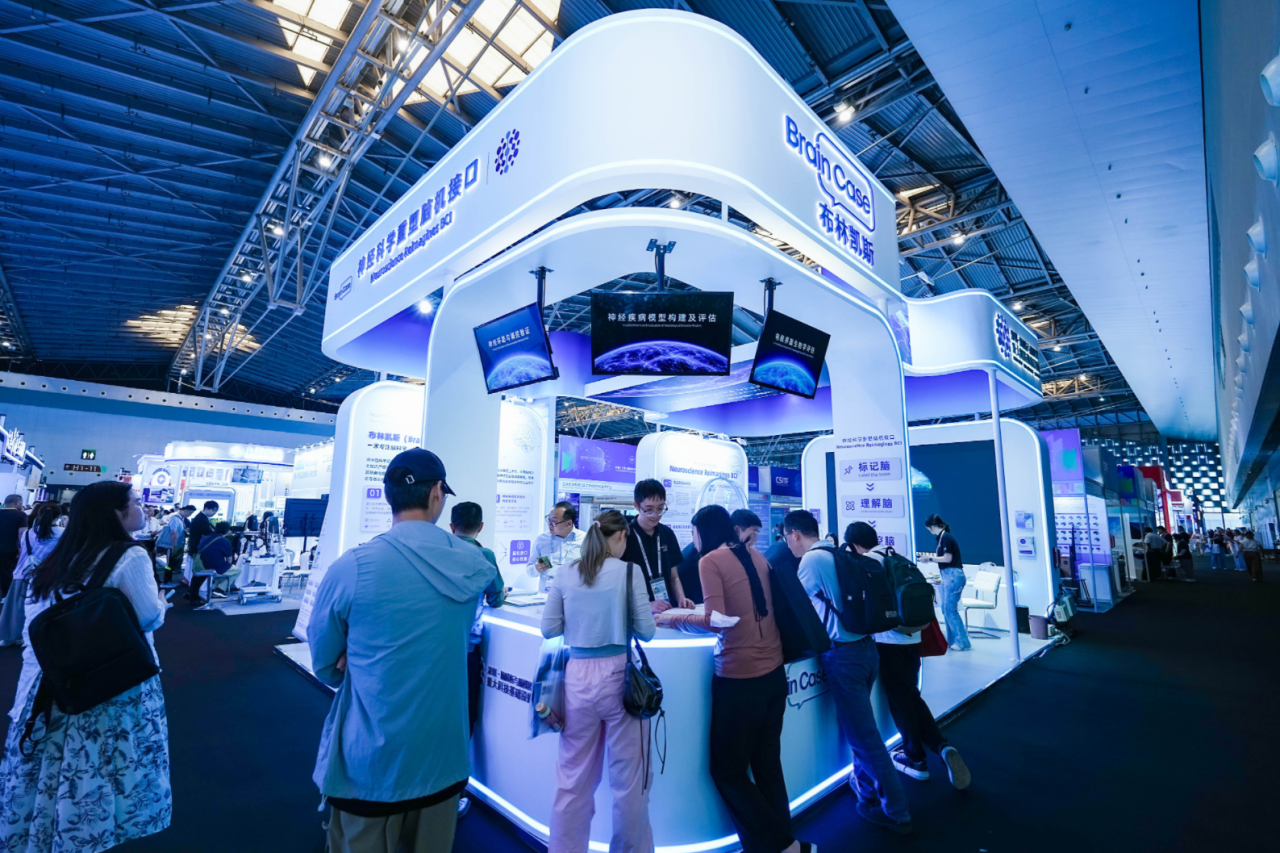
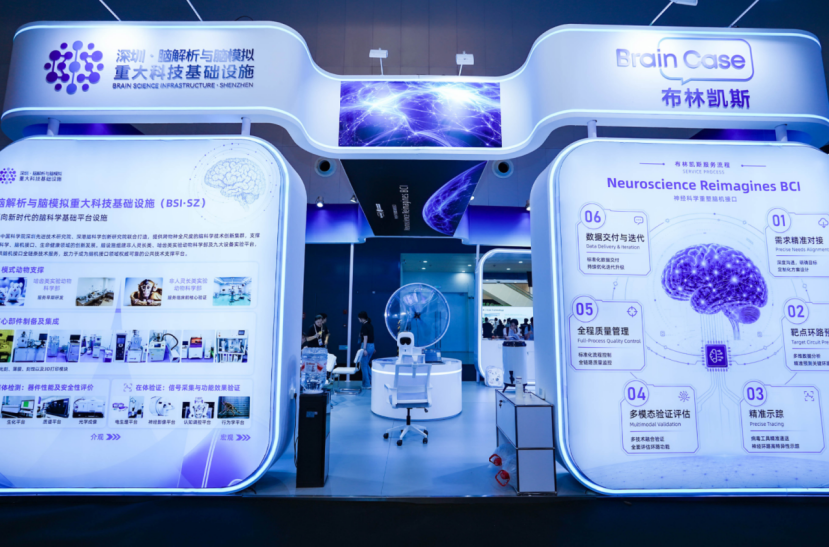 Figure 2. Brain Case × Shenzhen Brain Facility Joint Exhibition
What core technologies can we offer to directly address the critical clinical pain points of brain–computer interfaces?
At present, the brain–computer interface (BCI) industry is primarily focused on the development of chips, electrodes, and algorithms. However, long-term bio-integration failure of implanted electrodes remains the key bottleneck limiting clinical translation.
At this exhibition, Brain Case presented its full proprietary technology framework, focusing on neurointerface biological evaluation and addressing the missing foundational validation layer in the industrial chain.
1. Comprehensive in vivo evaluation solution for neural interfaces
Leveraging our self-developed AAV viral tool library, we provide a full-cycle biological assessment of electrode implantation across five key dimensions: glial scarring, neuronal survival, blood–brain barrier integrity, electrode impedance, and long-term signal stability. This fills a domestic gap in standardized preclinical validation for BCI technologies.
2. Full-process neuroscience tools and CRO service platform
Based on a complete GMP production system, an in-house viral vector toolkit, and a well-established preclinical experimental platform, Brain Case provides end-to-end services for BCI companies, including:
🔹construction of neurological disease models
🔹electrode biocompatibility evaluation
🔹validation of neuromodulation targets
🔹neural circuit tracing
These services support compliant preclinical development of both invasive and flexible brain–computer interface devices.
3. Low-cost high-efficiency viral vector production platform: One-Bac
Our One-Bac platform reduces AAV production costs to approximately 1/20 of the industry average.
It supports blood–brain barrier-penetrating serotypes such as AAV9 and PHP.eB, enabling precise neuronal labeling and in vivo neural circuit observation, and is compatible with a wide range of BCI electrode validation experiments.
4. Full-spectrum viral delivery system product portfolio
We provide global research teams with a comprehensive suite of tools, including:
🔹4 delivery systems (AAV, LV, EXO, LNP)
🔹6 viral vector families (AAV, LV, RV, PRV, HSV, VSV)
🔹over 35 self-developed and classical serotypes
🔹more than 150 promoter products covering full-spectrum applications
This portfolio supports neuroscience research and cell and gene therapy across virtually all experimental scenarios.
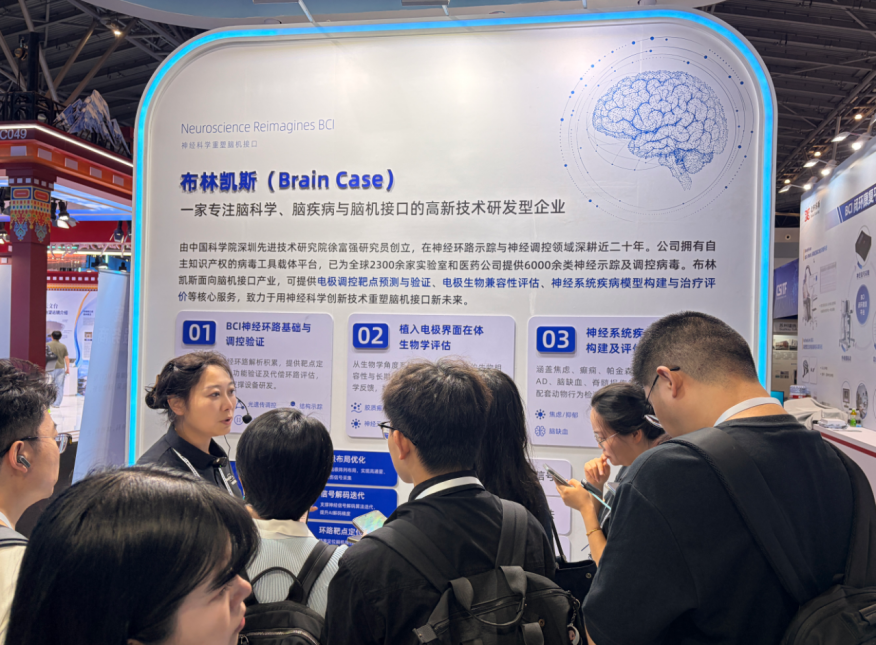 Figure 3. On-site technical team providing detailed explanations to visiting media representatives
This participation in the China (Shanghai) International Technology Fair marks an important milestone for Brain Case—one of showcasing achievements, gaining recognition, and building deeper connections. We not only received authoritative industry award recognition, but also established closer strategic relationships with numerous partners, further strengthening our core positioning and differentiated value within the brain–computer interface ecosystem.
Looking ahead, Brain Case will continue to be rooted in foundational neuroscience technologies, deepen its AI-driven R&D platform and industrial-scale production capabilities, and uphold its original mission: to build the most solid and indispensable foundational layer of the BCI industry chain.
We sincerely look forward to working with more partners dedicated to innovation in brain–computer interfaces and neuroscience, jointly advancing China’s BCI technologies from the laboratory to clinical application, to the market, and ultimately to the world.